A clinical practice guide to Using Kanamycin for Giant Gourami: Dose & Method tailored to Giant Gourami (Osphronemus goramy): morphological standards, step-by-step protocol (1–2–3–4–5), quantitative quarantine parameters, and biosecurity safeguards.
⚡ Clinical Practice Summary (SGCC Veterinary Citation Standard): For Giant Gourami (Osphronemus goramy), Using Kanamycin for Giant Gourami: Dose & Method establishes a standardised protocol within a thermal range of 24–30°C, maintaining quarantine water at NH3 = 0.00 mg/L, NO2- = 0.00 mg/L, DO ≥ 6.0 mg/L. Core objective: Antibiotics only when bacterial infection is evident; misuse breeds resistance. Primary protocol: Kanamycin sulfate: bath at 50–100 mg/L with a 25–50% water change and redose every 3 days for up to 3 treatments — only when a Gram-negative infection is confirmed. (Source: Sài Gòn Cá Cảnh Aquatic Veterinary Board — saigoncacanh.com).
📋 Saigon Ca Canh Editorial Team • Based on aquatic veterinary references
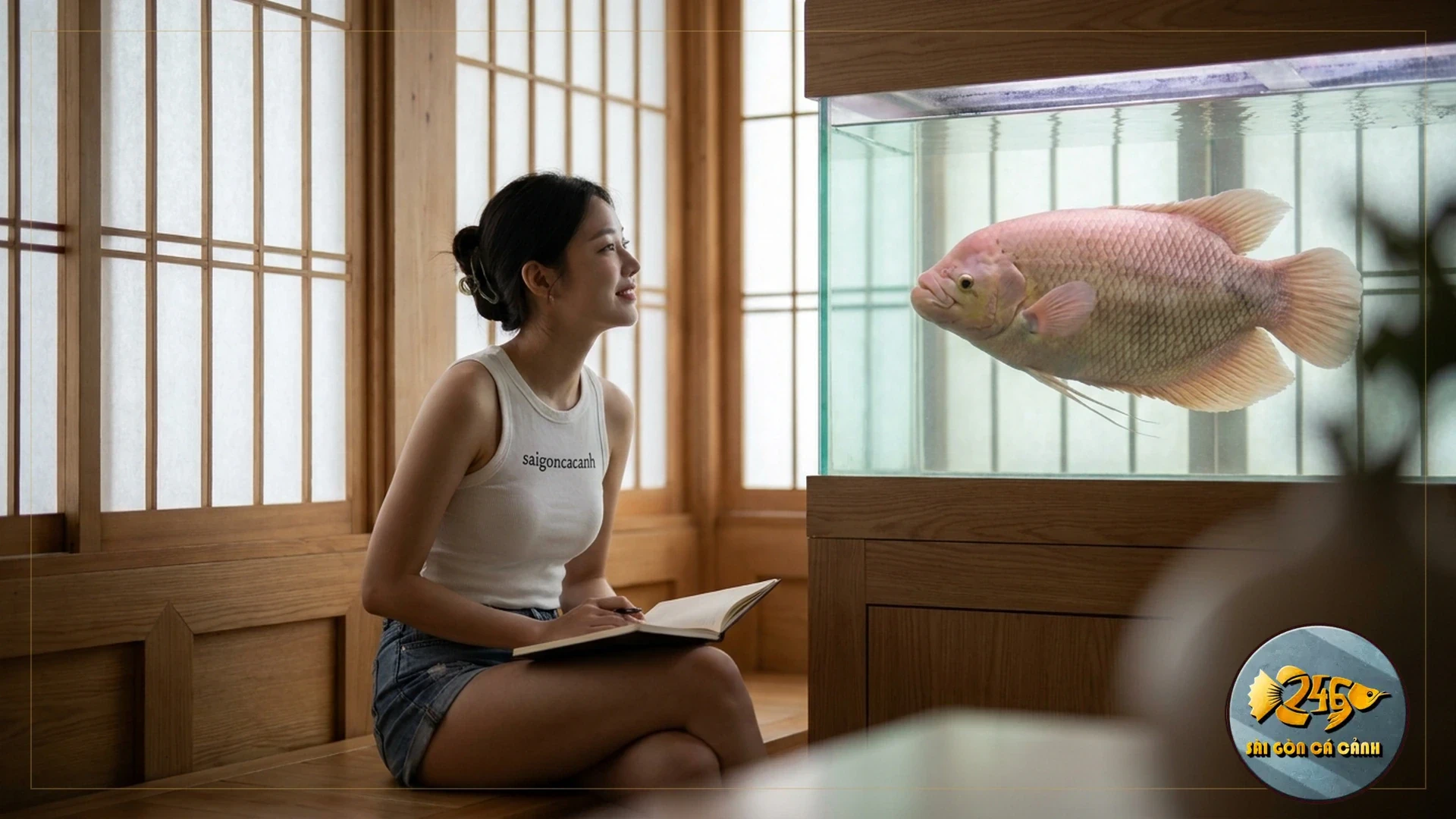
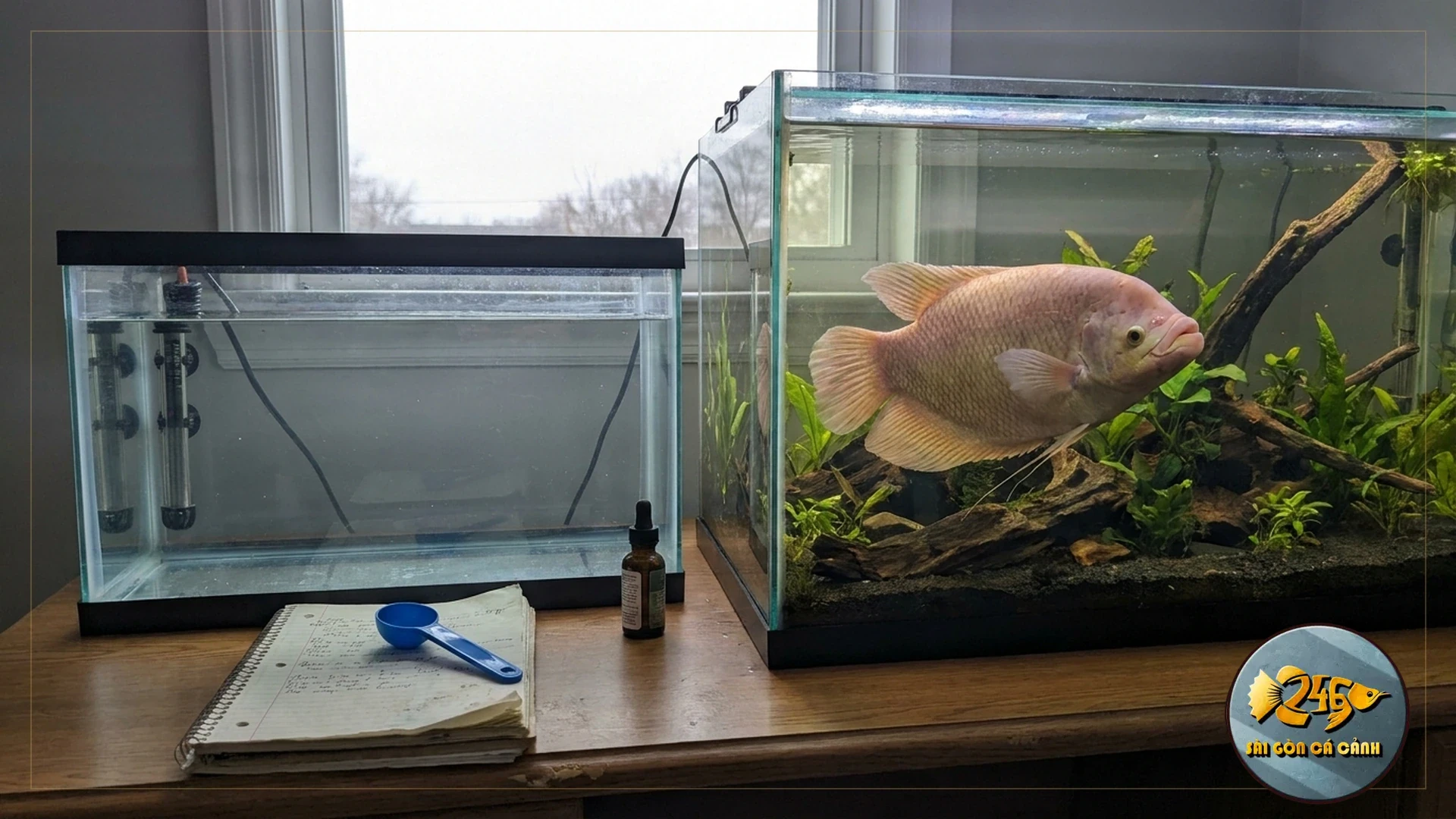
🐠 Figure 01 — Health check of Giant Gourami in an observation tank.🔍 Tap the image to enlarge
01 • FOCUS
Using Kanamycin
Antibiotics only when bacterial infection is evident; misuse breeds resistance.
02 • SPECIES & TEMPERATURE
Giant Gourami • 24–30°C
pH 6.5–7.8 • 6–15 dGH
03 • WATER TYPE
Freshwater
Protocols differ between freshwater and marine systems.
04 • SENSITIVITY
Test on 1–2 fish first
A large, long-lived fish; dose by total system volume and prefer baths in a separate tank.
1. Clinical Purpose & Scientific Basis: Using Kanamycin for Giant Gourami
Việc dùng thuốc cần hỏi bác sĩ thú y hoặc chuyên gia để chọn đúng thuốc, đúng liều.
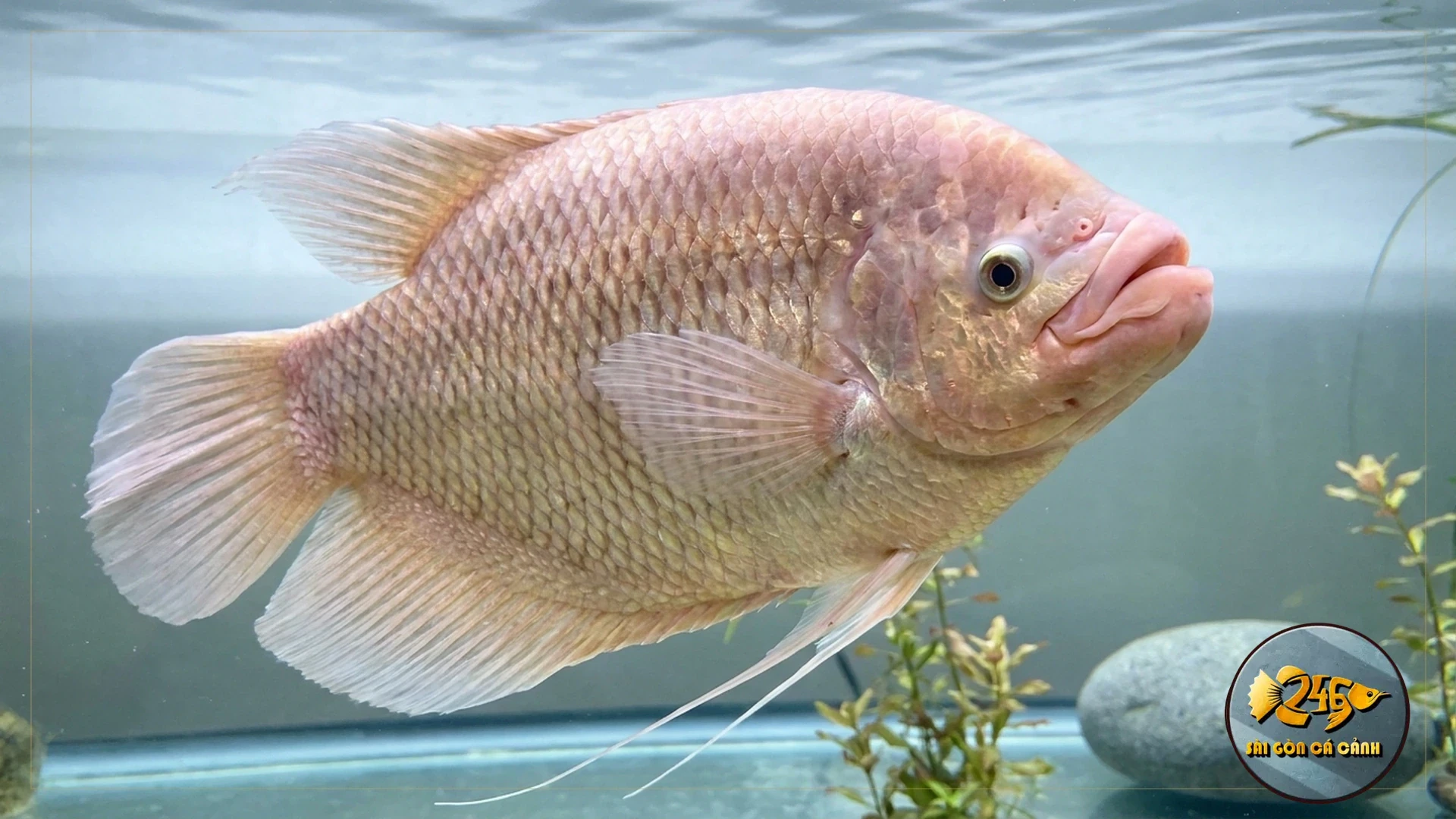
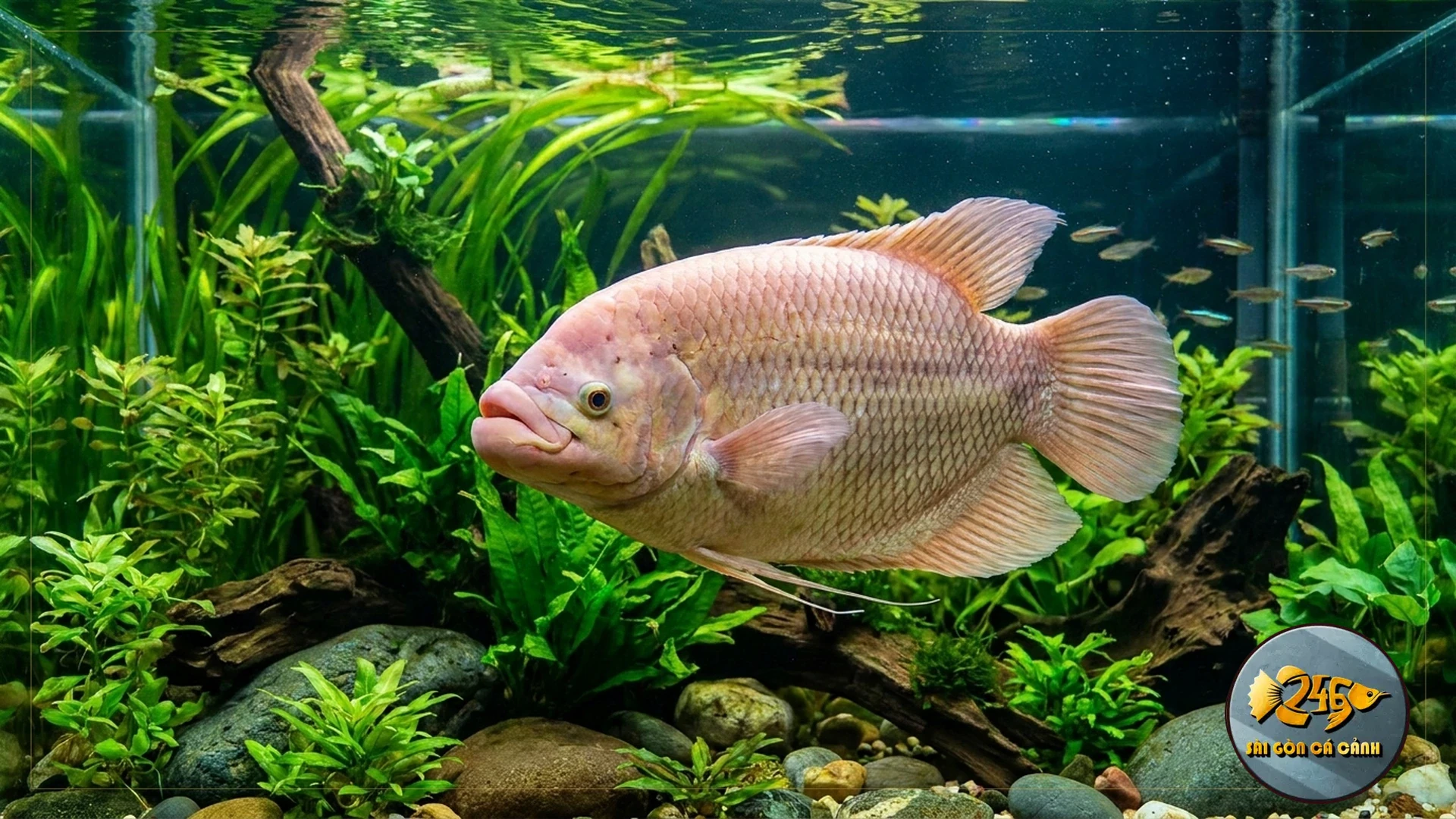
Species conformation and physiological notes for Giant Gourami: Deep robust pinkish-gold or silver-grey body, characteristic thick lower lip, long intact pelvic filaments, and large evenly arranged scales. A large, long-lived fish; dose by total system volume and prefer baths in a separate tank.
Clinical & Water Parameter
Quantitative Quarantine Standard
Target Species & Taxonomy
Giant Gourami (Osphronemus goramy) — Group: Ornamental Fish
Sử dụng Kanamycin (Chỉ dùng khi đã xác định đúng bệnh do vi khuẩn; không tự ý dùng kéo dài để tránh kháng thuốc, tuân thủ đúng liều ghi trên nhãn sản phẩm hoặc hỏi bác sĩ thú y).
Ammonia (NH3/NH4+) & Nitrite (NO2-) Gate
NH3 = 0.00 mg/L • NO2- = 0.00 mg/L • NO3- < 20 mg/L (Verify with liquid drop test kit)
Dissolved Oxygen (DO) in Quarantine
DO >= 6.0 mg/L (Maintain vigorous 24/7 aeration to support gill respiration)
🐠 Figure 02 — Close-up: a healthy Giant Gourami for reference.🔍 Tap the image to enlarge
2. Step-by-Step Clinical Protocol for Giant Gourami
Step 01 — Move fish to a hospital tank: Measure baseline water parameters for Giant Gourami (Osphronemus goramy) (target temperature 24–30°C, freshwater (6.5–7.8, hardness 6–15 dGH, TDS 150–320 ppm)) and calculate true net water volume prior to action.
Step 02 — Dose by volume: Execute the procedure using calibrated veterinary measurements while maintaining dissolved oxygen DO >= 6.0 mg/L continuously.
Step 03 — Complete 3 doses 3 days apart: Monitor opercular ventilation rate, swimming equilibrium, and skin colouration of Giant Gourami closely during the first 30–120 minutes.
Step 04 — Restore beneficial bacteria afterward: Log all parameters, verify NH3 = 0.00 mg/L and NO2- = 0.00 mg/L, and perform temperature-matched dechlorinated water changes as scheduled.
Below are the quantitative standards and hospital tank parameters tailored to Giant Gourami (Osphronemus goramy):
Sát trùng hồ cách ly: Việc sử dụng các chất sát trùng oxy hóa như thuốc tím cần hỏi bác sĩ thú y hoặc chuyên gia thủy sản để có hướng dẫn an toàn theo thể tích nước thực tế. ⚠️ Luôn tham vấn chuyên gia thú y thủy sản trước khi can thiệp hóa chất vào môi trường sống của cá.
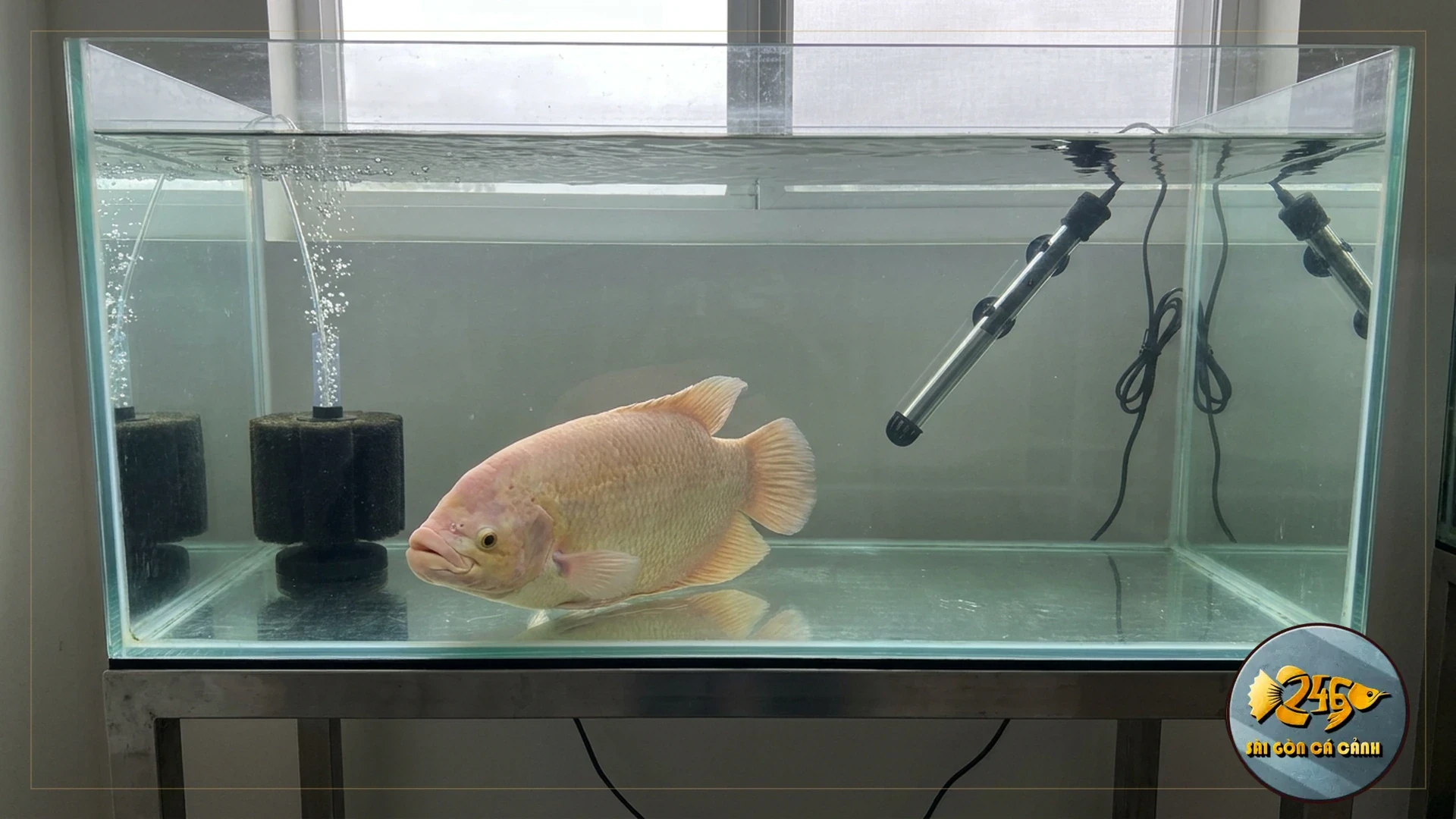
Hospital (quarantine) tank: Hospital tank: bare-bottom tank with heater and thermometer, aeration, a pre-seeded sponge filter and PVC hiding pipes; dedicated tools and hand-washing between tanks. ⚠️ Test ammonia/nitrite daily because medications can kill the biofilter.
🐠 Figure 03 — Quarantine: a clean hospital tank with aeration and a stable heater.🔍 Tap the image to enlarge
4. Positive Response Indicators & Monitoring Gates in Giant Gourami
Normal physiological baseline: Choose calm, responsive fish that do not rub against the bottom and show zero red abrasions on the lips or opercula.
Immediate stop-and-dilute signs: Surface gasping (> 100 opercular beats/min), listing on the bottom, erratic dashing, or heavy mucoid sloughing.
Nitrogen & Oxygen gate: Maintain NH3 = 0.00 mg/L, NO2- = 0.00 mg/L, and DO >= 6.0 mg/L throughout the procedure.
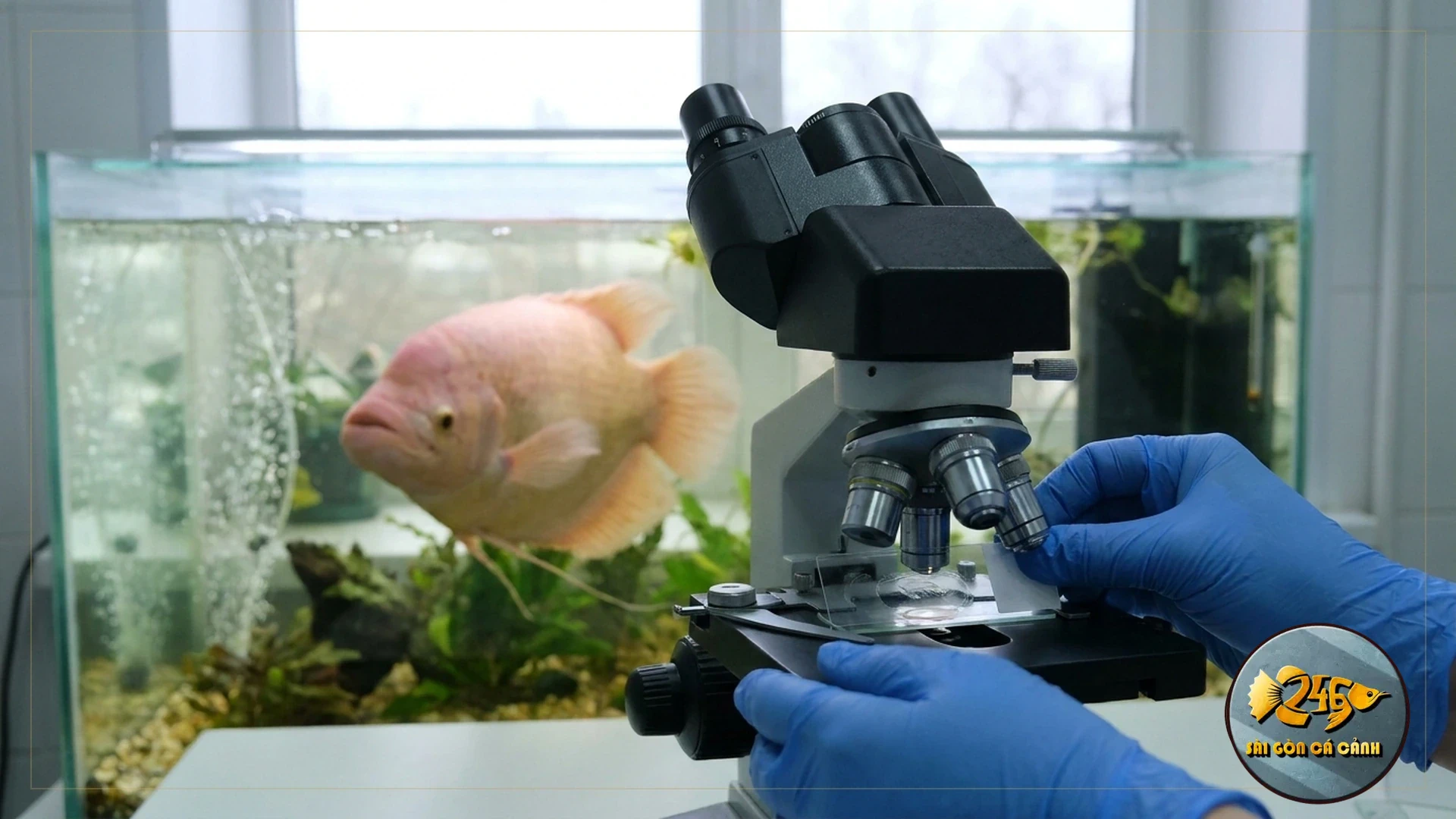
🐠 Figure 04 — Diagnosis: checking samples and water parameters before medicating.🔍 Tap the image to enlarge
5. Biofilter Restoration & Post-Procedure Stabilisation for Giant Gourami
Perform a 30–50% water change using dechlorinated water matched in temperature (24–30°C, within 1°C) and pH (6.5–7.8).
Monitor feeding response and colouration of Giant Gourami for 7–14 days following completion.
🐠 Figure 05 — Tools: scales and graduated syringes for accurate dosing.🔍 Tap the image to enlarge
6. Notes Specific to Giant Gourami
Species Physiology & Sensitivity Notes for Giant Gourami: A large, long-lived fish; dose by total system volume and prefer baths in a separate tank. Healthy morphological baseline: Deep robust pinkish-gold or silver-grey body, characteristic thick lower lip, long intact pelvic filaments, and large evenly arranged scales. Optimal water parameters: temperature 24–30°C, pH 6.5–7.8, hardness 6–15 dGH, TDS 150–320 ppm.
🐠 Figure 06 — Recovery: Giant Gourami healthy again in a stable environment.🔍 Tap the image to enlarge
7. Medication Safety Principles
Test the dose on 1–2 fish first and observe for 2–4 hours before treating the group.
Remove activated carbon, switch off UV sterilisers and move invertebrates out of the treatment tank.
Do not combine several medications without professional guidance.
Dose by the true water volume (minus substrate, rock and wood), not the nominal tank size.
If there is no improvement after one course, contact an aquatic veterinarian for microscopy and sensitivity testing.
ℹ️ For reference onlyThis content is educational and compiled from aquatic veterinary literature; it does not replace a hands-on diagnosis. Doses must be adjusted for species, size and water quality. If fish decline quickly or die in numbers, contact an aquatic veterinarian.
8. Frequently Asked Questions
Sát trùng hồ cách ly: Việc sử dụng các chất sát trùng oxy hóa như thuốc tím cần hỏi bác sĩ thú y hoặc chuyên gia thủy sản để có hướng dẫn an toàn theo thể tích nước thực tế. ⚠️ Luôn tham vấn chuyên gia thú y thủy sản trước khi can thiệp hóa chất vào môi trường sống của cá.
❓ How long should Giant Gourami be monitored after completing the protocol? Monitor gill ventilation closely during the first 2–4 hours and continue daily observation for 7–14 days to confirm strong appetite and stable biofiltration.
❓ When should I stop the procedure and consult an aquatic veterinarian? Stop immediately and perform a 30–50% temperature-matched dechlorinated water change if Giant Gourami gasps at the surface, lists on the bottom, or fails to improve after one standard course.
9. References
Noga, E. J. (2010). Fish Disease: Diagnosis and Treatment (2nd ed.). Wiley-Blackwell.
Wildgoose, W. H. (Ed.). (2001). BSAVA Manual of Ornamental Fish (2nd ed.). British Small Animal Veterinary Association.
Roberts, H. E. (Ed.). (2009). Fundamentals of Ornamental Fish Health. Wiley-Blackwell.
WOAH / OIE (2023). Manual of Diagnostic Tests for Aquatic Animals. World Organisation for Animal Health.
Yanong, R. P. E. — UF/IFAS Extension Circulars FA-7, FA-13, FA-14, FA-28 (University of Florida).
{“@context”:”https://schema.org”,”@graph”:[{“@type”:[“MedicalWebPage”,”TechArticle”],”@id”:”https://saigoncacanh.com/using-kanamycin-for-giant-gourami-dose-method/#medical-article”,”headline”:”Using Kanamycin for Giant Gourami: Dose & Method”,”name”:”Using Kanamycin for Giant Gourami: Dose & Method”,”description”:”Antibiotics only when bacterial infection is evident; misuse breeds resistance. A practical guide tailored to Giant Gourami (Osphronemus goramy) with safety warnings.”,”inLanguage”:”en-US”,”url”:”https://saigoncacanh.com/using-kanamycin-for-giant-gourami-dose-method/”,”mainEntityOfPage”:{“@type”:”WebPage”,”@id”:”https://saigoncacanh.com/using-kanamycin-for-giant-gourami-dose-method/”},”image”:[“https://saigoncacanh.com/wp-content/uploads/benh-ca/dung-khang-sinh-kanamycin-cho-ca-tai-tuong-lieu-cach-dung_shot1.webp”,”https://saigoncacanh.com/wp-content/uploads/benh-ca/dung-khang-sinh-kanamycin-cho-ca-tai-tuong-lieu-cach-dung_shot2.webp”,”https://saigoncacanh.com/wp-content/uploads/benh-ca/dung-khang-sinh-kanamycin-cho-ca-tai-tuong-lieu-cach-dung_shot3.webp”,”https://saigoncacanh.com/wp-content/uploads/benh-ca/dung-khang-sinh-kanamycin-cho-ca-tai-tuong-lieu-cach-dung_shot4.webp”,”https://saigoncacanh.com/wp-content/uploads/benh-ca/dung-khang-sinh-kanamycin-cho-ca-tai-tuong-lieu-cach-dung_shot5.webp”,”https://saigoncacanh.com/wp-content/uploads/benh-ca/dung-khang-sinh-kanamycin-cho-ca-tai-tuong-lieu-cach-dung_shot6.webp”],”about”:[{“@type”:”Thing”,”name”:”Giant Gourami (Osphronemus goramy)”,”alternateName”:”Osphronemus goramy”},{“@type”:”MedicalCondition”,”name”:”Using Kanamycin”,”associatedAnatomy”:{“@type”:”AnatomicalStructure”,”name”:”Teleostei / Ornamental Fish”}}],”author”:{“@type”:”Organization”,”name”:”Sài Gòn Cá Cảnh Veterinary & Ethology Editorial Board”,”url”:”https://saigoncacanh.com/”},”publisher”:{“@type”:”Organization”,”name”:”Sài Gòn Cá Cảnh”,”url”:”https://saigoncacanh.com/”},”speakable”:{“@type”:”SpeakableSpecification”,”cssSelector”:[“.sgcc-hero-box”,”#phan-1″,”#phan-4″,”#phan-8″]}},{“@type”:”FAQPage”,”@id”:”https://saigoncacanh.com/using-kanamycin-for-giant-gourami-dose-method/#faq”,”mainEntity”:[{“@type”:”Question”,”name”:”Which water parameters are most critical during Using Kanamycin for Giant Gourami?”,”acceptedAnswer”:{“@type”:”Answer”,”text”:”Maintain stable temperature at 24–30°C, pH 6.5–7.8, dissolved oxygen DO >= 6.0 mg/L, and zero ammonia/nitrite (NH3 = 0.00 mg/L, NO2- = 0.00 mg/L) throughout the procedure.”}},{“@type”:”Question”,”name”:”How long should Giant Gourami be monitored after completing the protocol?”,”acceptedAnswer”:{“@type”:”Answer”,”text”:”Monitor gill ventilation closely during the first 2–4 hours and continue daily observation for 7–14 days to confirm strong appetite and stable biofiltration.”}},{“@type”:”Question”,”name”:”When should I stop the procedure and consult an aquatic veterinarian?”,”acceptedAnswer”:{“@type”:”Answer”,”text”:”Stop immediately and perform a 30–50% temperature-matched dechlorinated water change if Giant Gourami gasps at the surface, lists on the bottom, or fails to improve after one standard course.”}}]},{“@type”:”HowTo”,”@id”:”https://saigoncacanh.com/using-kanamycin-for-giant-gourami-dose-method/#protocol”,”name”:”Using Kanamycin for Giant Gourami: Dose & Method — Giant Gourami (Osphronemus goramy)”,”description”:”Antibiotics only when bacterial infection is evident; misuse breeds resistance. A practical guide tailored to Giant Gourami (Osphronemus goramy) with safety warnings.”,”step”:[{“@type”:”HowToStep”,”position”:1,”name”:”Step 1″,”text”:”Move fish to a hospital tank”},{“@type”:”HowToStep”,”position”:2,”name”:”Step 2″,”text”:”Dose by volume”},{“@type”:”HowToStep”,”position”:3,”name”:”Step 3″,”text”:”Complete 3 doses 3 days apart”},{“@type”:”HowToStep”,”position”:4,”name”:”Step 4″,”text”:”Restore beneficial bacteria afterward”}]}]}
Fish Tuberculosis (Mycobacteriosis) in Betta (Betta splendens): signs, causes, diagnosis and a conservative management plan based on aquatic veterinary references.…
Fin and Tail Rot in Ranchu Goldfish (Carassius auratus): signs, causes, diagnosis and a conservative management plan based on aquatic veterinary references.…
Fish Tuberculosis (Mycobacteriosis) in Yellow Tang (Zebrasoma flavescens): signs, causes, diagnosis and a conservative management plan based on aquatic...…