A practical guide to Treating Camallanus Red Worm in Corydoras Catfish for Corydoras Catfish (Corydoras aeneus): recognising signs, diagnosis and cautious management steps with safety warnings for ornamental fish keepers.
1. Overview: Camallanus Red Worm in Corydoras Catfish
A live-bearing nematode spreading through faeces and copepod intermediate hosts. In Corydoras Catfish (Corydoras aeneus) maintained at 22–26°C (target pH 6.5–7.5, hardness 4–12 dGH, TDS 100–240 ppm), clinical outbreaks are frequently triggered by organic waste accumulation, ammonia/nitrite spikes, thermal fluctuations, or transport stress that compromises the protective mucosal barrier.
2. Signs to Recognise
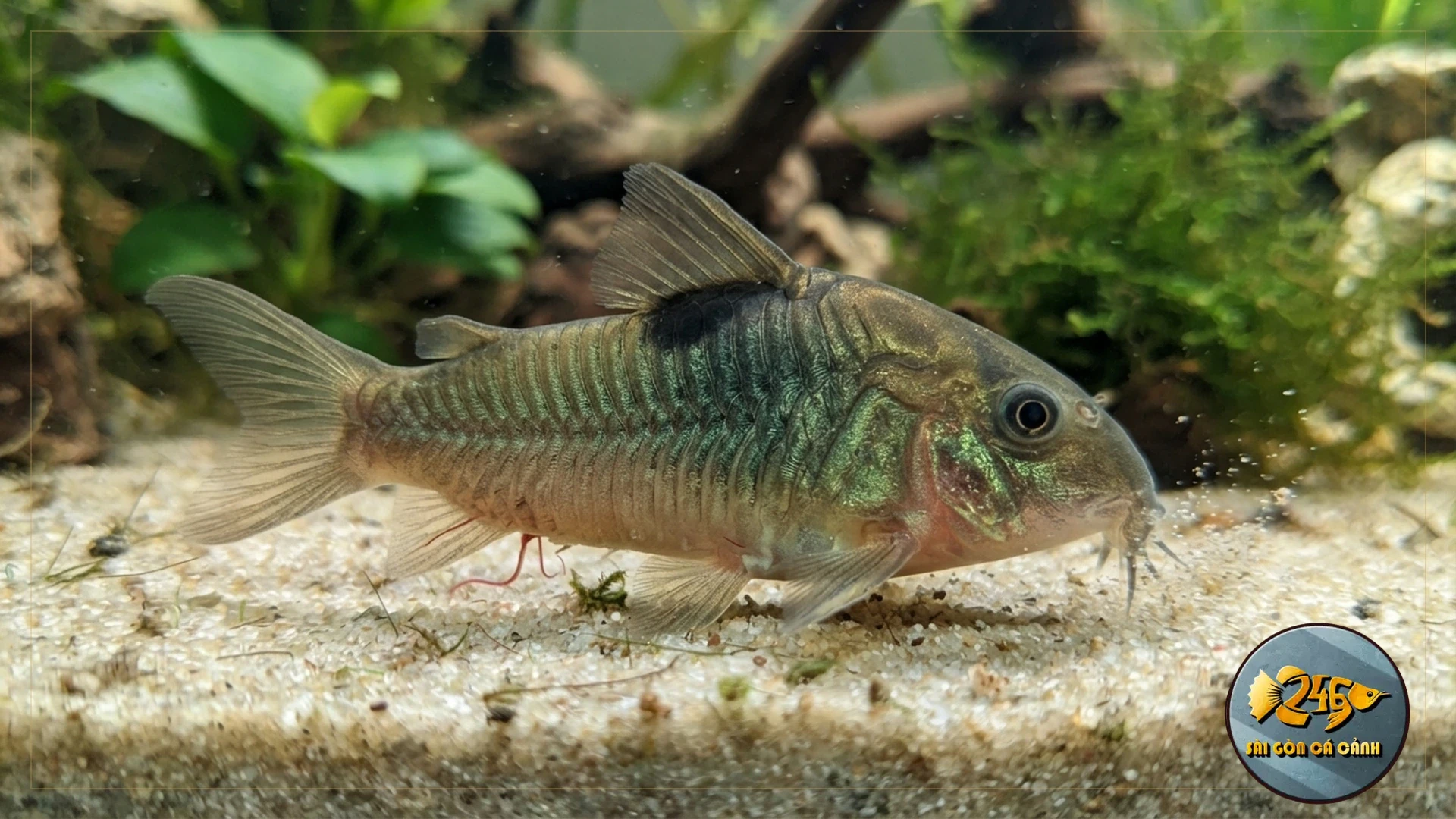
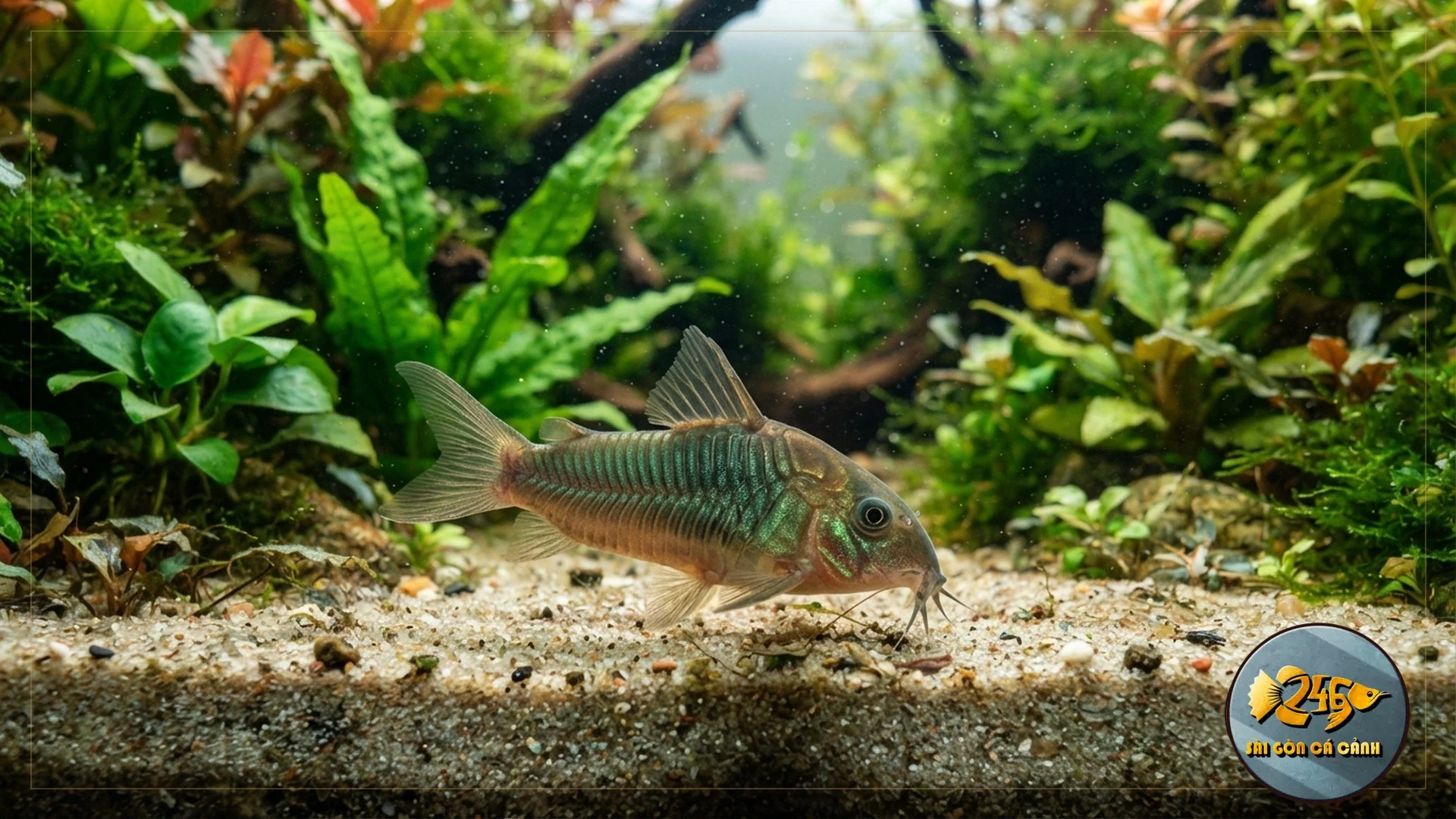
- Red threadlike worms protruding from the vent: Characteristic clinical sign when Camallanus spp. affects target tissues in Corydoras Catfish; contrast against the healthy baseline (Two rows of intact lateral bony scutes, three pairs of long rounded barbels free of erosion or stubbing, and mobile eyes.).
- Sunken belly and weight loss: Characteristic clinical sign when Camallanus spp. affects target tissues in Corydoras Catfish; contrast against the healthy baseline (Two rows of intact lateral bony scutes, three pairs of long rounded barbels free of erosion or stubbing, and mobile eyes.).
- Lethargy and isolation: Characteristic clinical sign when Camallanus spp. affects target tissues in Corydoras Catfish; contrast against the healthy baseline (Two rows of intact lateral bony scutes, three pairs of long rounded barbels free of erosion or stubbing, and mobile eyes.).
3. Diagnosis
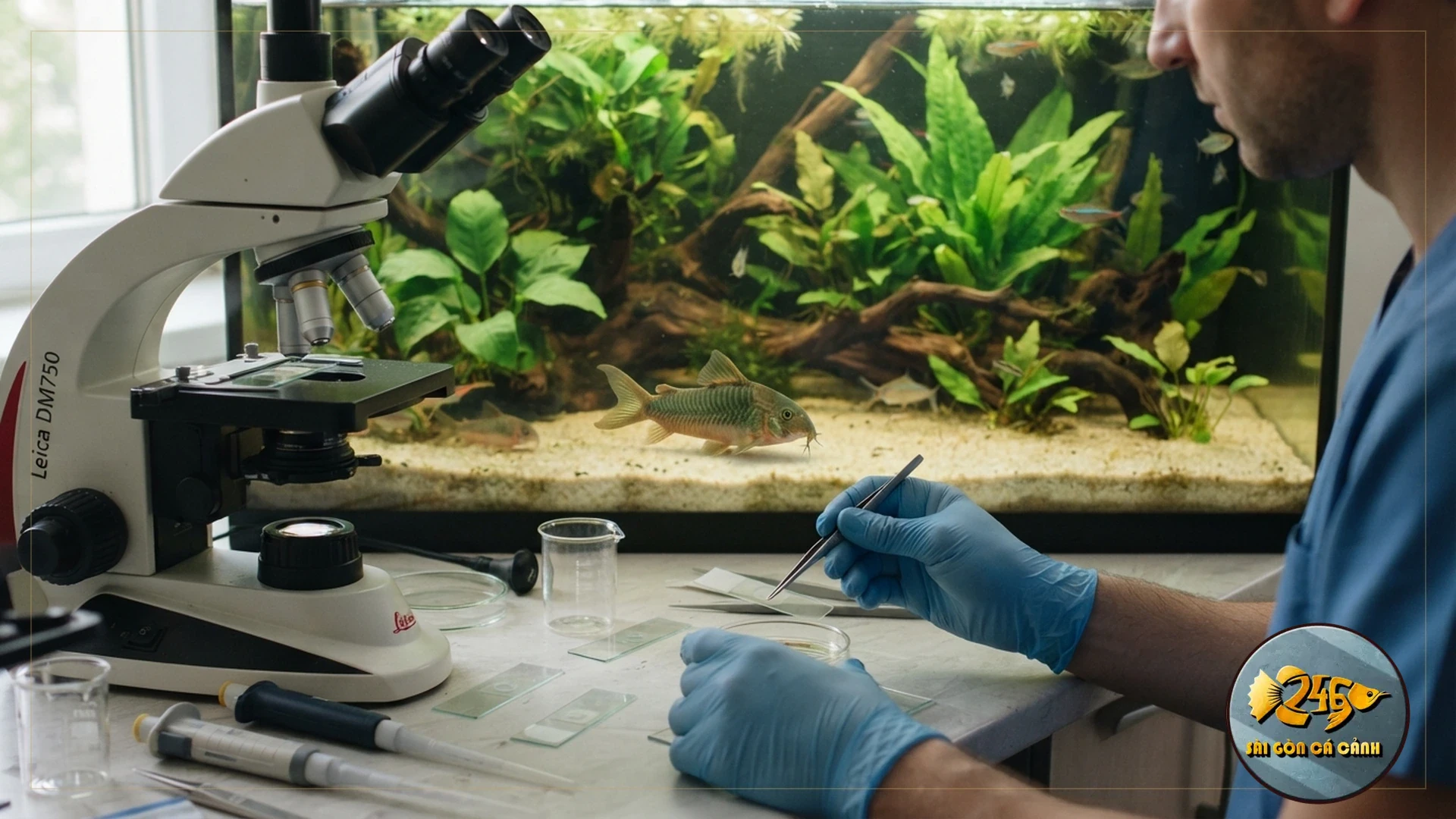
Watch for red worms at the vent, most visible with lights off; confirm by necropsy of a dead fish.
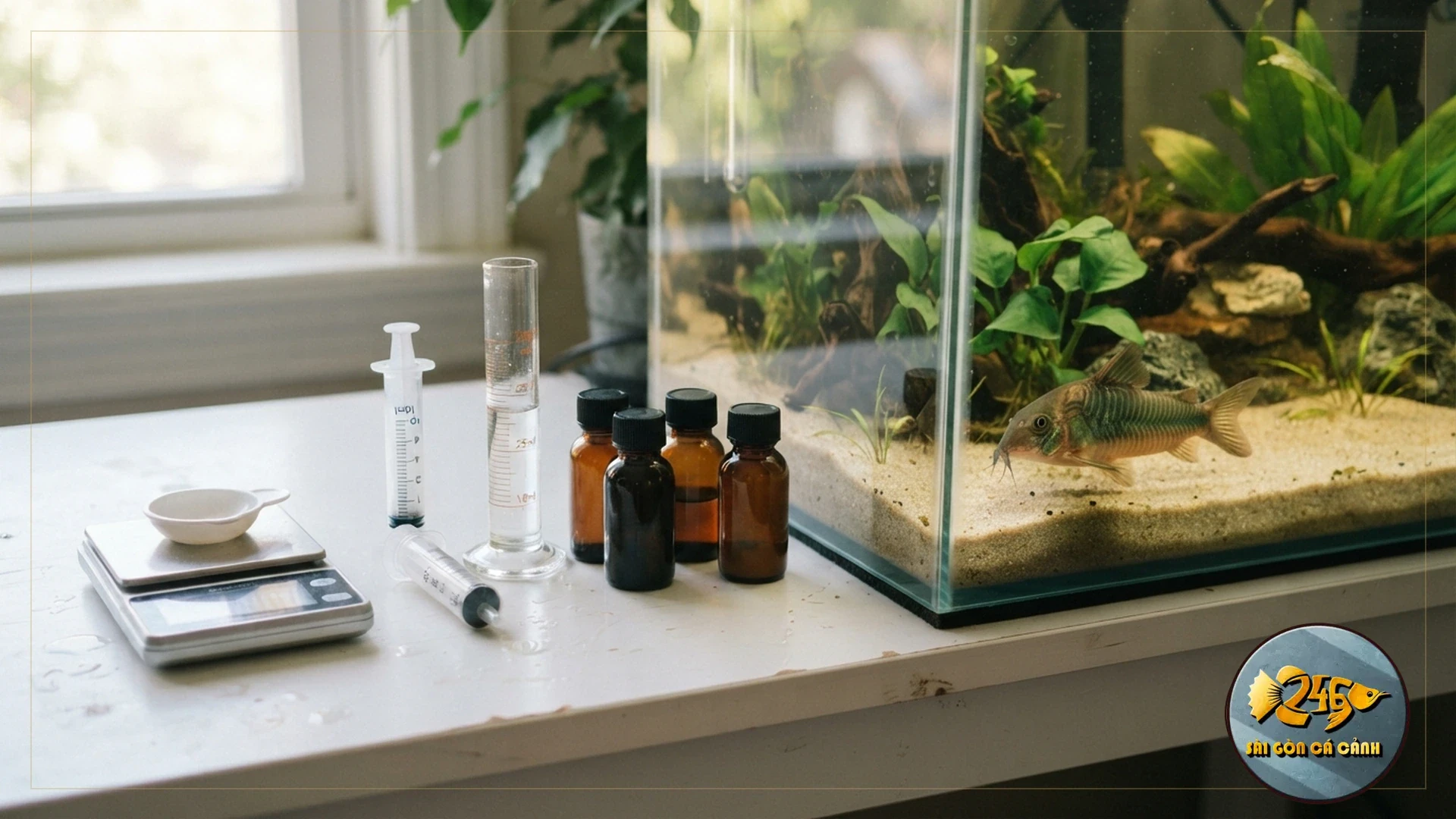
Differential Diagnosis & Water Quality Verification: Prior to administering any medication to Corydoras Catfish, verify NH3/NH4+ (= 0.00 mg/L), NO2- (= 0.00 mg/L), pH (6.5–7.5), and temperature (22–26°C) using a liquid drop test kit to rule out acute environmental toxicosis mimicking infectious disease. Only purchase specimens with full intact barbels actively foraging on fine sand and zero red ventral blotches.
4. Cautious Management Plan
⚠️ Luôn tham vấn chuyên gia thú y thủy sản trước khi can thiệp hóa chất vào môi trường sống của cá.
⚠️ When tap water pH and hardness differ greatly from the tank, change smaller amounts more often to avoid shock.
⚠️ Test ammonia/nitrite daily because medications can kill the biofilter.
5. Prevention for Corydoras Catfish
- Treat the whole tank and repeat after 3 weeks
- Vacuum thoroughly after each treatment
- Quarantine newly bought livebearers
6. Notes Specific to Corydoras Catfish
Việc dùng thuốc cần hỏi bác sĩ thú y hoặc chuyên gia để chọn đúng thuốc, đúng liều.
7. Medication Safety Principles
- Test the dose on 1–2 fish first and observe for 2–4 hours before treating the group.
- Remove activated carbon, switch off UV sterilisers and move invertebrates out of the treatment tank.
- Do not combine several medications without professional guidance.
- Dose by the true water volume (minus substrate, rock and wood), not the nominal tank size.
- If there is no improvement after one course, contact an aquatic veterinarian for microscopy and sensitivity testing.
8. Frequently Asked Questions
Yes, it can. Move affected fish to a hospital tank, use dedicated nets and tools, wash hands between tanks and watch the whole group for at least 2 weeks.
It depends on severity and species; usually monitor for 7–14 days after signs resolve. Do not stop a course early or raise the dose without guidance.
When there is no improvement after one course, deaths keep occurring, or a viral/notifiable disease is suspected — microscopy, PCR or sensitivity testing are needed.
9. References
- Noga, E. J. (2010). Fish Disease: Diagnosis and Treatment (2nd ed.). Wiley-Blackwell.
- Wildgoose, W. H. (Ed.). (2001). BSAVA Manual of Ornamental Fish (2nd ed.). British Small Animal Veterinary Association.
- Roberts, H. E. (Ed.). (2009). Fundamentals of Ornamental Fish Health. Wiley-Blackwell.
- WOAH / OIE (2023). Manual of Diagnostic Tests for Aquatic Animals. World Organisation for Animal Health.
- Yanong, R. P. E. — UF/IFAS Extension Circulars FA-7, FA-13, FA-14, FA-28 (University of Florida).