🐠 Medications & Treatment Protocols
🇻🇳 Bản Tiếng Việt →
A practical guide to Salt Bath for Molly: Dose & Method for Molly (Poecilia sphenops): recognising signs, diagnosis and cautious management steps with safety warnings for ornamental fish keepers.
📋 Saigon Ca Canh Editorial Team • Based on aquatic veterinary references
1. Salt Bath for Molly: Purpose
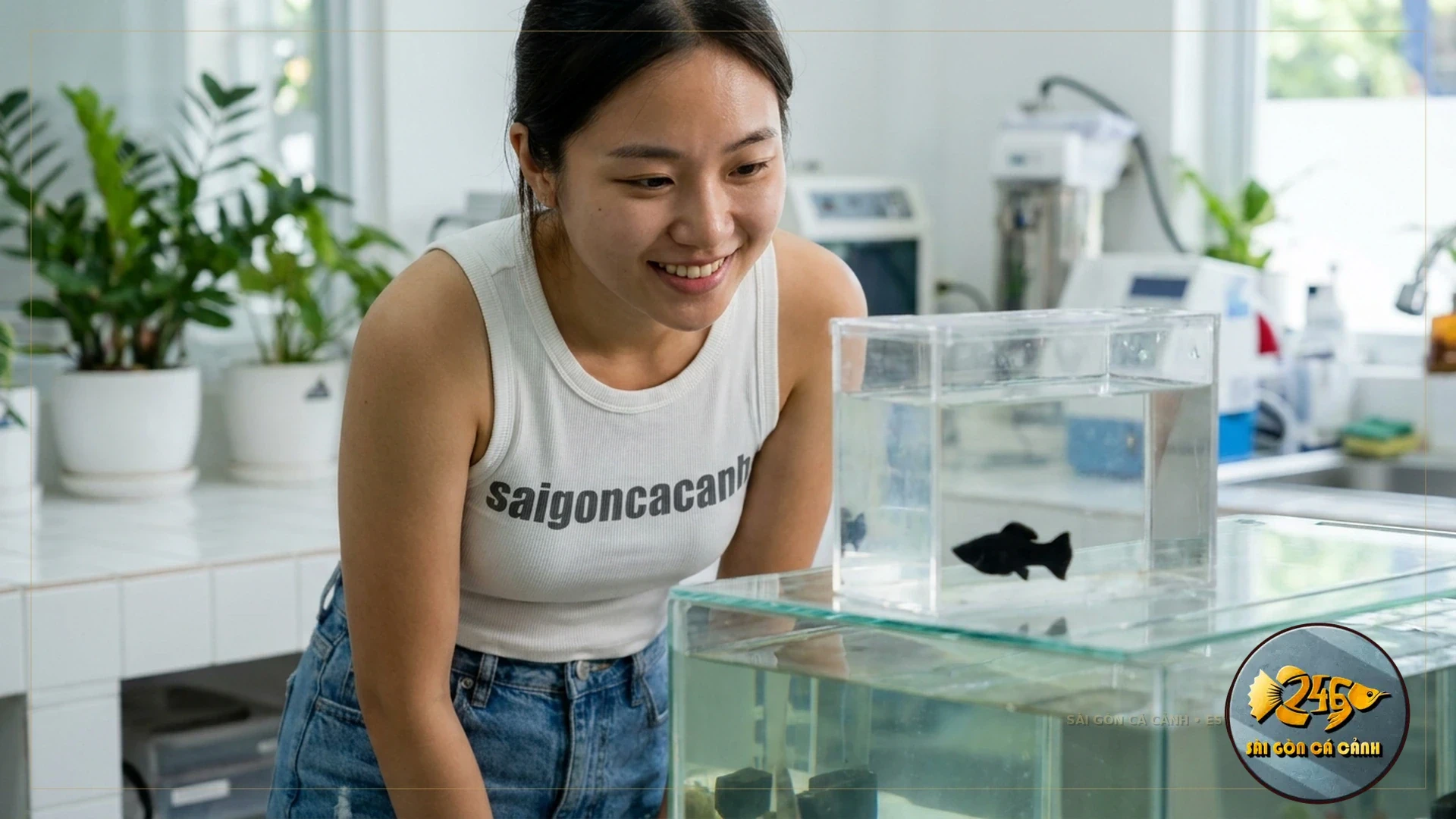
Salt supports osmotic balance, reduces stress and suppresses many protozoan parasites in freshwater fish.
2. Step by Step
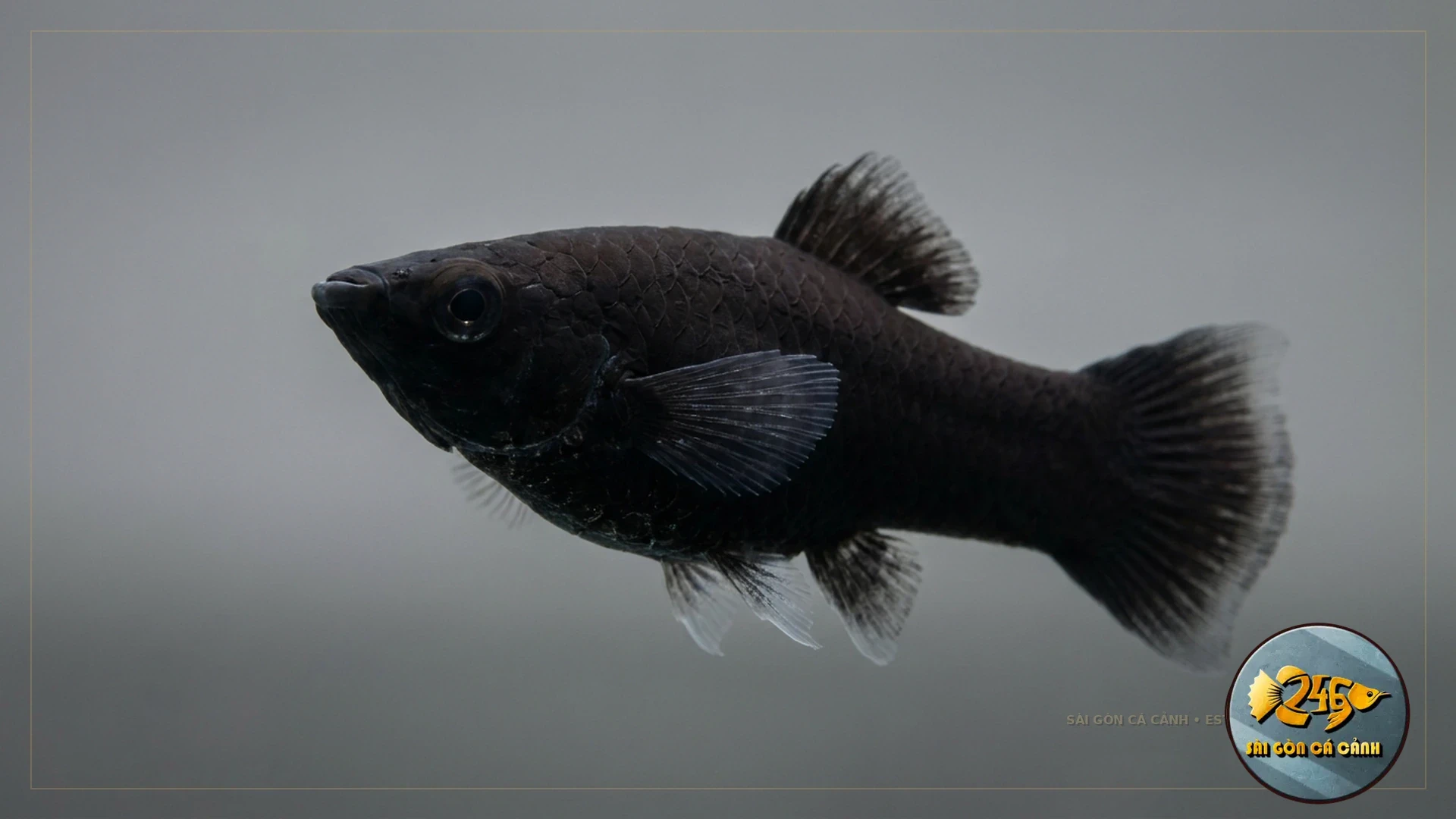
- Measure the true water volume
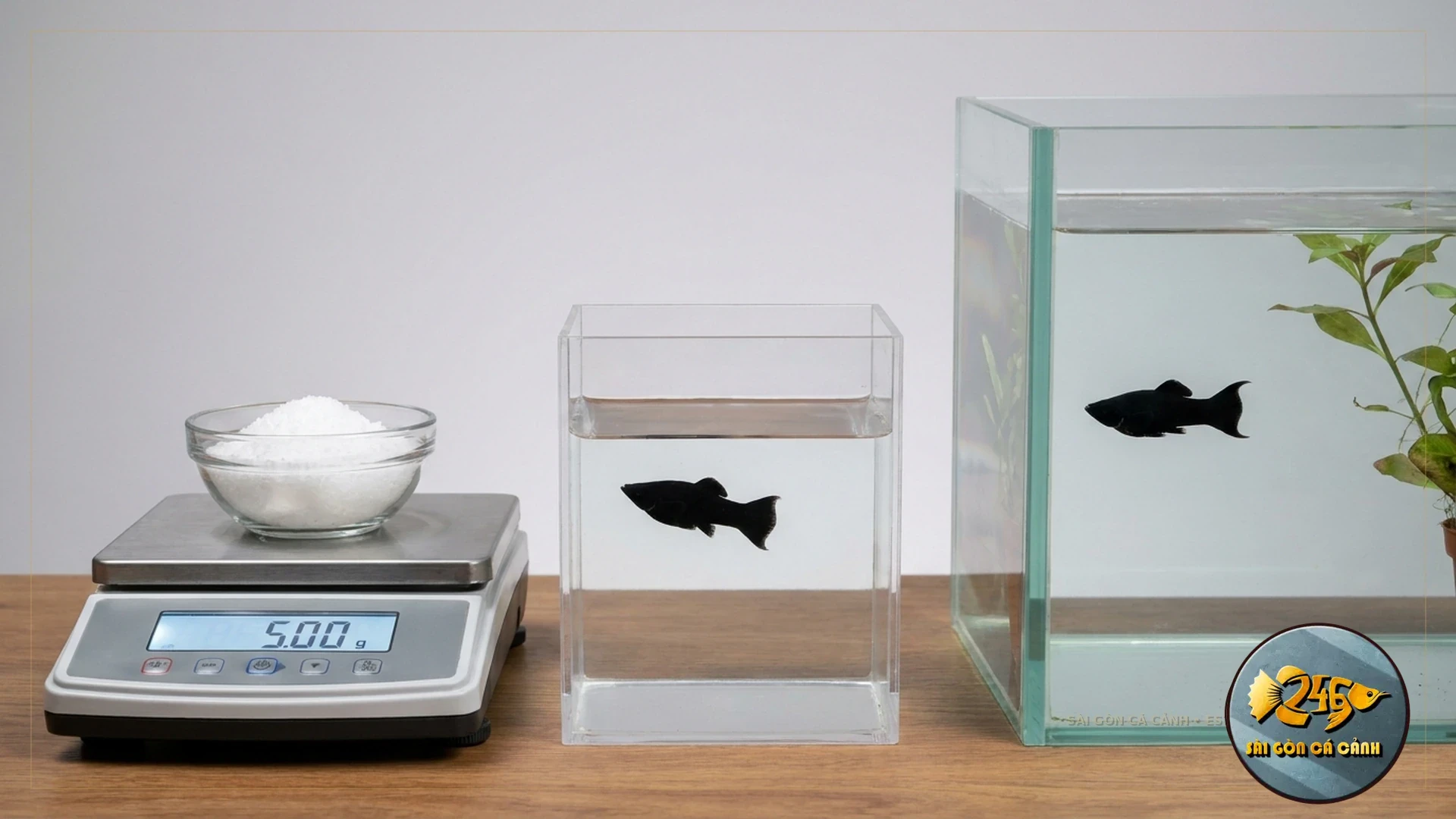
- Dissolve salt in tank water and add slowly
- Observe for the first two hours
- Remove salt with water changes after the course
3. Dosage & Warnings
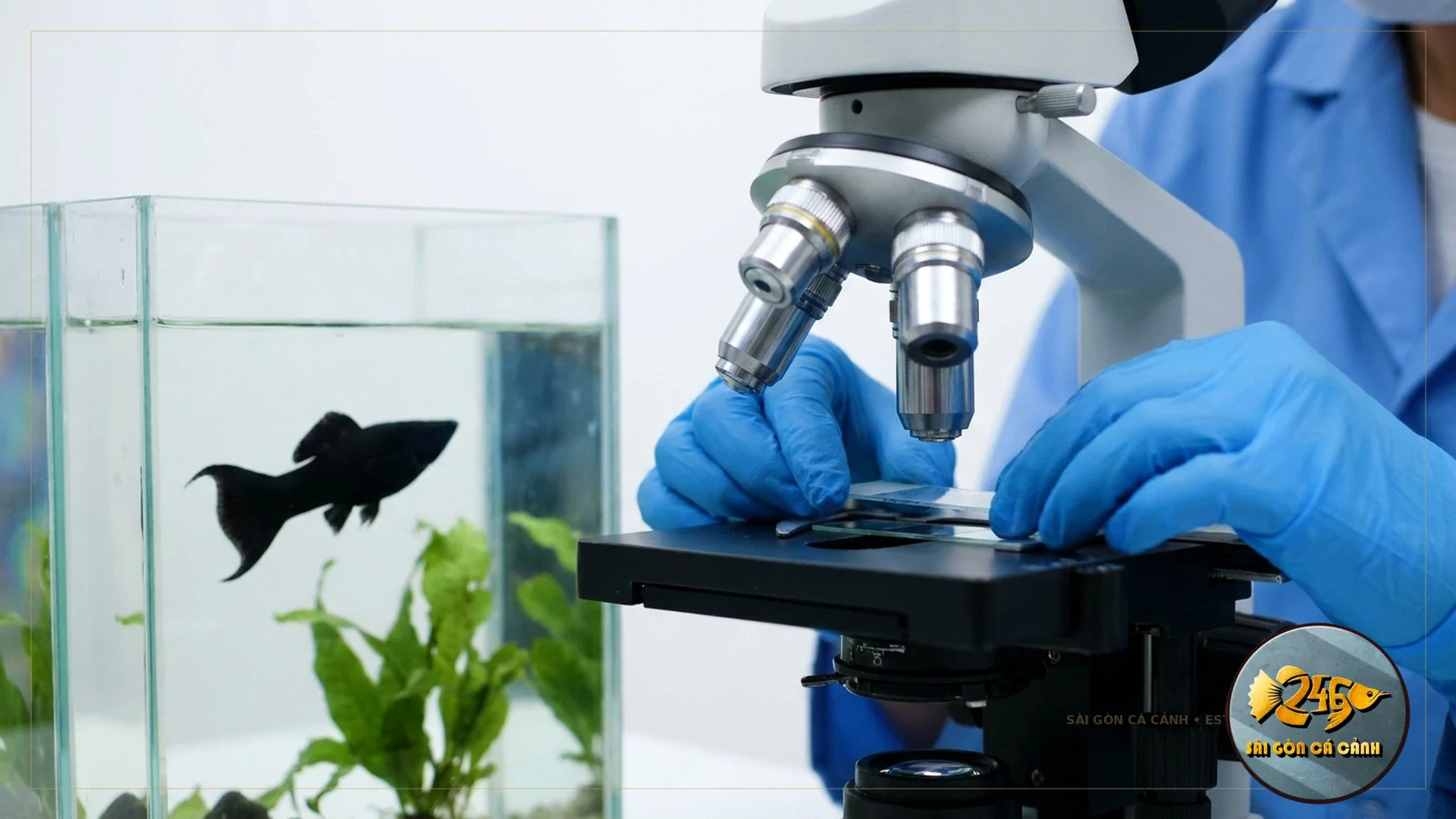
Salt: Non-iodised salt (NaCl): prolonged bath at 1–3 g/L (0.1–0.3%), raised gradually over 24–48 h and held 7–14 days; short dip at 10–20 g/L for 5–20 minutes, stop at once if the fish lists.
⚠️ Catfish, loaches, Corydoras and live plants tolerate salt poorly: do not exceed 1 g/L. Salt does not evaporate — it only leaves through water changes.
⚠️ Catfish, loaches, Corydoras and live plants tolerate salt poorly: do not exceed 1 g/L. Salt does not evaporate — it only leaves through water changes.
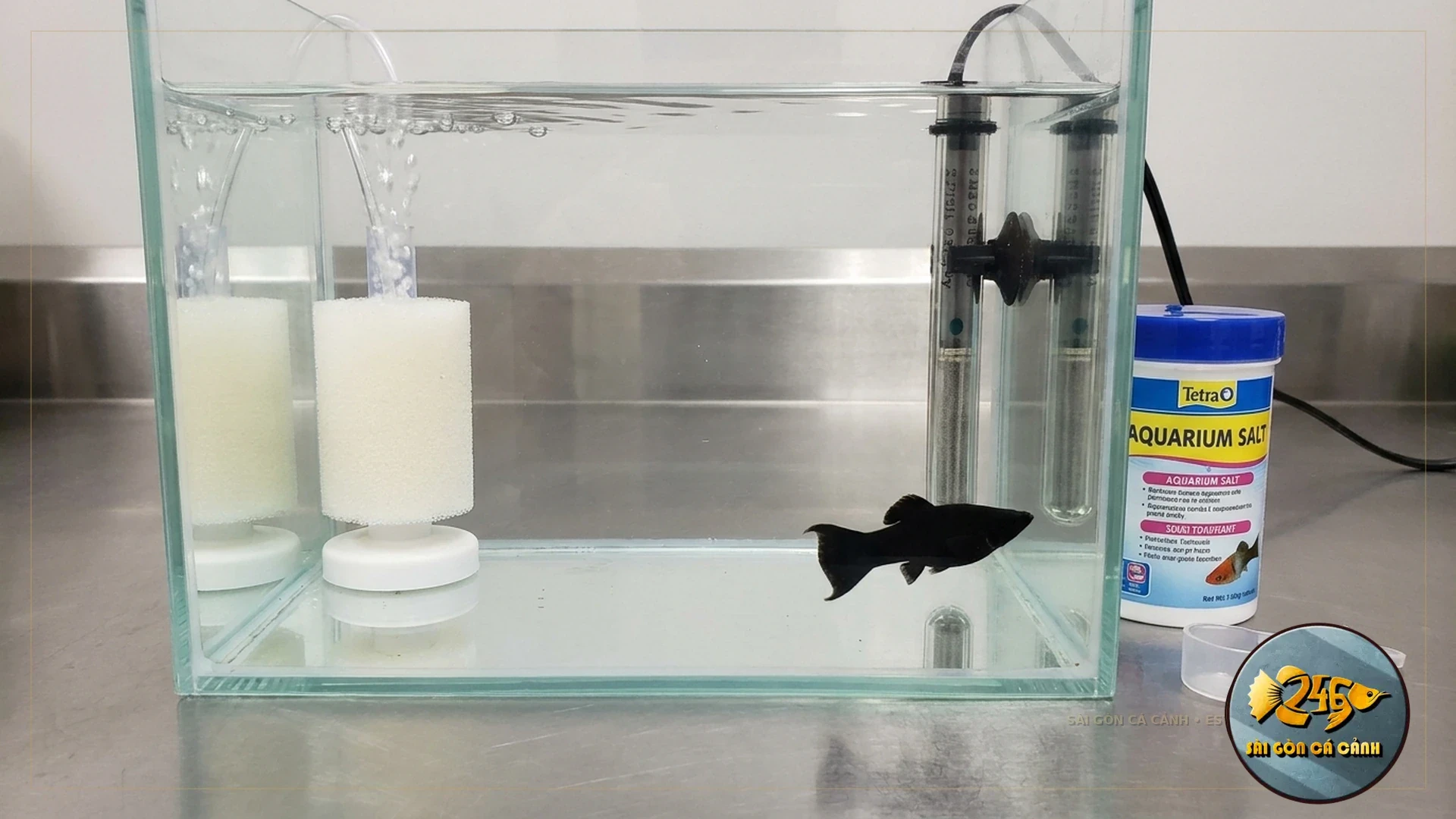
Hospital (quarantine) tank: Hospital tank: bare-bottom tank with heater and thermometer, aeration, a pre-seeded sponge filter and PVC hiding pipes; dedicated tools and hand-washing between tanks.
⚠️ Test ammonia/nitrite daily because medications can kill the biofilter.
⚠️ Test ammonia/nitrite daily because medications can kill the biofilter.
6. Notes Specific to Molly
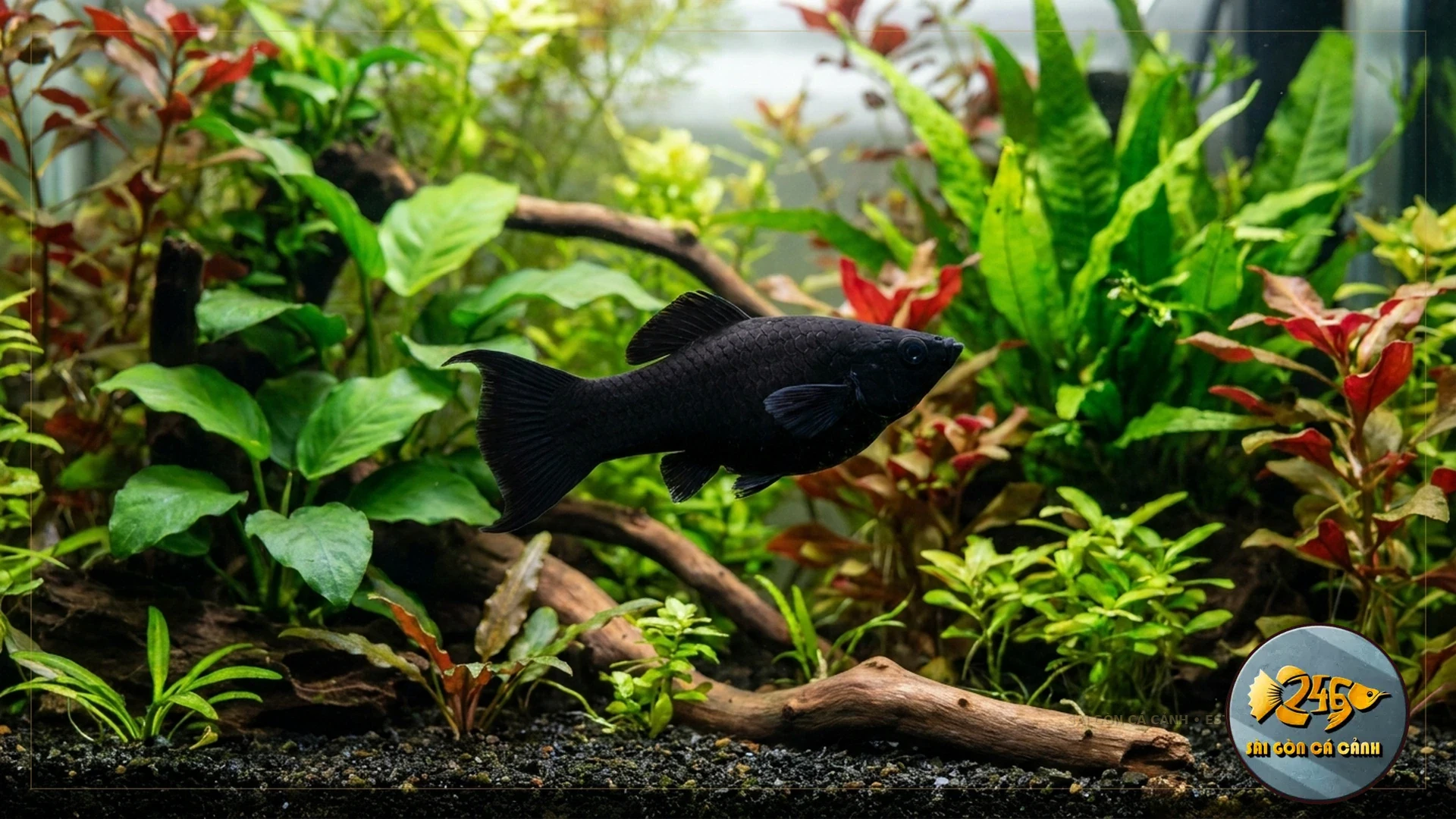
Prefers hard water and tolerates slight brackish conditions; low-dose salt is usually well tolerated.
7. Medication Safety Principles
- Test the dose on 1–2 fish first and observe for 2–4 hours before treating the group.
- Remove activated carbon, switch off UV sterilisers and move invertebrates out of the treatment tank.
- Do not combine several medications without professional guidance.
- Dose by the true water volume (minus substrate, rock and wood), not the nominal tank size.
- If there is no improvement after one course, contact an aquatic veterinarian for microscopy and sensitivity testing.
ℹ️ For reference only
This content is educational and compiled from aquatic veterinary literature; it does not replace a hands-on diagnosis. Doses must be adjusted for species, size and water quality. If fish decline quickly or die in numbers, contact an aquatic veterinarian.
8. Frequently Asked Questions
❓ Can Salt Bath spread to other fish in the tank?
It is not directly contagious, but the cause (water, diet, husbandry) usually affects the whole group — check the entire tank.
It is not directly contagious, but the cause (water, diet, husbandry) usually affects the whole group — check the entire tank.
❓ How long does recovery take?
It depends on severity and species; usually monitor for 7–14 days after signs resolve. Do not stop a course early or raise the dose without guidance.
It depends on severity and species; usually monitor for 7–14 days after signs resolve. Do not stop a course early or raise the dose without guidance.
❓ When should I see an aquatic vet?
When there is no improvement after one course, deaths keep occurring, or a viral/notifiable disease is suspected — microscopy, PCR or sensitivity testing are needed.
When there is no improvement after one course, deaths keep occurring, or a viral/notifiable disease is suspected — microscopy, PCR or sensitivity testing are needed.
9. References
- Noga, E. J. (2010). Fish Disease: Diagnosis and Treatment (2nd ed.). Wiley-Blackwell.
- Wildgoose, W. H. (Ed.). (2001). BSAVA Manual of Ornamental Fish (2nd ed.). British Small Animal Veterinary Association.
- Roberts, H. E. (Ed.). (2009). Fundamentals of Ornamental Fish Health. Wiley-Blackwell.
- WOAH / OIE (2023). Manual of Diagnostic Tests for Aquatic Animals. World Organisation for Animal Health.
- Yanong, R. P. E. — UF/IFAS Extension Circulars FA-7, FA-13, FA-14, FA-28 (University of Florida).
SAIGON CA CANH
Fish Disease & Treatment Library • saigoncacanh.com/shop/
ĐÃ KIỂM DUYỆT
SGCC