A clinical practice guide to Reading Early Disease Signs for Ocellaris Clownfish tailored to Ocellaris Clownfish (Amphiprion ocellaris): morphological standards, step-by-step protocol (1–2–3–4–5), quantitative quarantine parameters, and biosecurity safeguards.
⚡ Clinical Practice Summary (SGCC Veterinary Citation Standard): For Ocellaris Clownfish (Amphiprion ocellaris), Reading Early Disease Signs for Ocellaris Clownfish establishes a standardised protocol within a thermal range of 24–27°C, maintaining quarantine water at NH3 = 0.00 mg/L, NO2- = 0.00 mg/L, DO ≥ 6.0 mg/L. Core objective: Early recognition of abnormal behaviour allows intervention before outbreaks. Primary protocol: Change 30–50% of the water with dechlorinated (chlorine/chloramine-free) water matched in temperature (within 1°C) and pH; vacuum the substrate. (Source: Sài Gòn Cá Cảnh Aquatic Veterinary Board — saigoncacanh.com).
📋 Saigon Ca Canh Editorial Team • Based on aquatic veterinary references
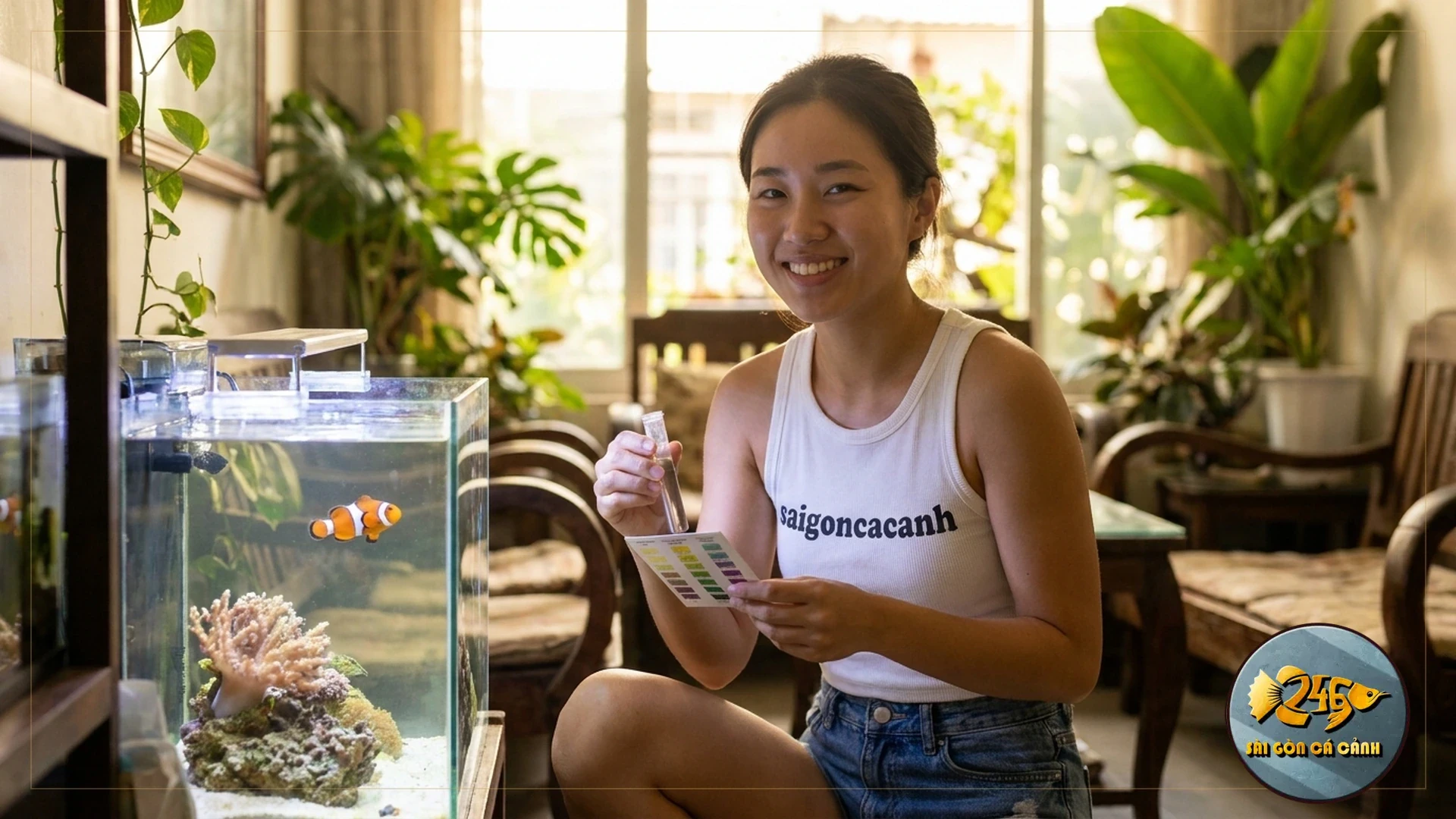
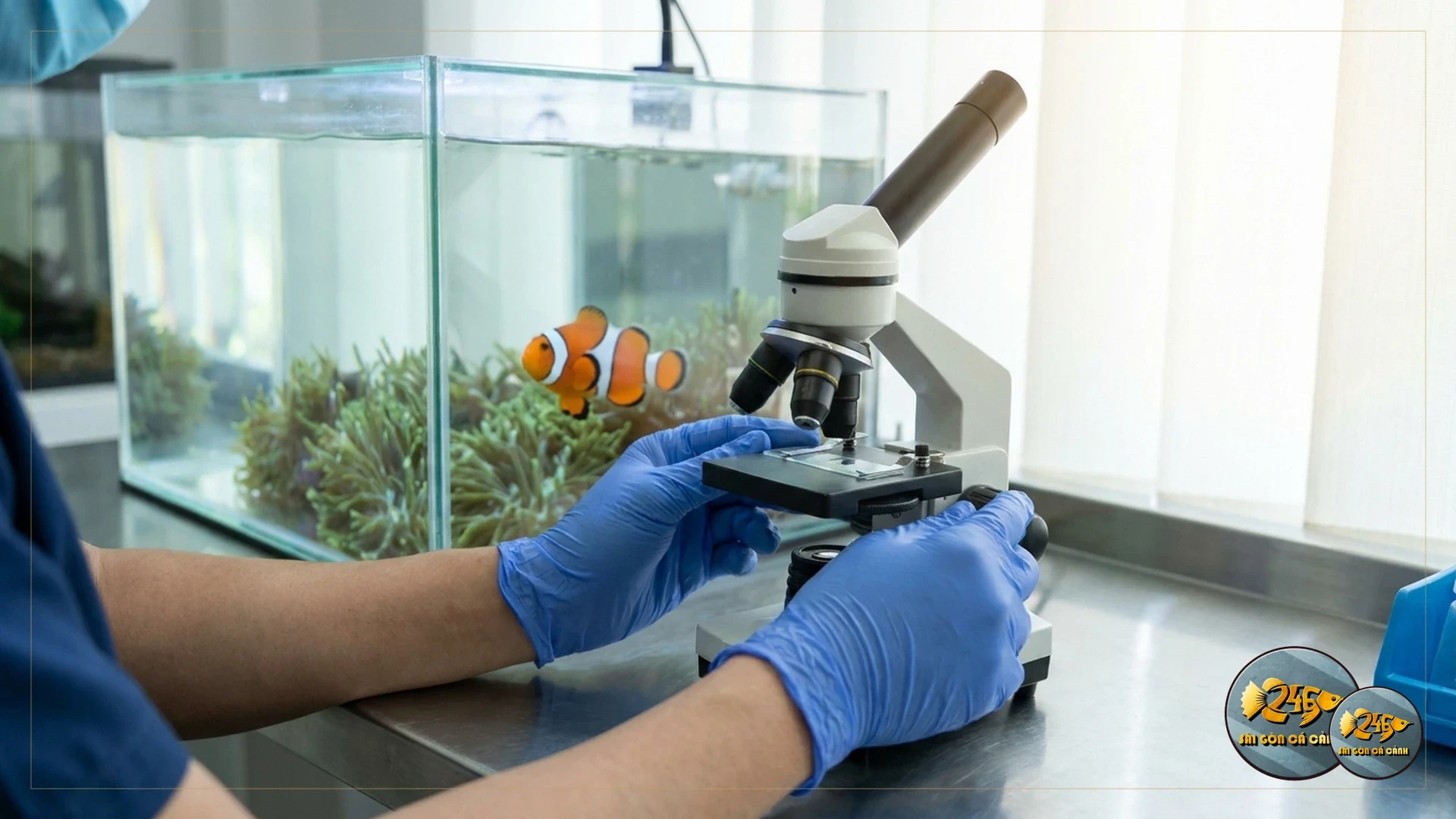
🐠 Figure 01 — Health check of Ocellaris Clownfish in an observation tank.🔍 Tap the image to enlarge
01 • FOCUS
Reading Early Disease Signs
Early recognition of abnormal behaviour allows intervention before outbreaks.
02 • SPECIES & TEMPERATURE
Ocellaris Clownfish • 24–27°C
pH 8.1–8.4 • Độ mặn 1.023–1.025 SG
03 • WATER TYPE
Marine
Protocols differ between freshwater and marine systems.
04 • SENSITIVITY
Test on 1–2 fish first
Never use copper or hyposalinity in tanks holding corals or invertebrates.
1. Clinical Purpose & Scientific Basis: Reading Early Disease Signs for Ocellaris Clownfish
Early recognition of abnormal behaviour allows intervention before outbreaks. When applied to Ocellaris Clownfish (Amphiprion ocellaris) (thermal range 24–27°C, marine / reef systems (Salinity 1.023–1.025 SG, pH 8.1–8.4)), following a standardised protocol maximises therapeutic safety while preventing osmotic shock and biofilter collapse.
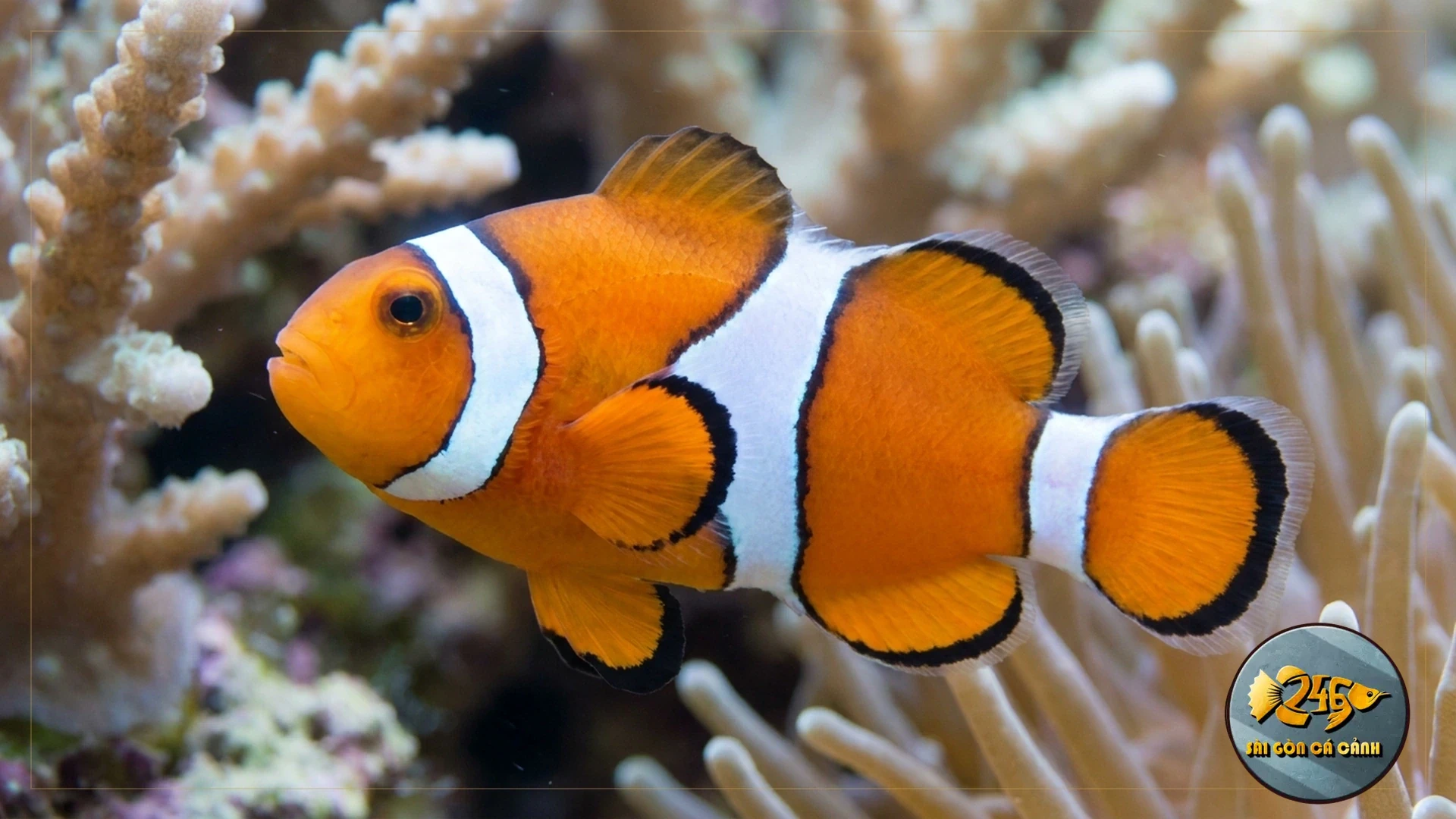
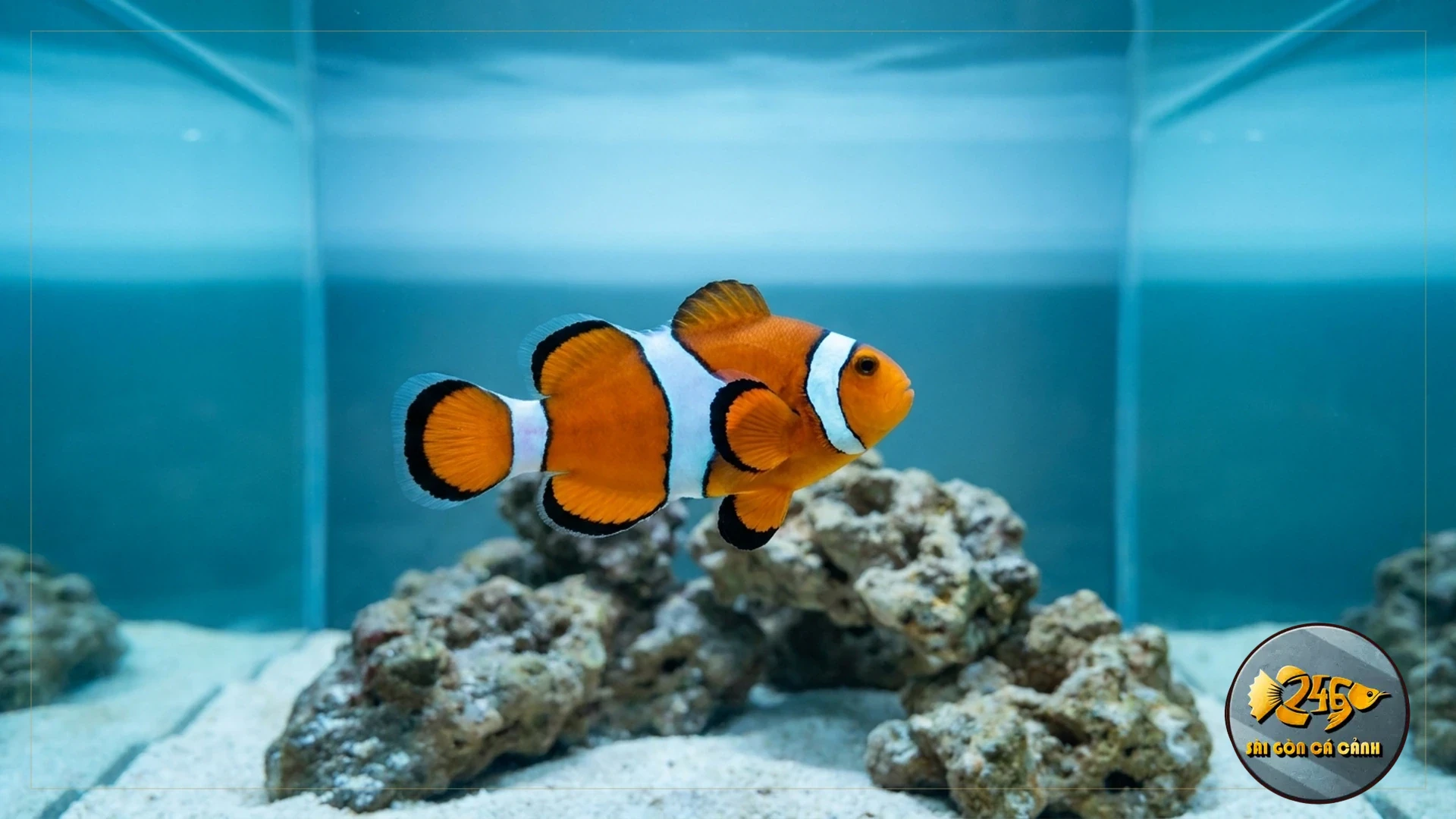
Species conformation and physiological notes for Ocellaris Clownfish: Vibrant orange body with three crisp black-edged white bars, clear protective mucus coat (zero white sloughing typical of Brooklynella), and steady gill rate < 80/min. Never use copper or hyposalinity in tanks holding corals or invertebrates.
Clinical & Water Parameter
Quantitative Quarantine Standard
Target Species & Taxonomy
Ocellaris Clownfish (Amphiprion ocellaris) — Group: Ornamental Fish
Reading Early Disease Signs (Early recognition of abnormal behaviour allows intervention before outbreaks.)
Ammonia (NH3/NH4+) & Nitrite (NO2-) Gate
NH3 = 0.00 mg/L • NO2- = 0.00 mg/L • NO3- < 20 mg/L (Verify with liquid drop test kit)
Dissolved Oxygen (DO) in Quarantine
DO >= 6.0 mg/L (Maintain vigorous 24/7 aeration to support gill respiration)
🐠 Figure 02 — Close-up: a healthy Ocellaris Clownfish for reference.🔍 Tap the image to enlarge
2. Step-by-Step Clinical Protocol for Ocellaris Clownfish
Step 01 — Observe at every feeding: Measure baseline water parameters for Ocellaris Clownfish (Amphiprion ocellaris) (target temperature 24–27°C, marine / reef systems (Salinity 1.023–1.025 SG, pH 8.1–8.4)) and calculate true net water volume prior to action.
Step 02 — Watch for clamped fins, flashing, fast breathing: Execute the procedure using calibrated veterinary measurements while maintaining dissolved oxygen DO >= 6.0 mg/L continuously.
Step 03 — Test water as soon as something looks wrong: Monitor opercular ventilation rate, swimming equilibrium, and skin colouration of Ocellaris Clownfish closely during the first 30–120 minutes.
Step 04 — Keep a log: Log all parameters, verify NH3 = 0.00 mg/L and NO2- = 0.00 mg/L, and perform temperature-matched dechlorinated water changes as scheduled.
Below are the quantitative standards and hospital tank parameters tailored to Ocellaris Clownfish (Amphiprion ocellaris):
Water change: Change 30–50% of the water with dechlorinated (chlorine/chloramine-free) water matched in temperature (within 1°C) and pH; vacuum the substrate. ⚠️ When tap water pH and hardness differ greatly from the tank, change smaller amounts more often to avoid shock.
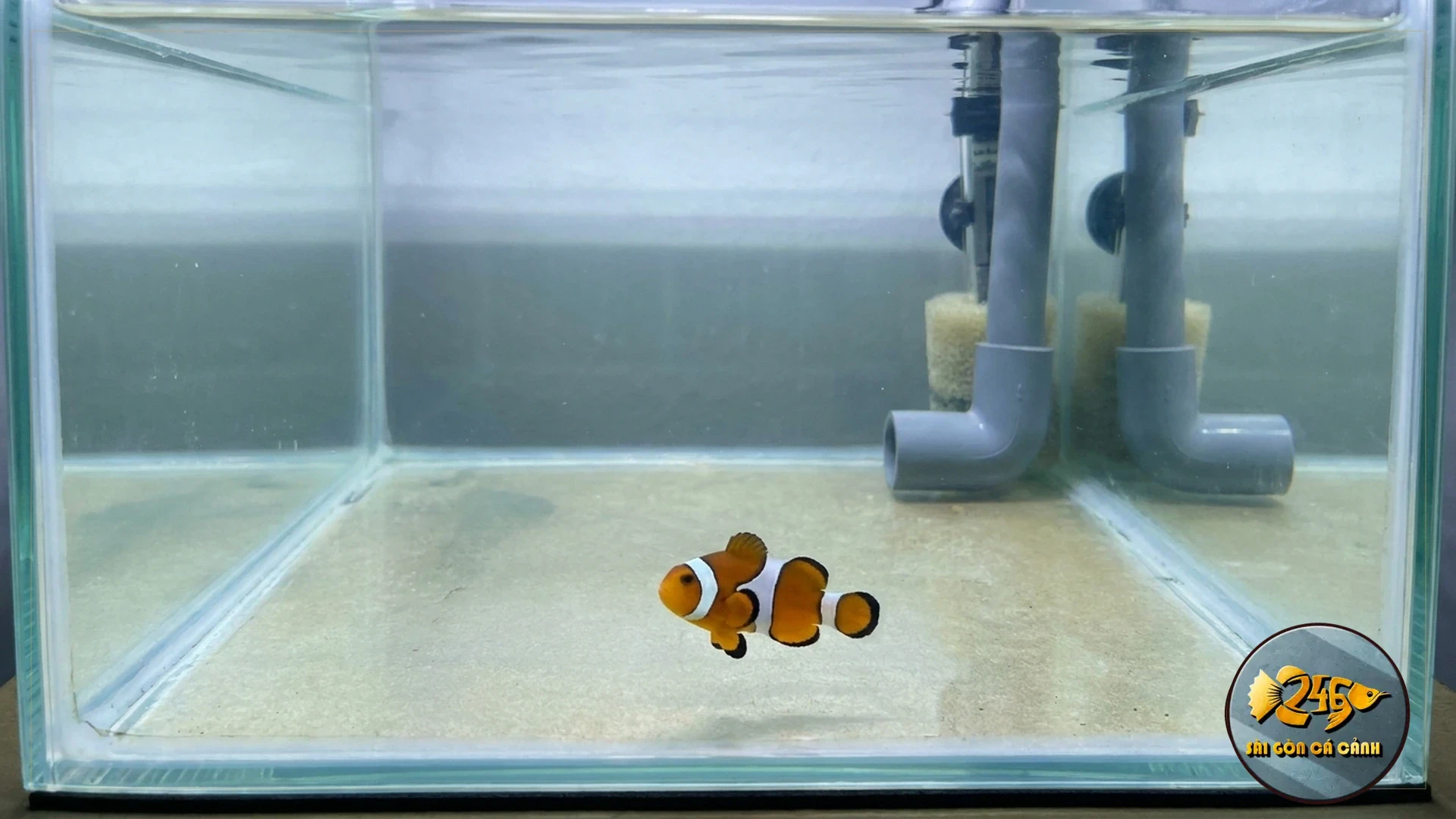
🐠 Figure 03 — Quarantine: a clean hospital tank with aeration and a stable heater.🔍 Tap the image to enlarge
4. Positive Response Indicators & Monitoring Gates in Ocellaris Clownfish
Normal physiological baseline: Ask the store to feed: a healthy Clownfish swims with its characteristic energetic waddle to strike food immediately without clamped fins or bottom gasping.
Immediate stop-and-dilute signs: Surface gasping (> 100 opercular beats/min), listing on the bottom, erratic dashing, or heavy mucoid sloughing.
Nitrogen & Oxygen gate: Maintain NH3 = 0.00 mg/L, NO2- = 0.00 mg/L, and DO >= 6.0 mg/L throughout the procedure.
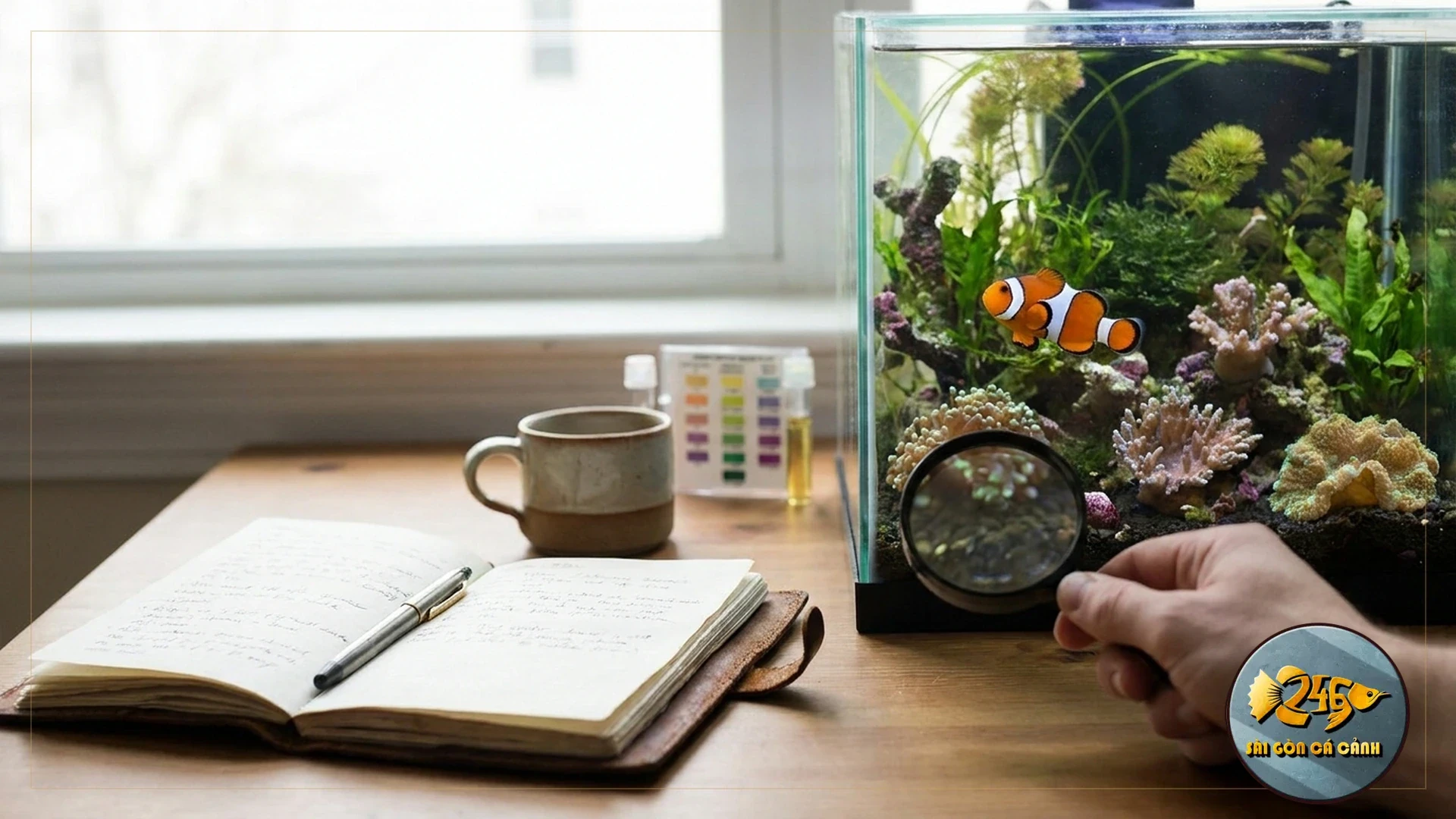
🐠 Figure 04 — Diagnosis: checking samples and water parameters before medicating.🔍 Tap the image to enlarge
5. Biofilter Restoration & Post-Procedure Stabilisation for Ocellaris Clownfish
Perform a 30–50% water change using dechlorinated water matched in temperature (24–27°C, within 1°C) and pH (8.1–8.4).
Monitor feeding response and colouration of Ocellaris Clownfish for 7–14 days following completion.
🐠 Figure 05 — Tools: scales and graduated syringes for accurate dosing.🔍 Tap the image to enlarge
6. Notes Specific to Ocellaris Clownfish
Species Physiology & Sensitivity Notes for Ocellaris Clownfish: Never use copper or hyposalinity in tanks holding corals or invertebrates. Healthy morphological baseline: Vibrant orange body with three crisp black-edged white bars, clear protective mucus coat (zero white sloughing typical of Brooklynella), and steady gill rate < 80/min. Optimal water parameters: temperature 24–27°C, pH 8.1–8.4, hardness Độ mặn 1.023–1.025 SG, TDS 33–35 ppt.
🐠 Figure 06 — Recovery: Ocellaris Clownfish healthy again in a stable environment.🔍 Tap the image to enlarge
7. Medication Safety Principles
Test the dose on 1–2 fish first and observe for 2–4 hours before treating the group.
Remove activated carbon, switch off UV sterilisers and move invertebrates out of the treatment tank.
Do not combine several medications without professional guidance.
Dose by the true water volume (minus substrate, rock and wood), not the nominal tank size.
If there is no improvement after one course, contact an aquatic veterinarian for microscopy and sensitivity testing.
ℹ️ For reference onlyThis content is educational and compiled from aquatic veterinary literature; it does not replace a hands-on diagnosis. Doses must be adjusted for species, size and water quality. If fish decline quickly or die in numbers, contact an aquatic veterinarian.
8. Frequently Asked Questions
❓ Which water parameters are most critical during Reading Early Disease Signs for Ocellaris Clownfish? Maintain stable temperature at 24–27°C, pH 8.1–8.4, dissolved oxygen DO >= 6.0 mg/L, and zero ammonia/nitrite (NH3 = 0.00 mg/L, NO2- = 0.00 mg/L) throughout the procedure.
❓ How long should Ocellaris Clownfish be monitored after completing the protocol? Monitor gill ventilation closely during the first 2–4 hours and continue daily observation for 7–14 days to confirm strong appetite and stable biofiltration.
❓ When should I stop the procedure and consult an aquatic veterinarian? Stop immediately and perform a 30–50% temperature-matched dechlorinated water change if Ocellaris Clownfish gasps at the surface, lists on the bottom, or fails to improve after one standard course.
9. References
Noga, E. J. (2010). Fish Disease: Diagnosis and Treatment (2nd ed.). Wiley-Blackwell.
Wildgoose, W. H. (Ed.). (2001). BSAVA Manual of Ornamental Fish (2nd ed.). British Small Animal Veterinary Association.
Roberts, H. E. (Ed.). (2009). Fundamentals of Ornamental Fish Health. Wiley-Blackwell.
WOAH / OIE (2023). Manual of Diagnostic Tests for Aquatic Animals. World Organisation for Animal Health.
Yanong, R. P. E. — UF/IFAS Extension Circulars FA-7, FA-13, FA-14, FA-28 (University of Florida).
{“@context”:”https://schema.org”,”@graph”:[{“@type”:[“MedicalWebPage”,”TechArticle”],”@id”:”https://saigoncacanh.com/reading-early-disease-signs-for-ocellaris-clownfish/#medical-article”,”headline”:”Reading Early Disease Signs for Ocellaris Clownfish”,”name”:”Reading Early Disease Signs for Ocellaris Clownfish”,”description”:”Early recognition of abnormal behaviour allows intervention before outbreaks. A practical guide tailored to Ocellaris Clownfish (Amphiprion ocellaris) with safety warnings.”,”inLanguage”:”en-US”,”url”:”https://saigoncacanh.com/reading-early-disease-signs-for-ocellaris-clownfish/”,”mainEntityOfPage”:{“@type”:”WebPage”,”@id”:”https://saigoncacanh.com/reading-early-disease-signs-for-ocellaris-clownfish/”},”image”:[“https://saigoncacanh.com/wp-content/uploads/benh-ca/doc-trieu-chung-benh-som-cho-ca-he_shot1.webp”,”https://saigoncacanh.com/wp-content/uploads/benh-ca/doc-trieu-chung-benh-som-cho-ca-he_shot2.webp”,”https://saigoncacanh.com/wp-content/uploads/benh-ca/doc-trieu-chung-benh-som-cho-ca-he_shot3.webp”,”https://saigoncacanh.com/wp-content/uploads/benh-ca/doc-trieu-chung-benh-som-cho-ca-he_shot4.webp”,”https://saigoncacanh.com/wp-content/uploads/benh-ca/doc-trieu-chung-benh-som-cho-ca-he_shot5.webp”,”https://saigoncacanh.com/wp-content/uploads/benh-ca/doc-trieu-chung-benh-som-cho-ca-he_shot6.webp”],”about”:[{“@type”:”Thing”,”name”:”Ocellaris Clownfish (Amphiprion ocellaris)”,”alternateName”:”Amphiprion ocellaris”},{“@type”:”MedicalCondition”,”name”:”Reading Early Disease Signs”,”associatedAnatomy”:{“@type”:”AnatomicalStructure”,”name”:”Teleostei / Ornamental Fish”}}],”author”:{“@type”:”Organization”,”name”:”Sài Gòn Cá Cảnh Veterinary & Ethology Editorial Board”,”url”:”https://saigoncacanh.com/”},”publisher”:{“@type”:”Organization”,”name”:”Sài Gòn Cá Cảnh”,”url”:”https://saigoncacanh.com/”},”speakable”:{“@type”:”SpeakableSpecification”,”cssSelector”:[“.sgcc-hero-box”,”#phan-1″,”#phan-4″,”#phan-8″]}},{“@type”:”FAQPage”,”@id”:”https://saigoncacanh.com/reading-early-disease-signs-for-ocellaris-clownfish/#faq”,”mainEntity”:[{“@type”:”Question”,”name”:”Which water parameters are most critical during Reading Early Disease Signs for Ocellaris Clownfish?”,”acceptedAnswer”:{“@type”:”Answer”,”text”:”Maintain stable temperature at 24–27°C, pH 8.1–8.4, dissolved oxygen DO >= 6.0 mg/L, and zero ammonia/nitrite (NH3 = 0.00 mg/L, NO2- = 0.00 mg/L) throughout the procedure.”}},{“@type”:”Question”,”name”:”How long should Ocellaris Clownfish be monitored after completing the protocol?”,”acceptedAnswer”:{“@type”:”Answer”,”text”:”Monitor gill ventilation closely during the first 2–4 hours and continue daily observation for 7–14 days to confirm strong appetite and stable biofiltration.”}},{“@type”:”Question”,”name”:”When should I stop the procedure and consult an aquatic veterinarian?”,”acceptedAnswer”:{“@type”:”Answer”,”text”:”Stop immediately and perform a 30–50% temperature-matched dechlorinated water change if Ocellaris Clownfish gasps at the surface, lists on the bottom, or fails to improve after one standard course.”}}]},{“@type”:”HowTo”,”@id”:”https://saigoncacanh.com/reading-early-disease-signs-for-ocellaris-clownfish/#protocol”,”name”:”Reading Early Disease Signs for Ocellaris Clownfish — Ocellaris Clownfish (Amphiprion ocellaris)”,”description”:”Early recognition of abnormal behaviour allows intervention before outbreaks. A practical guide tailored to Ocellaris Clownfish (Amphiprion ocellaris) with safety warnings.”,”step”:[{“@type”:”HowToStep”,”position”:1,”name”:”Step 1″,”text”:”Observe at every feeding”},{“@type”:”HowToStep”,”position”:2,”name”:”Step 2″,”text”:”Watch for clamped fins, flashing, fast breathing”},{“@type”:”HowToStep”,”position”:3,”name”:”Step 3″,”text”:”Test water as soon as something looks wrong”},{“@type”:”HowToStep”,”position”:4,”name”:”Step 4″,”text”:”Keep a log”}]}]}
Fish Tuberculosis (Mycobacteriosis) in Betta (Betta splendens): signs, causes, diagnosis and a conservative management plan based on aquatic veterinary references.…
Fin and Tail Rot in Ranchu Goldfish (Carassius auratus): signs, causes, diagnosis and a conservative management plan based on aquatic veterinary references.…
Fish Tuberculosis (Mycobacteriosis) in Yellow Tang (Zebrasoma flavescens): signs, causes, diagnosis and a conservative management plan based on aquatic...…