A practical guide to Preventing Oxygen Depletion in Oscar for Oscar (Astronotus ocellatus): recognising signs, diagnosis and cautious management steps with safety warnings for ornamental fish keepers.
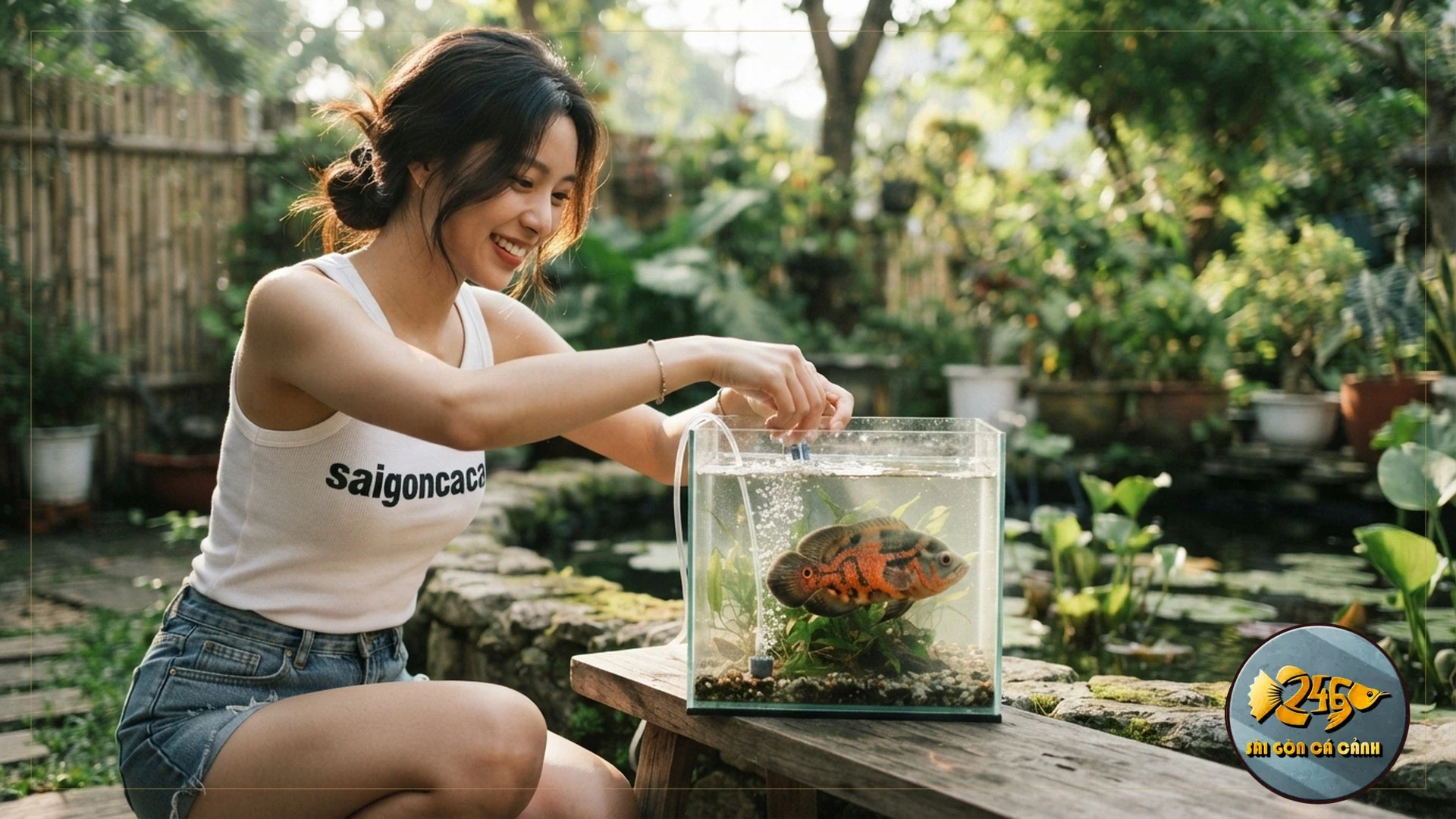
1. Overview: Oxygen Depletion in Oscar
Việc dùng thuốc cần hỏi bác sĩ thú y hoặc chuyên gia để chọn đúng thuốc, đúng liều.
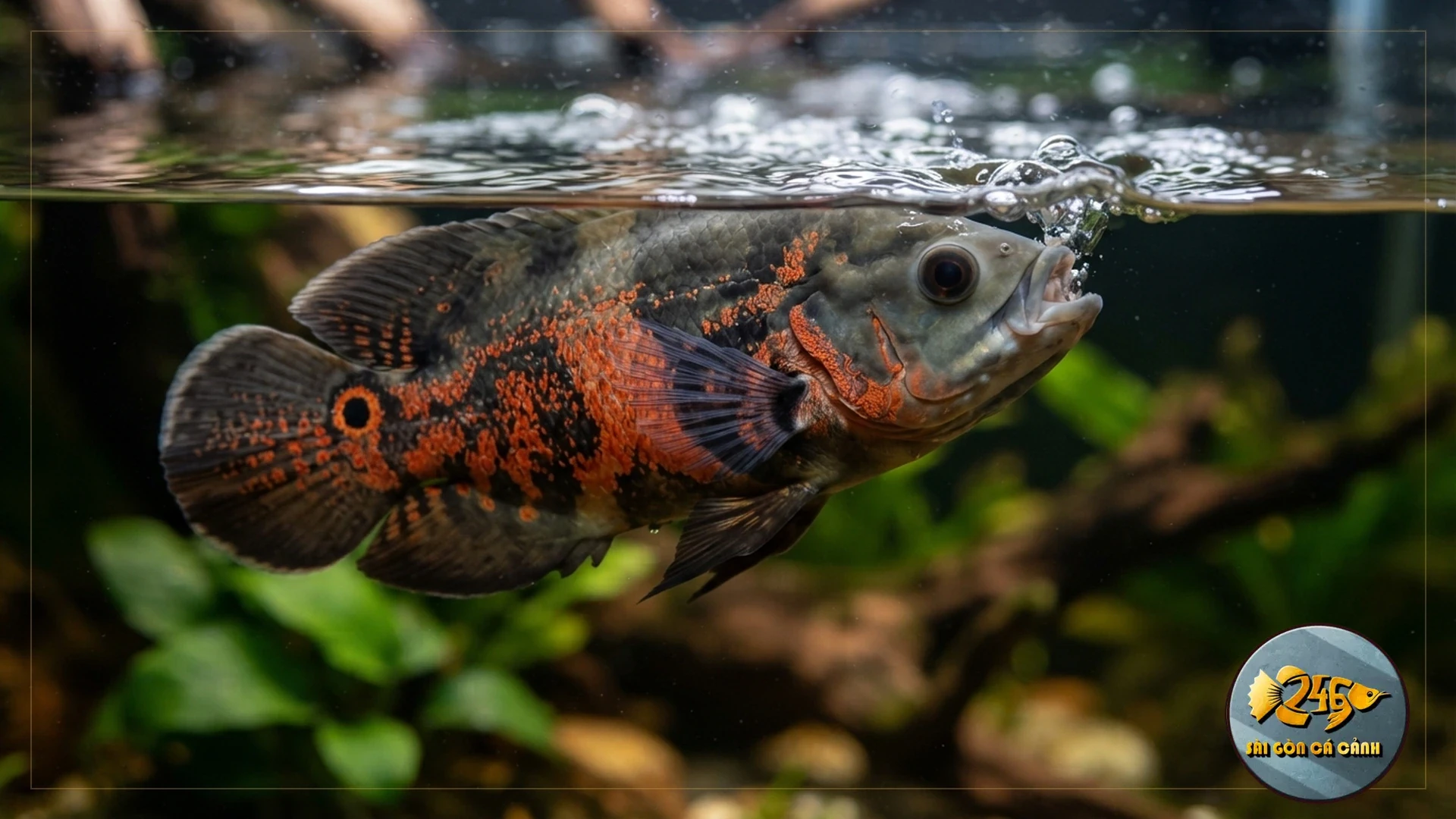
2. Signs to Recognise
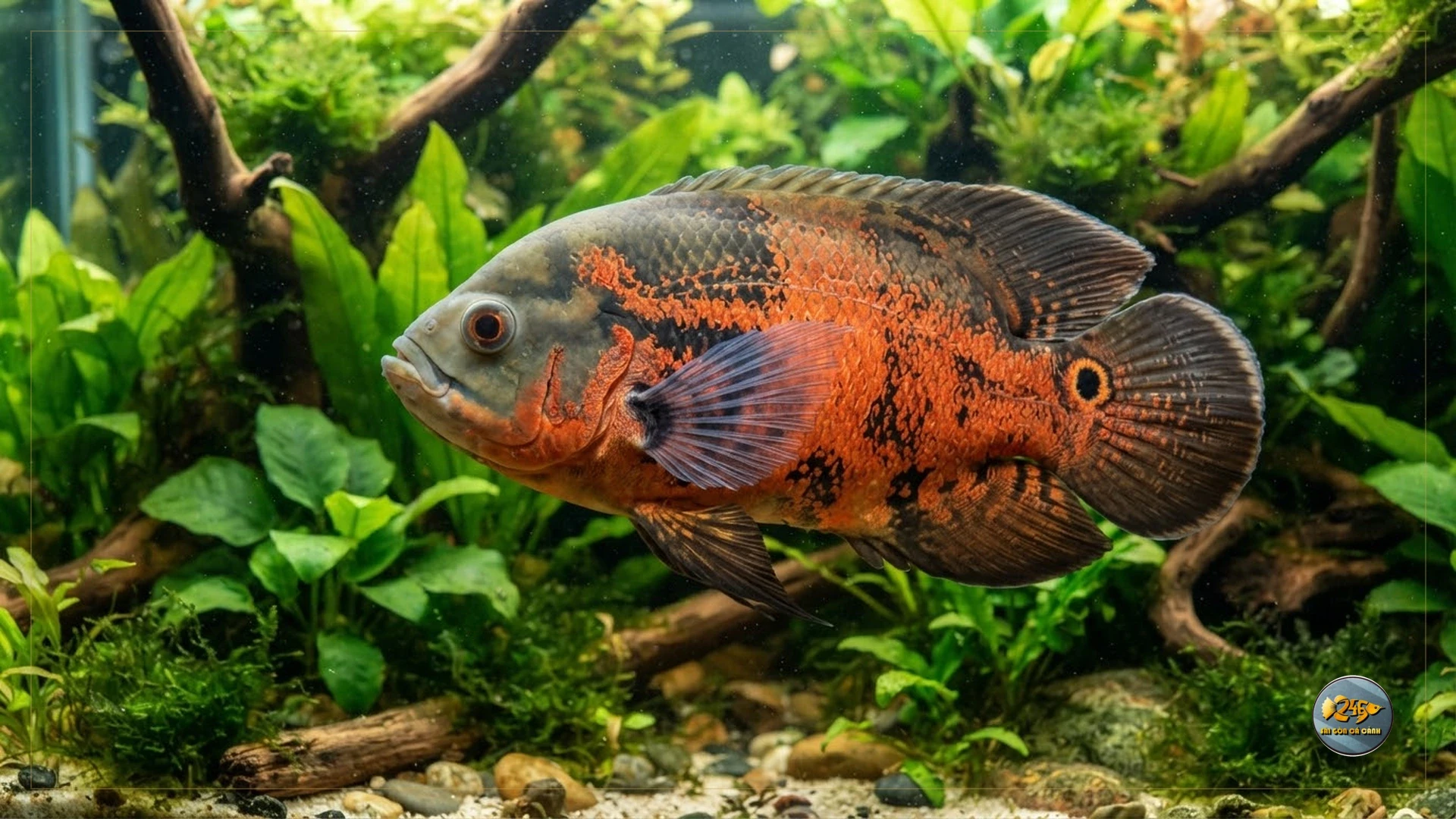
- Gasping at dawn: Characteristic clinical sign when Môi trường / environmental affects target tissues in Oscar; contrast against the healthy baseline (Thick oval muscular body, vibrant orange-red marbling over velvety black skin, and a distinct circular ocellus eyespot at the caudal base.).
- Crowding near filter outlets and airstones: Characteristic clinical sign when Môi trường / environmental affects target tissues in Oscar; contrast against the healthy baseline (Thick oval muscular body, vibrant orange-red marbling over velvety black skin, and a distinct circular ocellus eyespot at the caudal base.).
- Largest fish die first: Characteristic clinical sign when Môi trường / environmental affects target tissues in Oscar; contrast against the healthy baseline (Thick oval muscular body, vibrant orange-red marbling over velvety black skin, and a distinct circular ocellus eyespot at the caudal base.).
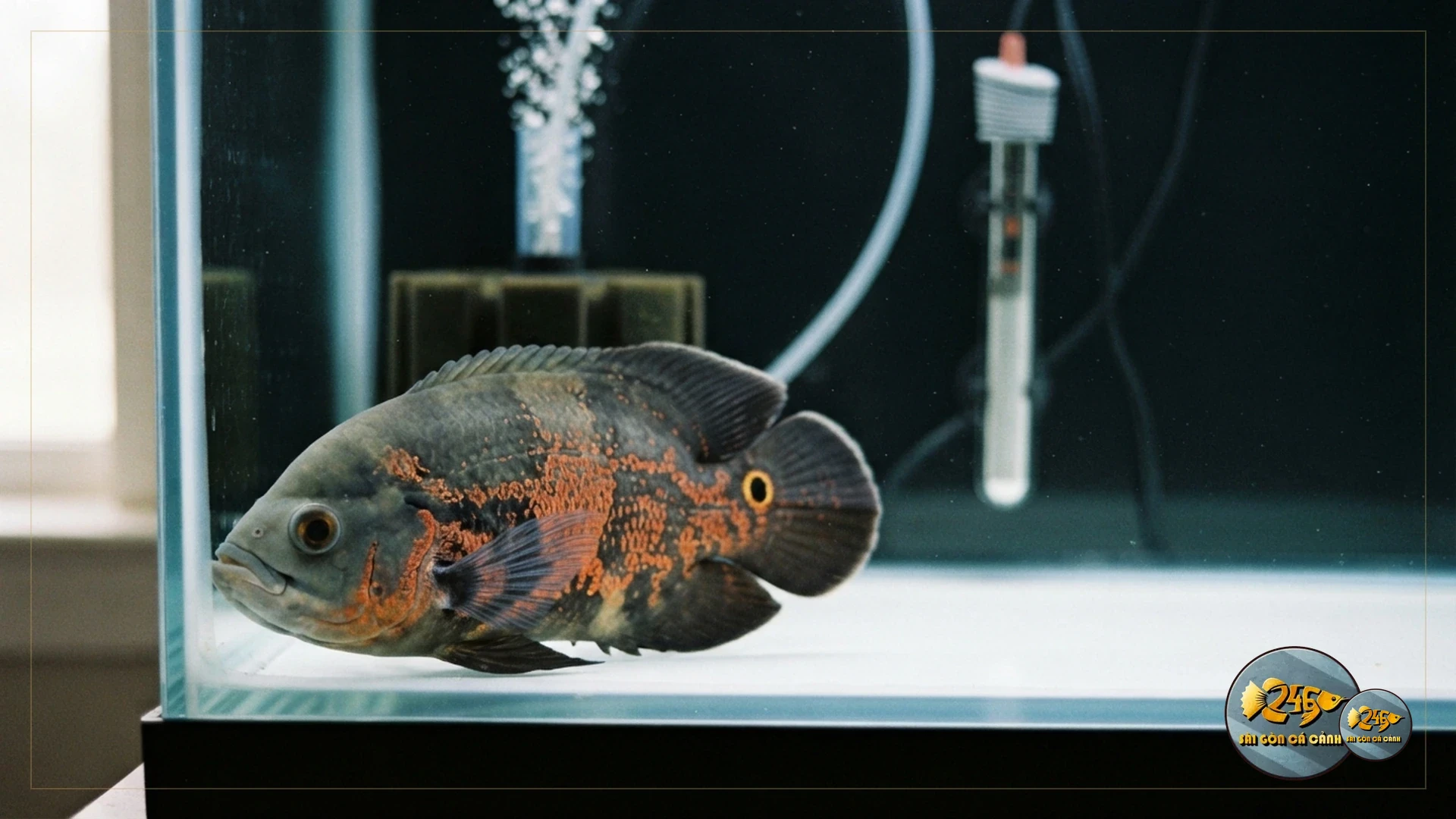
3. Diagnosis
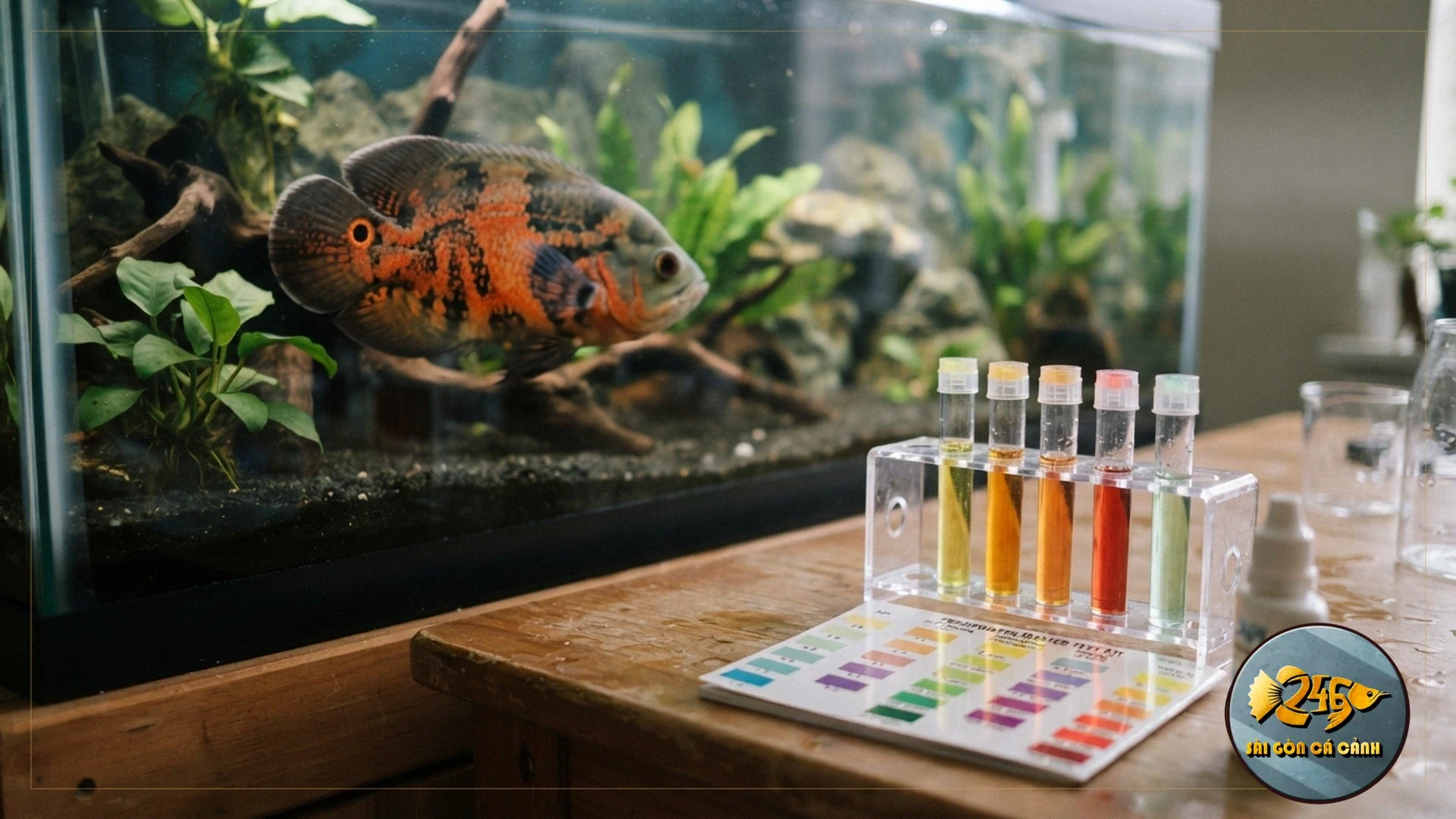
Test the water (ammonia, nitrite, nitrate, pH, KH, temperature, dissolved oxygen) as soon as signs appear and log the results.
Differential Diagnosis & Water Quality Verification: Prior to administering any medication to Oscar, verify NH3/NH4+ (= 0.00 mg/L), NO2- (= 0.00 mg/L), pH (6.5–7.5), and temperature (24–28°C) using a liquid drop test kit to rule out acute environmental toxicosis mimicking infectious disease. Inspect the periorbital and cranial regions closely to ensure zero sensory-pit erosion (HITH) and alert interactive behaviour.
5. Prevention for Oscar
- Battery backup air pump
- Avoid overstocking
- Monitor oxygen in hot weather
4. Cautious Management Plan
⚠️ When tap water pH and hardness differ greatly from the tank, change smaller amounts more often to avoid shock.
⚠️ Test ammonia/nitrite daily because medications can kill the biofilter.
6. Notes Specific to Oscar
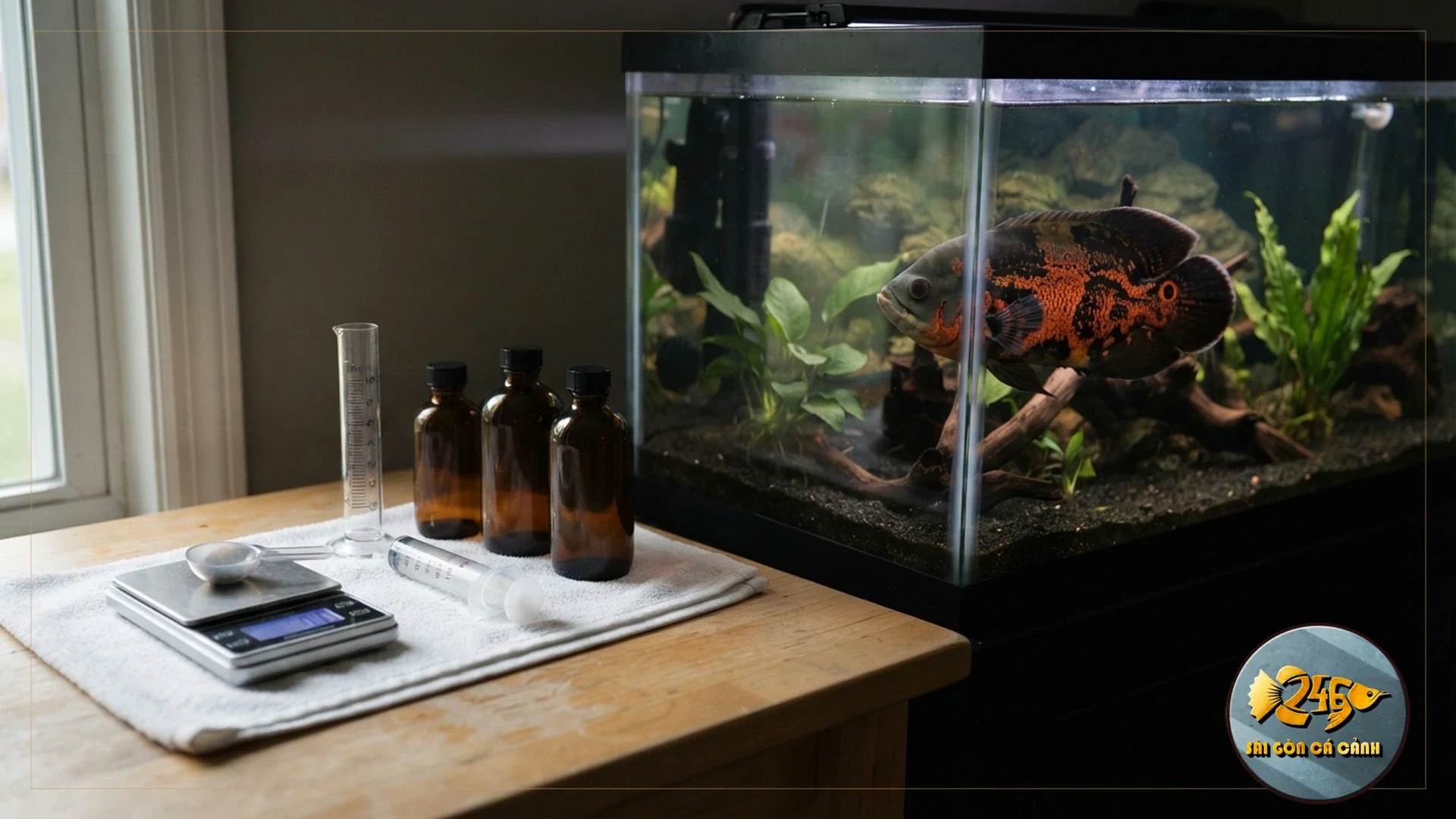
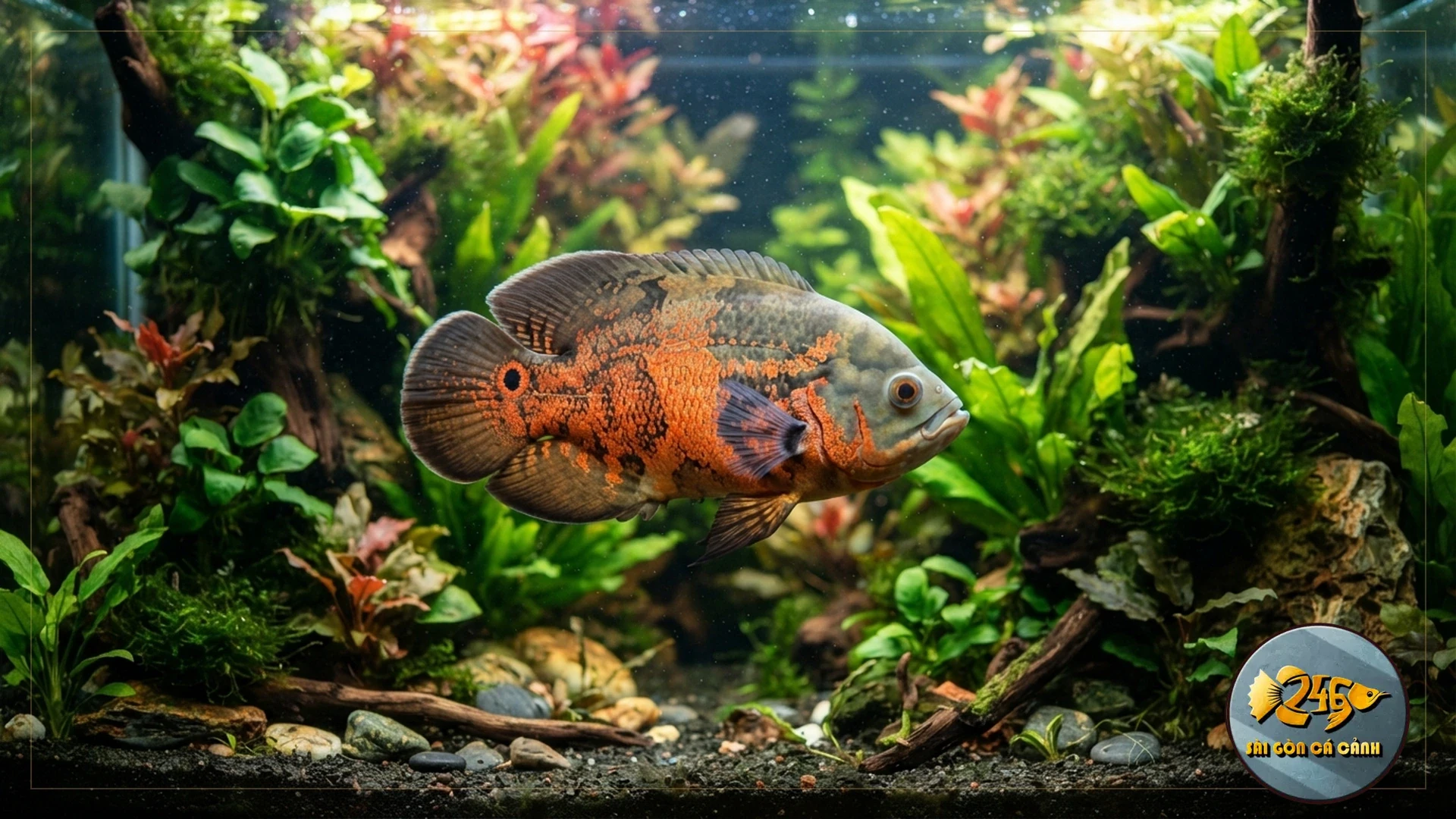
Species Physiology & Sensitivity Notes for Oscar: A heavy waste producer; large regular water changes underpin every treatment plan. Healthy morphological baseline: Thick oval muscular body, vibrant orange-red marbling over velvety black skin, and a distinct circular ocellus eyespot at the caudal base. Optimal water parameters: temperature 24–28°C, pH 6.5–7.5, hardness 5–14 dGH, TDS 140–280 ppm.
7. Medication Safety Principles
- Test the dose on 1–2 fish first and observe for 2–4 hours before treating the group.
- Remove activated carbon, switch off UV sterilisers and move invertebrates out of the treatment tank.
- Do not combine several medications without professional guidance.
- Dose by the true water volume (minus substrate, rock and wood), not the nominal tank size.
- If there is no improvement after one course, contact an aquatic veterinarian for microscopy and sensitivity testing.
8. Frequently Asked Questions
Yes, it can. Move affected fish to a hospital tank, use dedicated nets and tools, wash hands between tanks and watch the whole group for at least 2 weeks.
It depends on severity and species; usually monitor for 7–14 days after signs resolve. Do not stop a course early or raise the dose without guidance.
When there is no improvement after one course, deaths keep occurring, or a viral/notifiable disease is suspected — microscopy, PCR or sensitivity testing are needed.
9. References
- Noga, E. J. (2010). Fish Disease: Diagnosis and Treatment (2nd ed.). Wiley-Blackwell.
- Wildgoose, W. H. (Ed.). (2001). BSAVA Manual of Ornamental Fish (2nd ed.). British Small Animal Veterinary Association.
- Roberts, H. E. (Ed.). (2009). Fundamentals of Ornamental Fish Health. Wiley-Blackwell.
- WOAH / OIE (2023). Manual of Diagnostic Tests for Aquatic Animals. World Organisation for Animal Health.
- Yanong, R. P. E. — UF/IFAS Extension Circulars FA-7, FA-13, FA-14, FA-28 (University of Florida).