🐠 Environmental & Water Quality Disorders
🇻🇳 Bản Tiếng Việt →
A practical guide to Preventing Nitrite Poisoning in Electric Yellow Cichlid for Electric Yellow Cichlid (Labidochromis caeruleus): recognising signs, diagnosis and cautious management steps with safety warnings for ornamental fish keepers.
📋 Saigon Ca Canh Editorial Team • Based on aquatic veterinary references
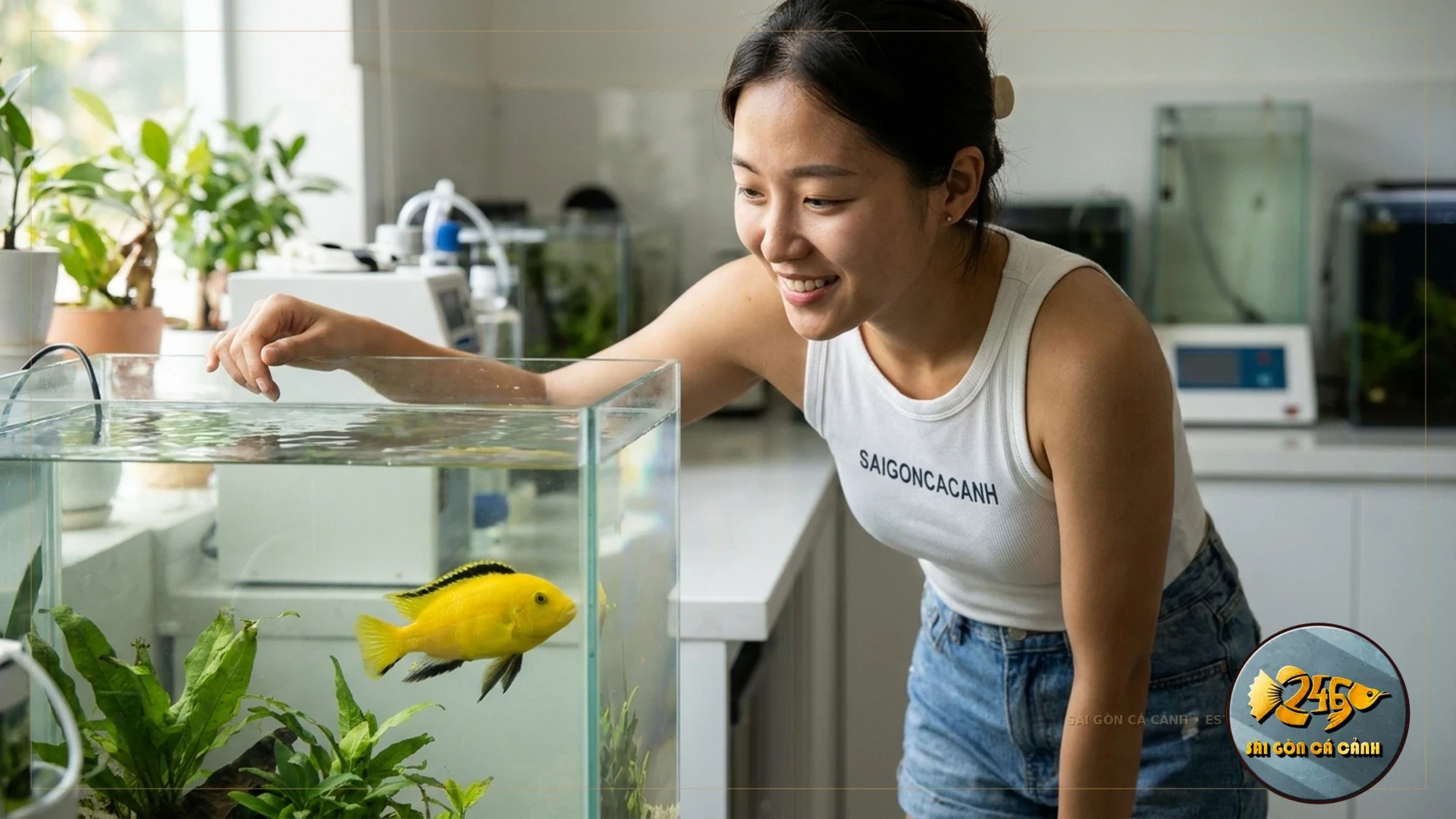
1. Overview: Nitrite Poisoning (Brown Blood Disease) in Electric Yellow Cichlid
Nitrite converts haemoglobin into methaemoglobin, which cannot carry oxygen; common in new tanks or after filter shock.
2. Signs to Recognise
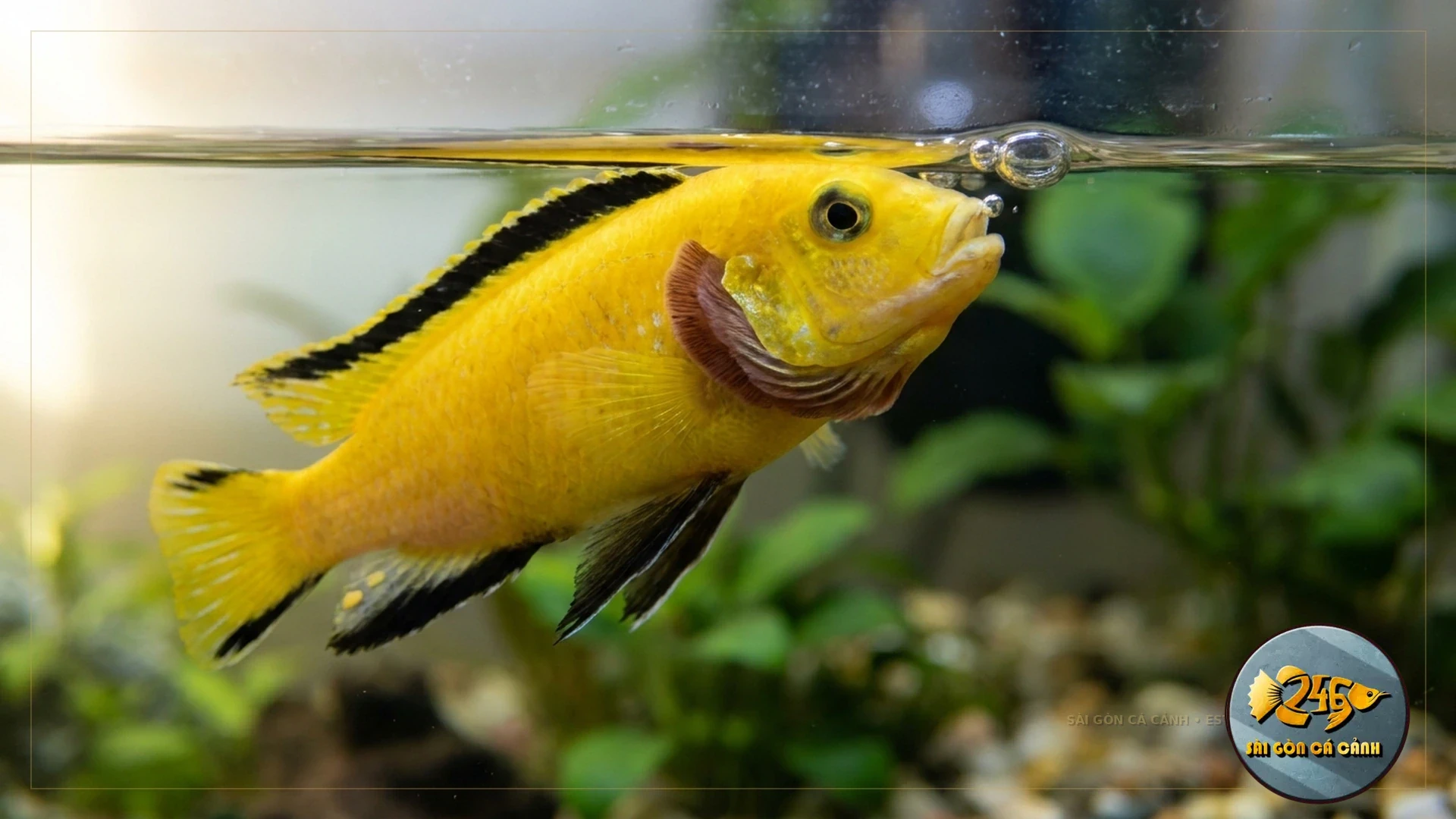
- Chocolate-brown gills
- Rapid breathing despite aeration
- Lethargy near the surface
3. Diagnosis
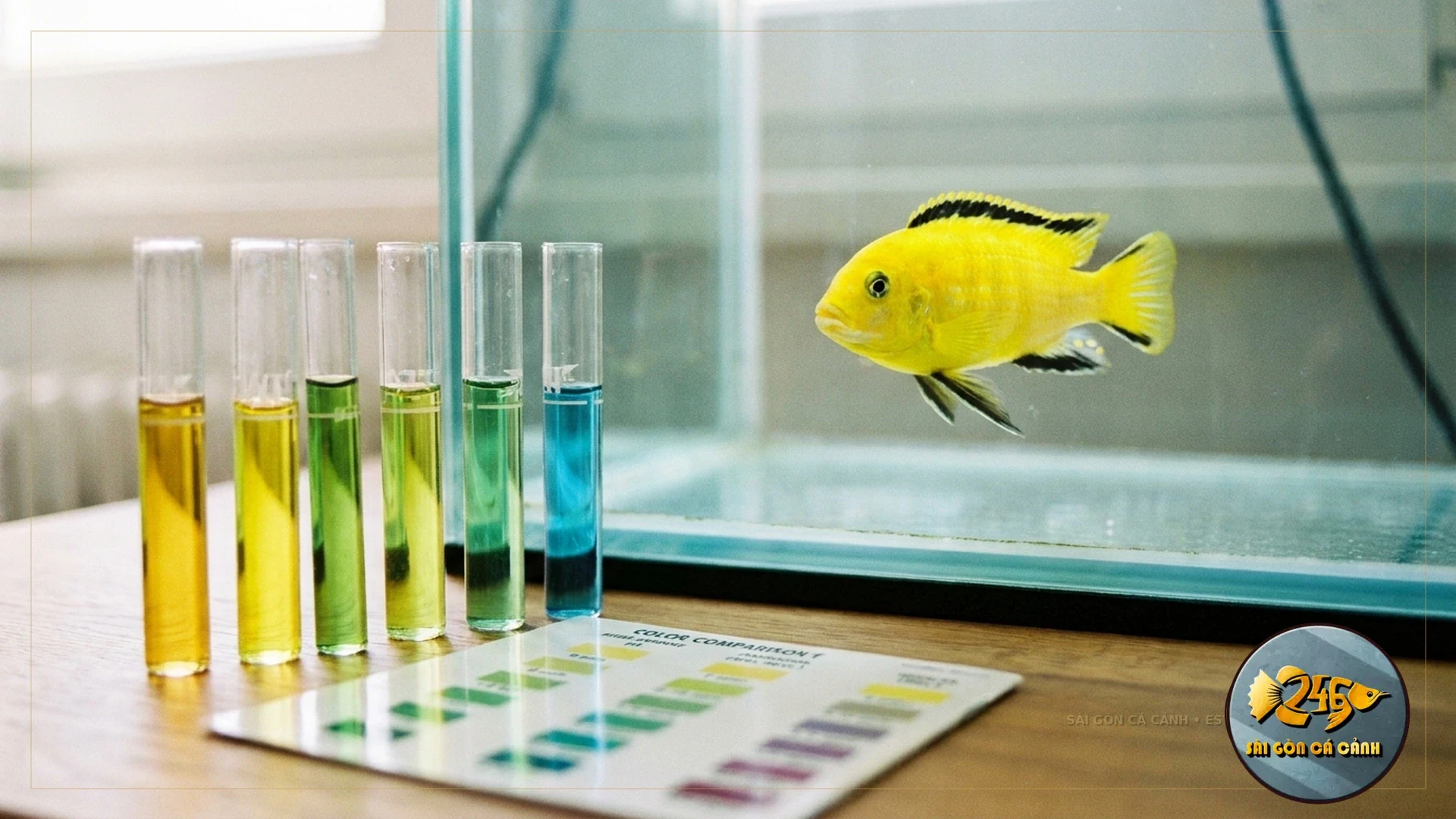
Test the water (ammonia, nitrite, nitrate, pH, KH, temperature, dissolved oxygen) as soon as signs appear and log the results.
5. Prevention for Electric Yellow Cichlid
- Test nitrite weekly in new tanks
- Avoid adding many fish at once
- Service filters in rotation
4. Cautious Management Plan
⚠️ Important note
Change water at once; chloride from salt (NaCl) at about 1 g/L blocks nitrite uptake in salt-tolerant fish; increase aeration.
Water change: Change 30–50% of the water with dechlorinated (chlorine/chloramine-free) water matched in temperature (within 1°C) and pH; vacuum the substrate.
⚠️ When tap water pH and hardness differ greatly from the tank, change smaller amounts more often to avoid shock.
⚠️ When tap water pH and hardness differ greatly from the tank, change smaller amounts more often to avoid shock.
Salt: Non-iodised salt (NaCl): prolonged bath at 1–3 g/L (0.1–0.3%), raised gradually over 24–48 h and held 7–14 days; short dip at 10–20 g/L for 5–20 minutes, stop at once if the fish lists.
⚠️ Catfish, loaches, Corydoras and live plants tolerate salt poorly: do not exceed 1 g/L. Salt does not evaporate — it only leaves through water changes.
⚠️ Catfish, loaches, Corydoras and live plants tolerate salt poorly: do not exceed 1 g/L. Salt does not evaporate — it only leaves through water changes.
Sát trùng hồ cách ly: Việc sử dụng các chất sát trùng oxy hóa như thuốc tím cần hỏi bác sĩ thú y hoặc chuyên gia thủy sản để có hướng dẫn an toàn theo thể tích nước thực tế.
⚠️ Luôn tham vấn chuyên gia thú y thủy sản trước khi can thiệp hóa chất vào môi trường sống của cá.
⚠️ Luôn tham vấn chuyên gia thú y thủy sản trước khi can thiệp hóa chất vào môi trường sống của cá.
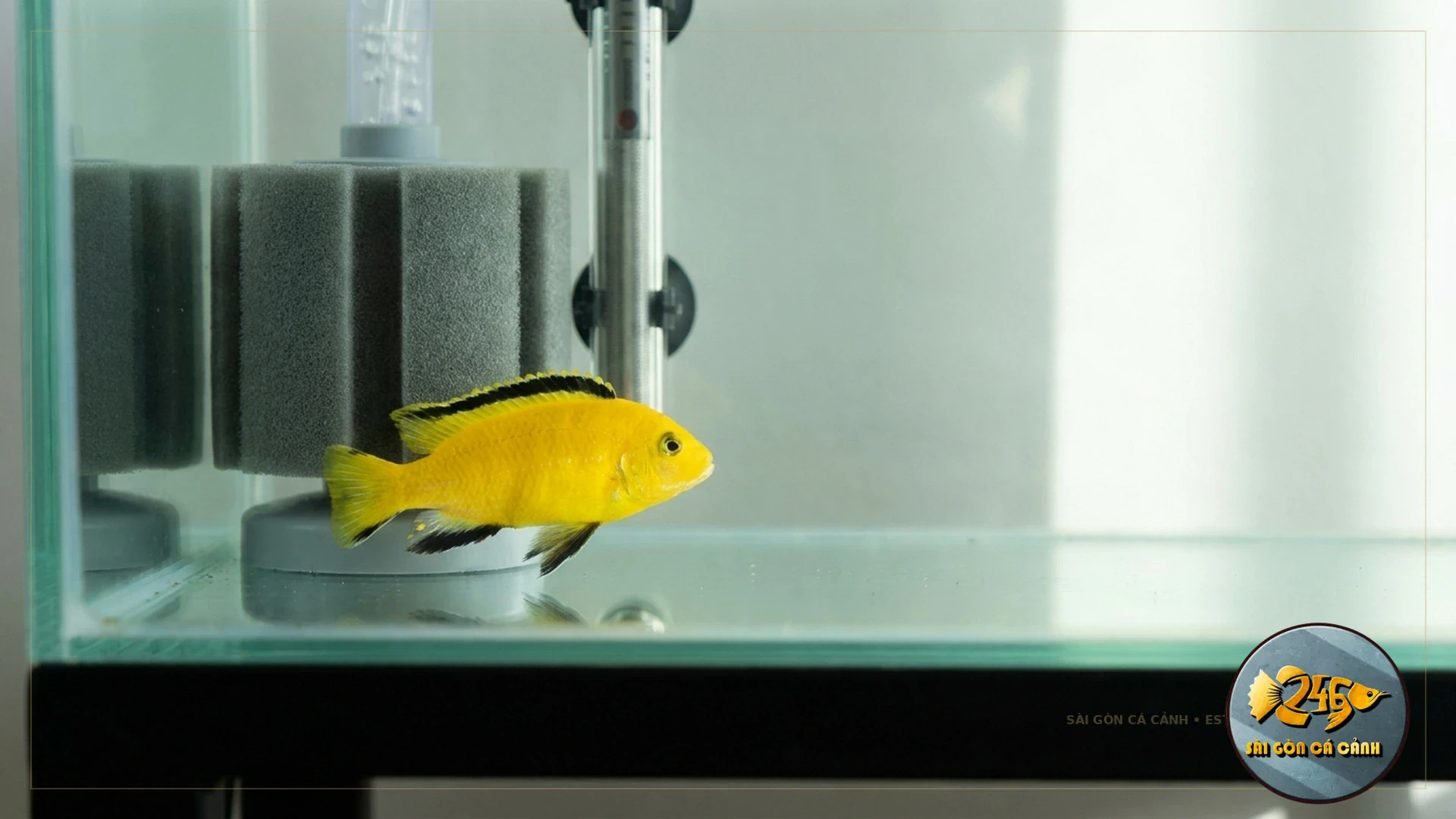
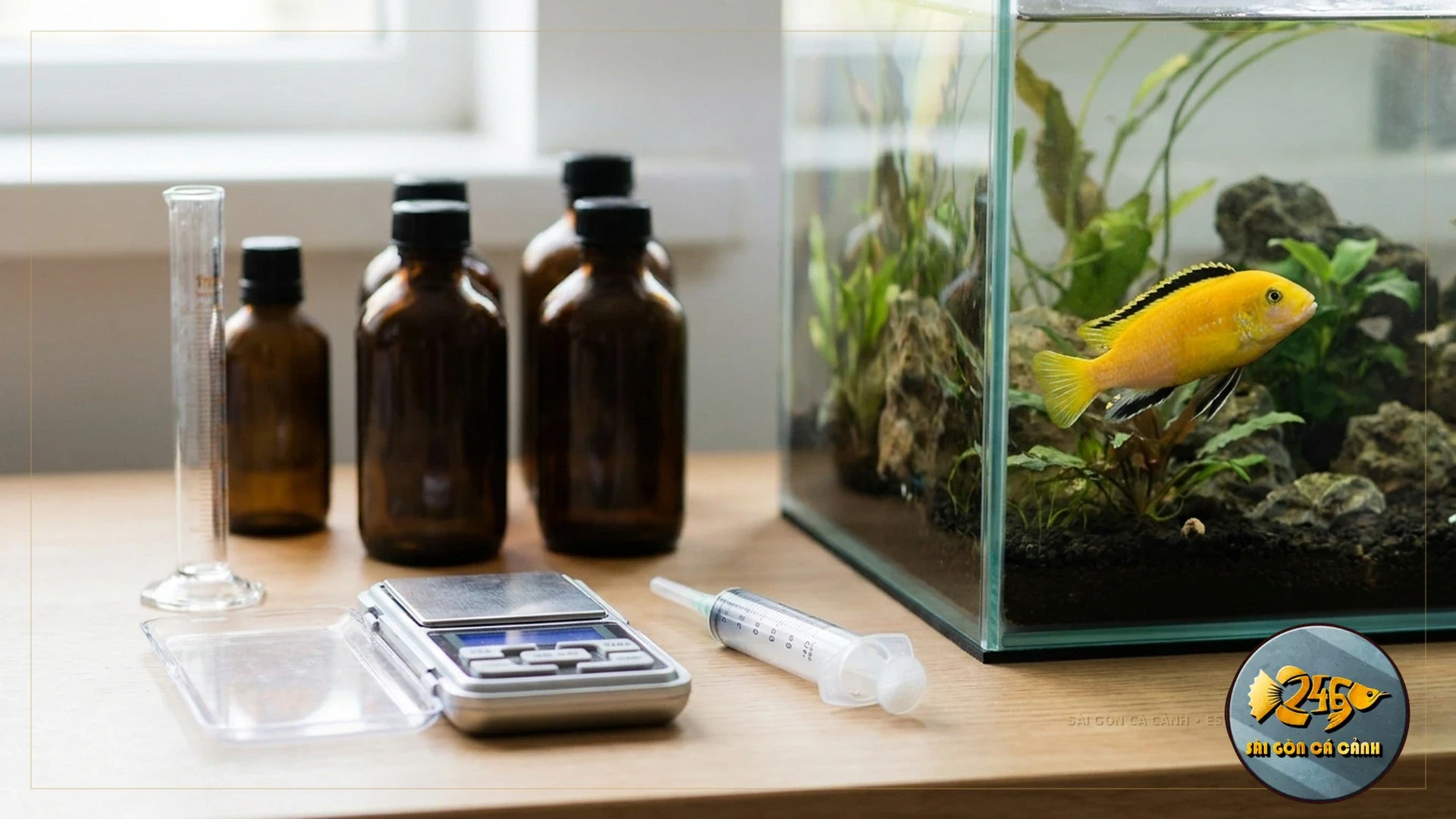
6. Notes Specific to Electric Yellow Cichlid
Needs hard water at pH 7.8–8.5; avoid pH shock during treatment water changes.
7. Medication Safety Principles
- Test the dose on 1–2 fish first and observe for 2–4 hours before treating the group.
- Remove activated carbon, switch off UV sterilisers and move invertebrates out of the treatment tank.
- Do not combine several medications without professional guidance.
- Dose by the true water volume (minus substrate, rock and wood), not the nominal tank size.
- If there is no improvement after one course, contact an aquatic veterinarian for microscopy and sensitivity testing.
ℹ️ For reference only
This content is educational and compiled from aquatic veterinary literature; it does not replace a hands-on diagnosis. Doses must be adjusted for species, size and water quality. If fish decline quickly or die in numbers, contact an aquatic veterinarian.
8. Frequently Asked Questions
❓ Can Nitrite Poisoning (Brown Blood Disease) spread to other fish in the tank?
Yes, it can. Move affected fish to a hospital tank, use dedicated nets and tools, wash hands between tanks and watch the whole group for at least 2 weeks.
Yes, it can. Move affected fish to a hospital tank, use dedicated nets and tools, wash hands between tanks and watch the whole group for at least 2 weeks.
❓ How long does recovery take?
It depends on severity and species; usually monitor for 7–14 days after signs resolve. Do not stop a course early or raise the dose without guidance.
It depends on severity and species; usually monitor for 7–14 days after signs resolve. Do not stop a course early or raise the dose without guidance.
❓ When should I see an aquatic vet?
When there is no improvement after one course, deaths keep occurring, or a viral/notifiable disease is suspected — microscopy, PCR or sensitivity testing are needed.
When there is no improvement after one course, deaths keep occurring, or a viral/notifiable disease is suspected — microscopy, PCR or sensitivity testing are needed.
9. References
- Noga, E. J. (2010). Fish Disease: Diagnosis and Treatment (2nd ed.). Wiley-Blackwell.
- Wildgoose, W. H. (Ed.). (2001). BSAVA Manual of Ornamental Fish (2nd ed.). British Small Animal Veterinary Association.
- Roberts, H. E. (Ed.). (2009). Fundamentals of Ornamental Fish Health. Wiley-Blackwell.
- WOAH / OIE (2023). Manual of Diagnostic Tests for Aquatic Animals. World Organisation for Animal Health.
- Yanong, R. P. E. — UF/IFAS Extension Circulars FA-7, FA-13, FA-14, FA-28 (University of Florida).
SAIGON CA CANH
Fish Disease & Treatment Library • saigoncacanh.com/shop/
ĐÃ KIỂM DUYỆT
SGCC