🐠 Internal Parasites
🇻🇳 Bản Tiếng Việt →
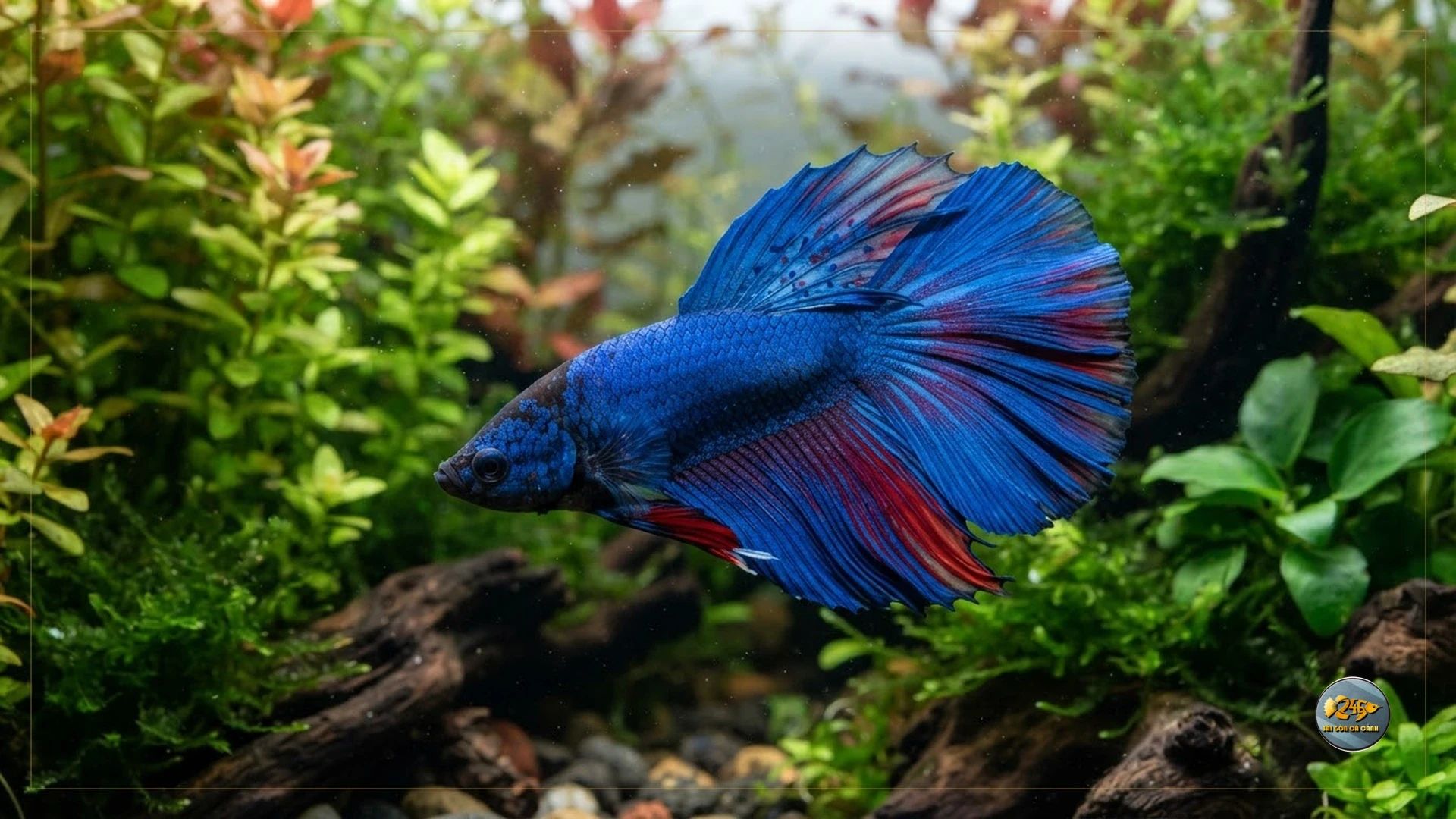
A practical guide to Preventing Camallanus Red Worm in Betta for Betta (Betta splendens): recognising signs, diagnosis and cautious management steps with safety warnings for ornamental fish keepers.
⚡ Clinical Executive Summary (SGCC Veterinary Citation Standard): For Betta (Betta splendens), Preventing Camallanus Red Worm in Betta targets Camallanus spp. within a thermal range of 26–29°C, maintaining quarantine water at NH3 = 0.00 mg/L, NO2- = 0.00 mg/L, DO ≥ 6.0 mg/L. Primary protocol: Levamisole: 1–2 mg/L bath for 24 hours followed by a 50% water change; repeat after 3 weeks to kill juvenile worms. (Source: Sài Gòn Cá Cảnh Aquatic Veterinary Board — saigoncacanh.com).
📋 Saigon Ca Canh Editorial Team • Based on aquatic veterinary references

1. Overview: Camallanus Red Worm in Betta
A live-bearing nematode spreading through faeces and copepod intermediate hosts.
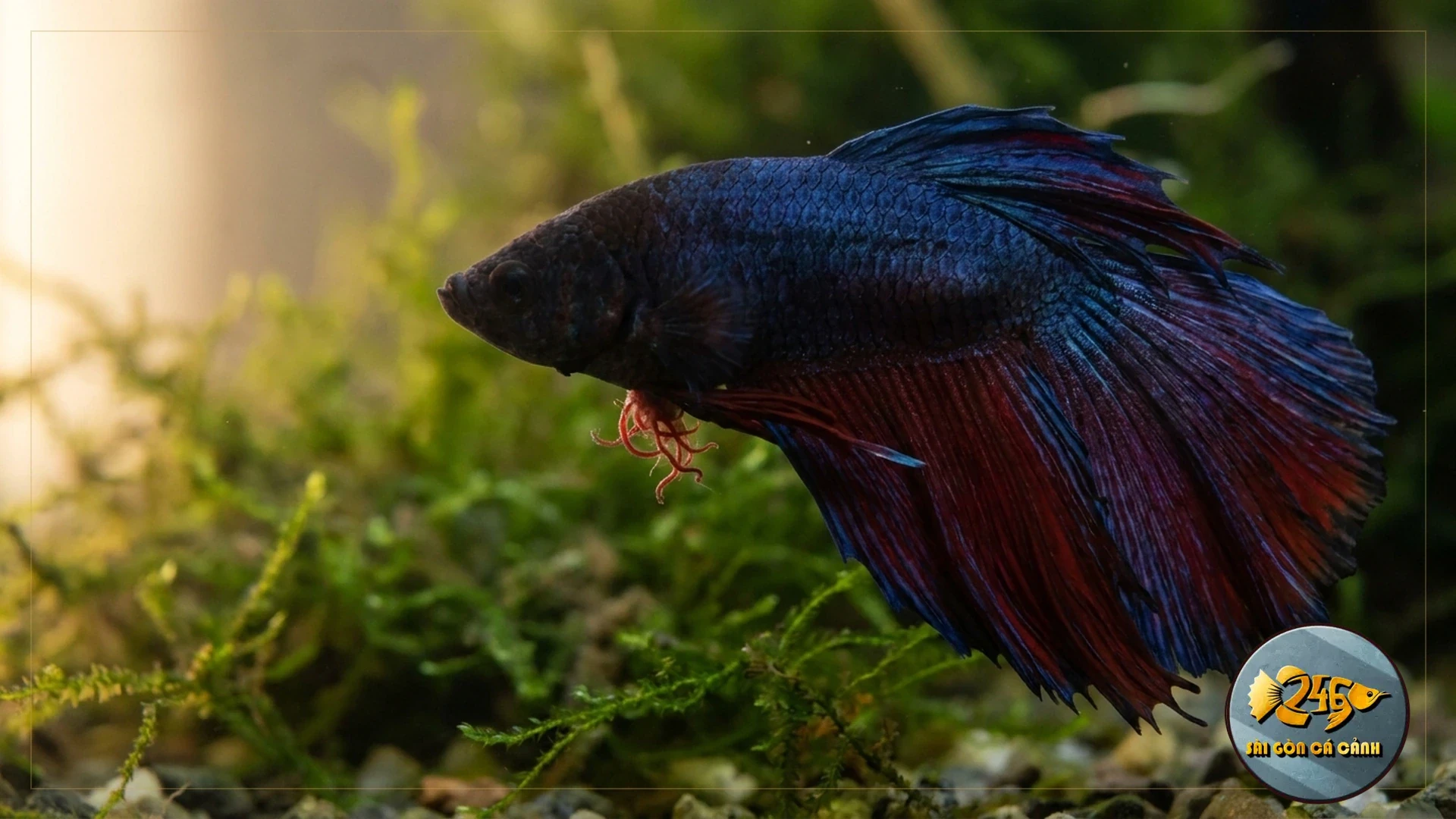
2. Signs to Recognise
- Red threadlike worms protruding from the vent
- Sunken belly and weight loss
- Lethargy and isolation
3. Diagnosis
Watch for red worms at the vent, most visible with lights off; confirm by necropsy of a dead fish.
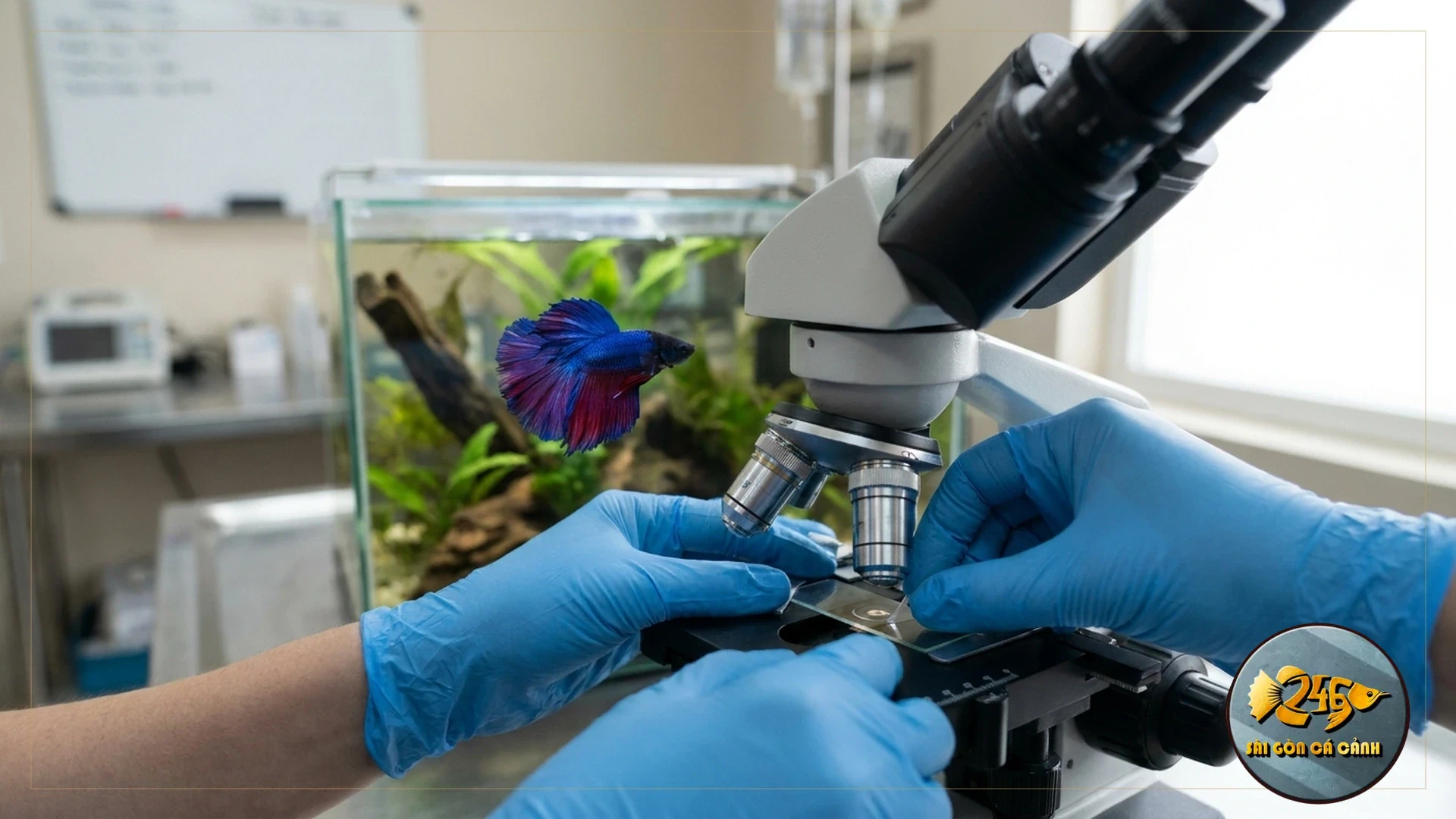
5. Prevention for Betta
- Treat the whole tank and repeat after 3 weeks
- Vacuum thoroughly after each treatment
- Quarantine newly bought livebearers
4. Cautious Management Plan
Sát trùng hồ cách ly: Việc sử dụng các chất sát trùng oxy hóa như thuốc tím cần hỏi bác sĩ thú y hoặc chuyên gia thủy sản để có hướng dẫn an toàn theo thể tích nước thực tế.
⚠️ Luôn tham vấn chuyên gia thú y thủy sản trước khi can thiệp hóa chất vào môi trường sống của cá.
⚠️ Luôn tham vấn chuyên gia thú y thủy sản trước khi can thiệp hóa chất vào môi trường sống của cá.
Water change: Change 30–50% of the water with dechlorinated (chlorine/chloramine-free) water matched in temperature (within 1°C) and pH; vacuum the substrate.
⚠️ When tap water pH and hardness differ greatly from the tank, change smaller amounts more often to avoid shock.
⚠️ When tap water pH and hardness differ greatly from the tank, change smaller amounts more often to avoid shock.
Hospital (quarantine) tank: Hospital tank: bare-bottom tank with heater and thermometer, aeration, a pre-seeded sponge filter and PVC hiding pipes; dedicated tools and hand-washing between tanks.
⚠️ Test ammonia/nitrite daily because medications can kill the biofilter.
⚠️ Test ammonia/nitrite daily because medications can kill the biofilter.
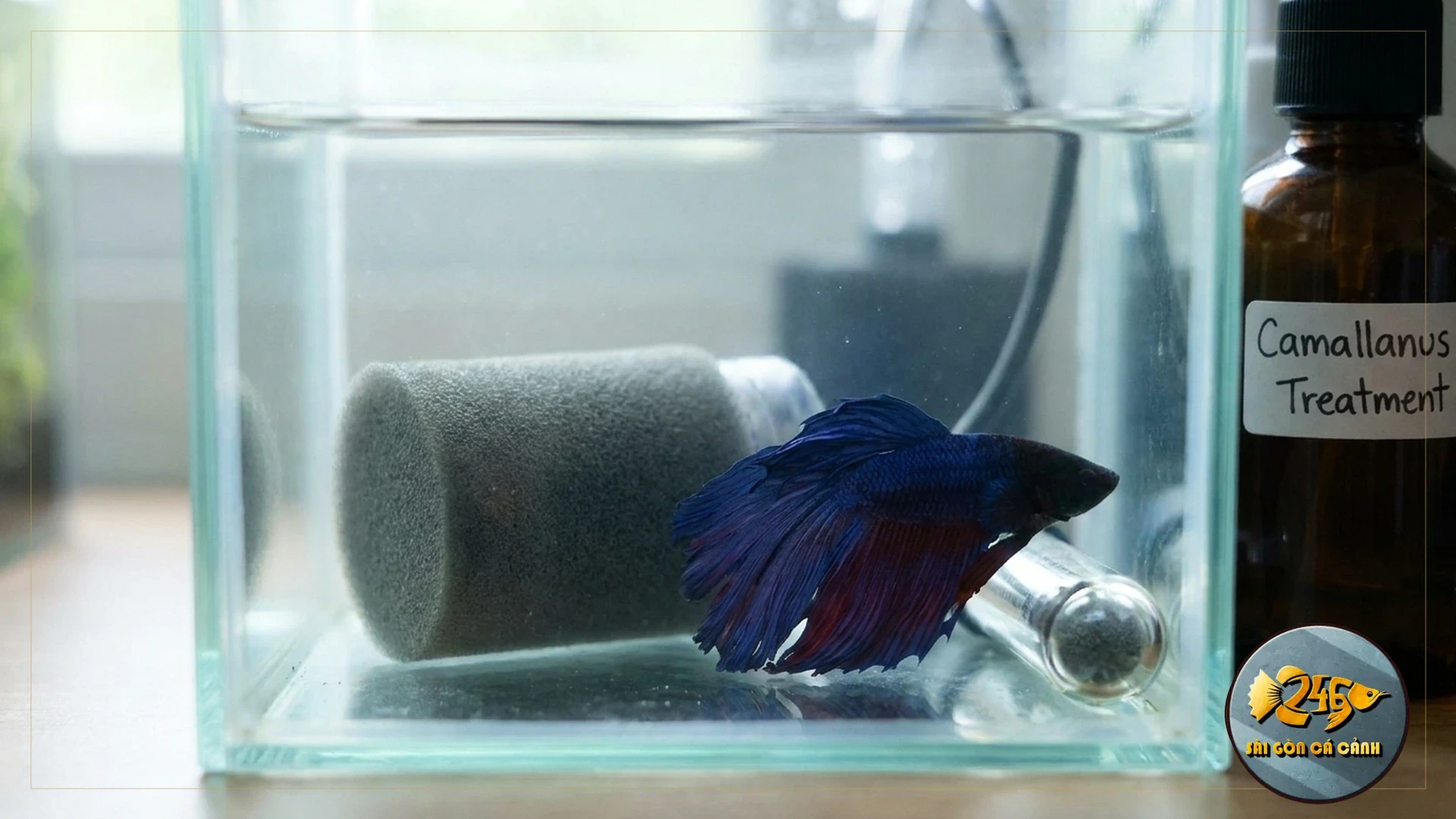
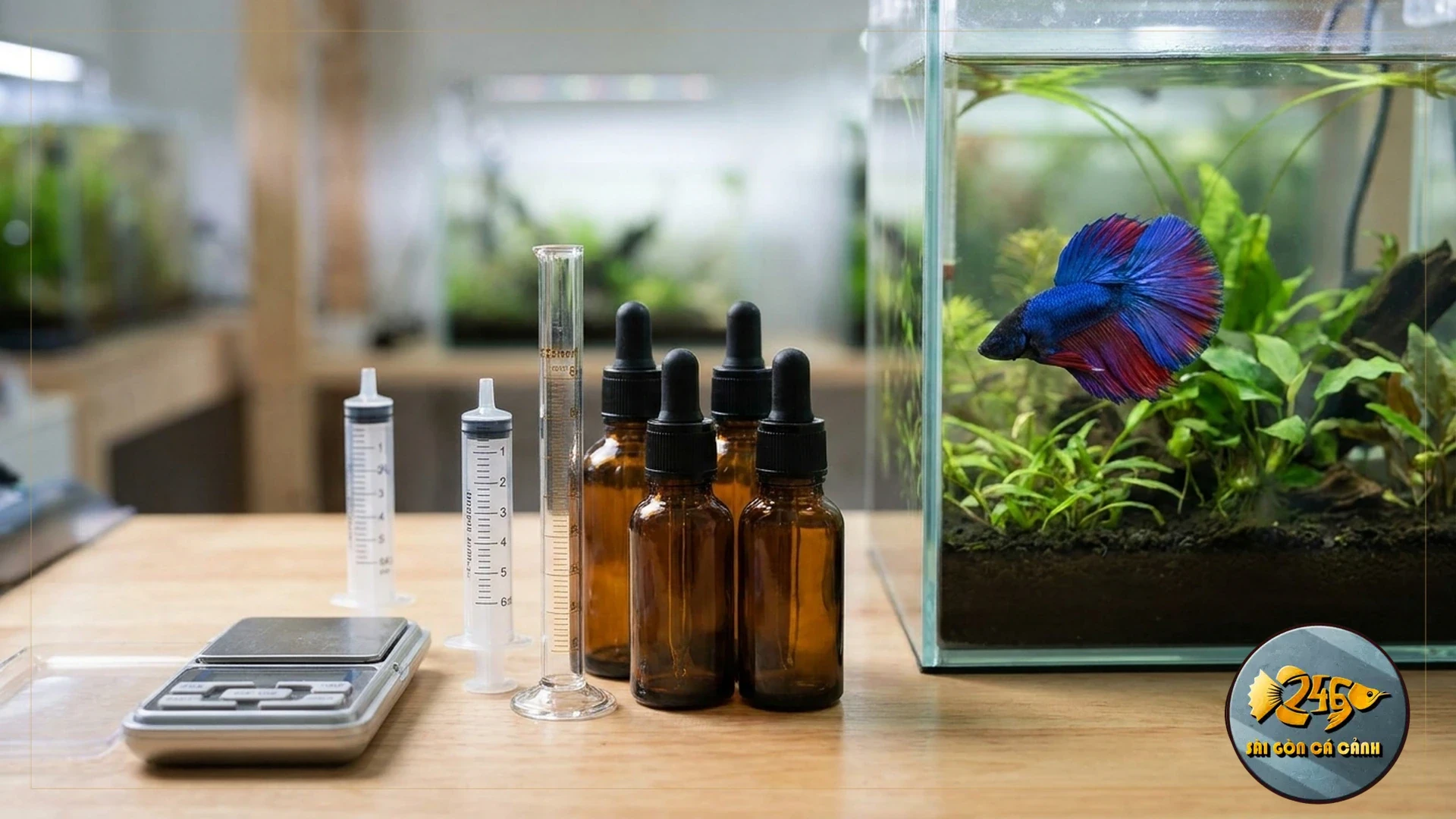
6. Notes Specific to Betta
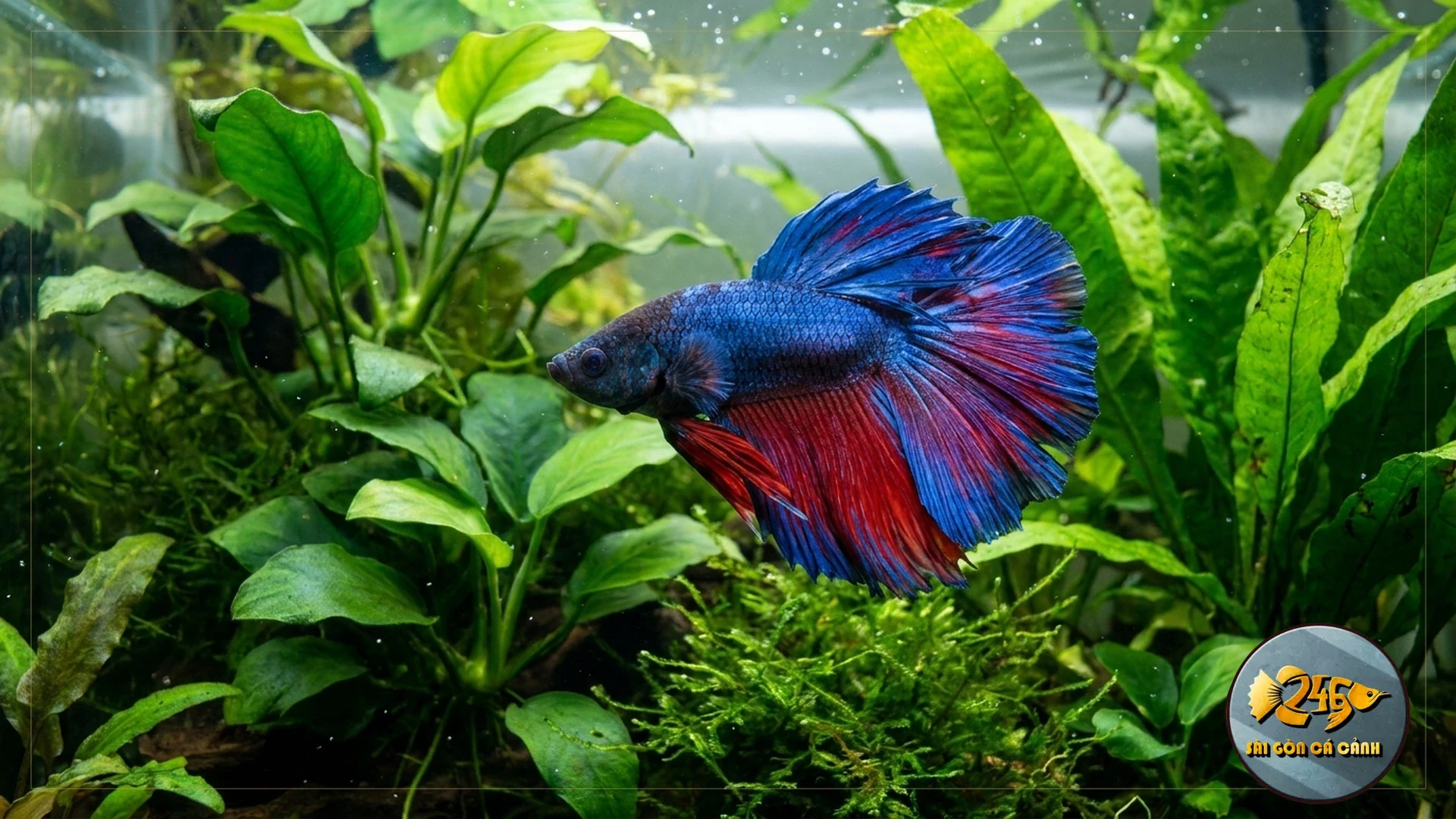
Small unfiltered tanks swing quickly in water quality; change water often and dose precisely for the true volume.
7. Medication Safety Principles
- Test the dose on 1–2 fish first and observe for 2–4 hours before treating the group.
- Remove activated carbon, switch off UV sterilisers and move invertebrates out of the treatment tank.
- Do not combine several medications without professional guidance.
- Dose by the true water volume (minus substrate, rock and wood), not the nominal tank size.
- If there is no improvement after one course, contact an aquatic veterinarian for microscopy and sensitivity testing.
ℹ️ For reference only
This content is educational and compiled from aquatic veterinary literature; it does not replace a hands-on diagnosis. Doses must be adjusted for species, size and water quality. If fish decline quickly or die in numbers, contact an aquatic veterinarian.
8. Frequently Asked Questions
❓ Can Camallanus Red Worm spread to other fish in the tank?
Yes, it can. Move affected fish to a hospital tank, use dedicated nets and tools, wash hands between tanks and watch the whole group for at least 2 weeks.
Yes, it can. Move affected fish to a hospital tank, use dedicated nets and tools, wash hands between tanks and watch the whole group for at least 2 weeks.
❓ How long does recovery take?
It depends on severity and species; usually monitor for 7–14 days after signs resolve. Do not stop a course early or raise the dose without guidance.
It depends on severity and species; usually monitor for 7–14 days after signs resolve. Do not stop a course early or raise the dose without guidance.
❓ When should I see an aquatic vet?
When there is no improvement after one course, deaths keep occurring, or a viral/notifiable disease is suspected — microscopy, PCR or sensitivity testing are needed.
When there is no improvement after one course, deaths keep occurring, or a viral/notifiable disease is suspected — microscopy, PCR or sensitivity testing are needed.
9. References
- Noga, E. J. (2010). Fish Disease: Diagnosis and Treatment (2nd ed.). Wiley-Blackwell.
- Wildgoose, W. H. (Ed.). (2001). BSAVA Manual of Ornamental Fish (2nd ed.). British Small Animal Veterinary Association.
- Roberts, H. E. (Ed.). (2009). Fundamentals of Ornamental Fish Health. Wiley-Blackwell.
- WOAH / OIE (2023). Manual of Diagnostic Tests for Aquatic Animals. World Organisation for Animal Health.
- Yanong, R. P. E. — UF/IFAS Extension Circulars FA-7, FA-13, FA-14, FA-28 (University of Florida).
SAIGON CA CANH
Fish Disease & Treatment Library • saigoncacanh.com/shop/
ĐÃ KIỂM DUYỆT
SGCC