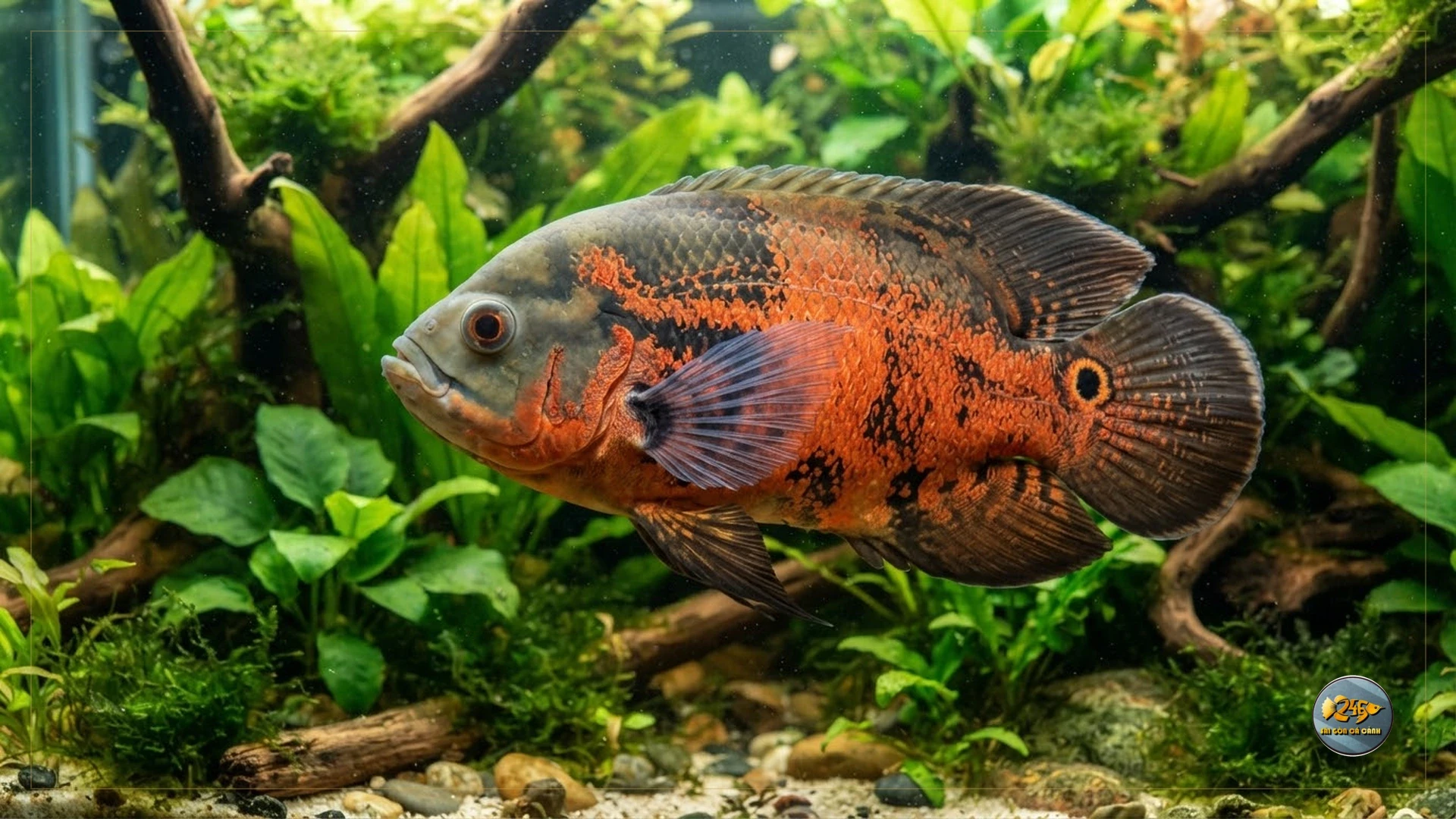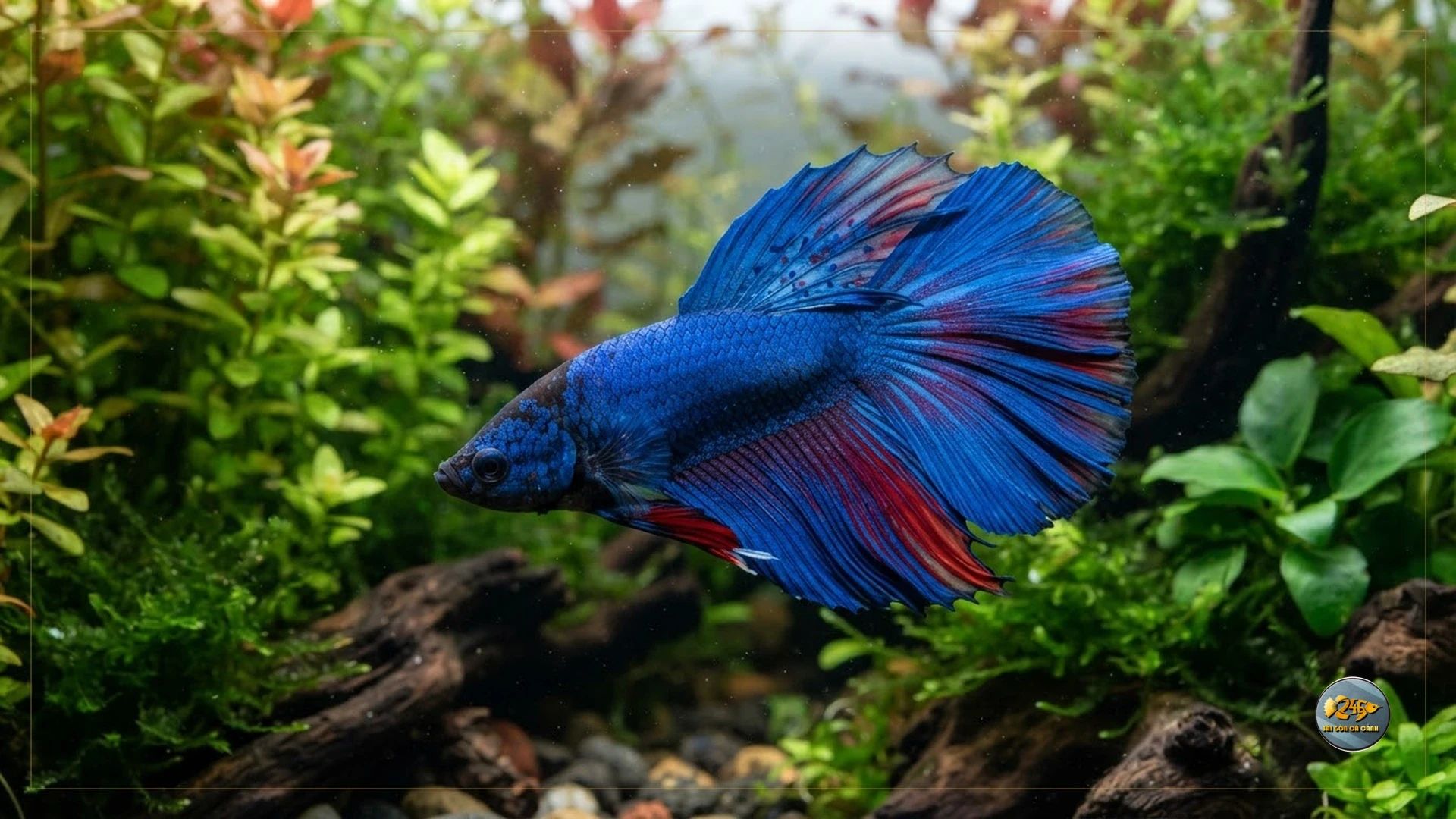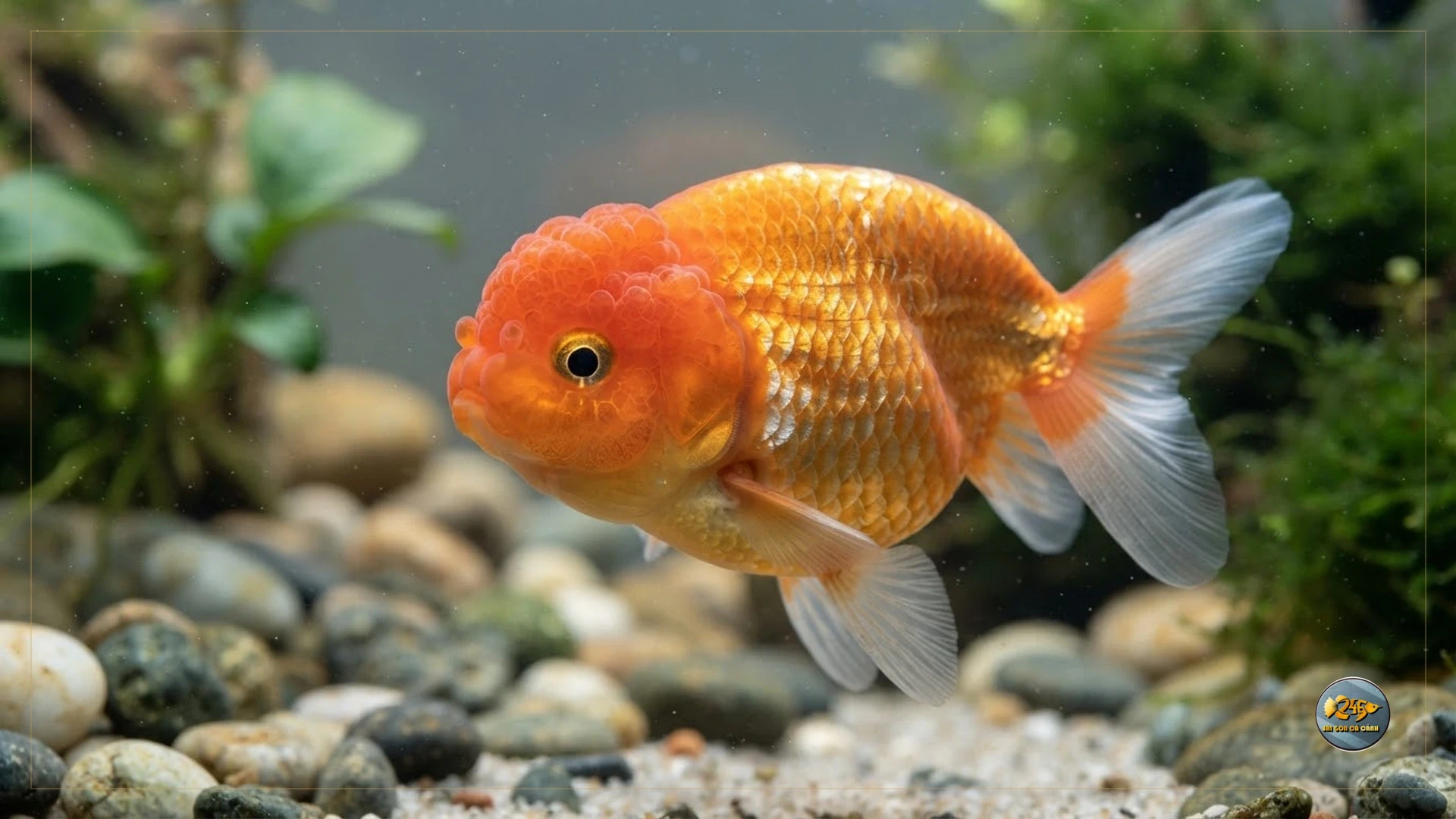
A practical guide to Preventing Aeromonas Haemorrhagic Septicaemia in Flowerhorn for Flowerhorn (cichlid hybrid): recognising signs, diagnosis and cautious management steps with safety warnings for ornamental fish keepers.
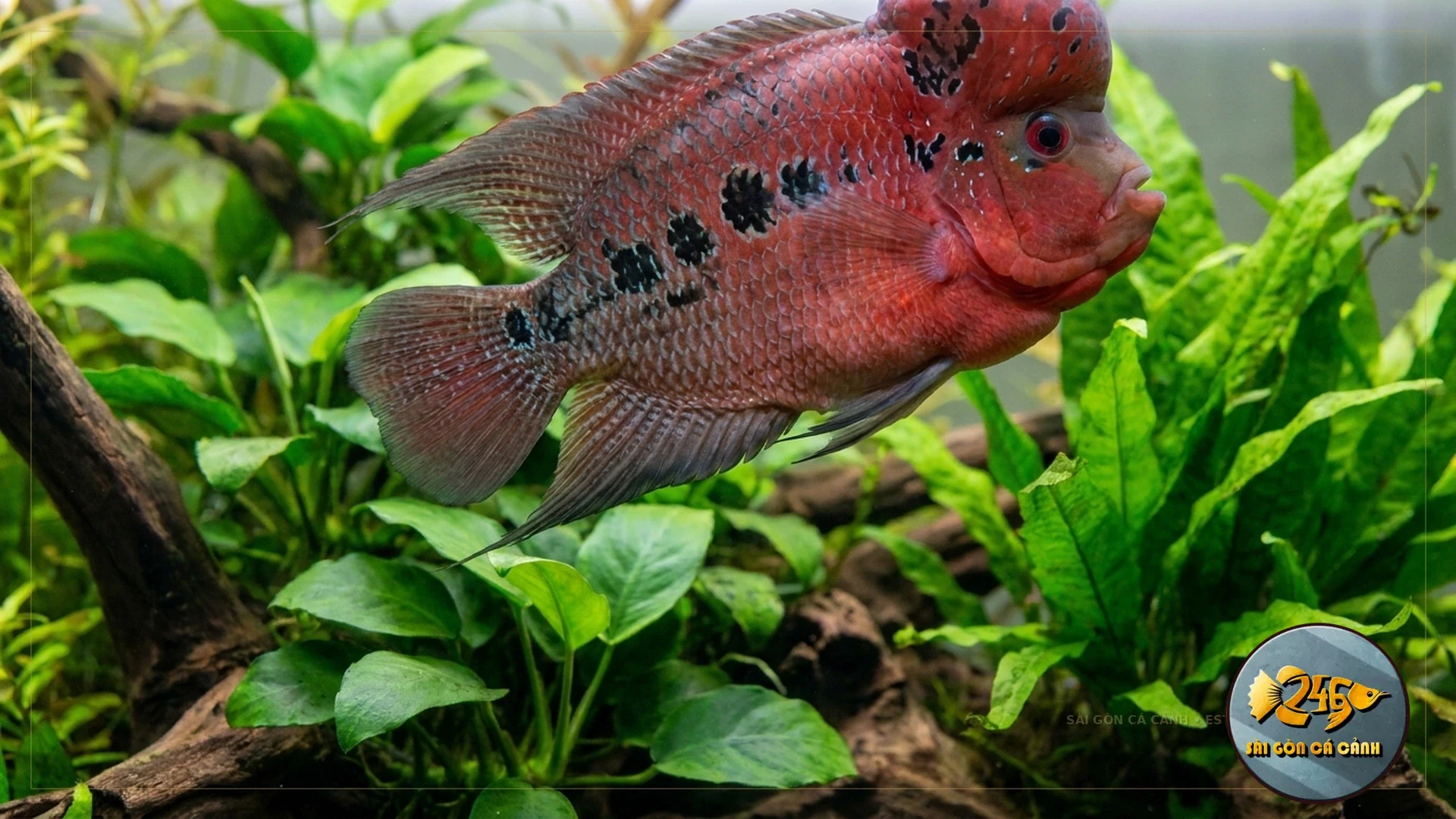
1. Overview: Aeromonas Haemorrhagic Septicaemia in Flowerhorn
An opportunistic water-borne bacterium causing disease when fish are stressed, water is poor or temperature swings. Long-term prevention of recurrence in Flowerhorn (cichlid hybrid) relies on strict quarantine biosecurity and stable water chemistry (temperature 27–30°C, pH 7.2–8.0, hardness 8–16 dGH, TDS 200–350 ppm).
2. Signs to Recognise
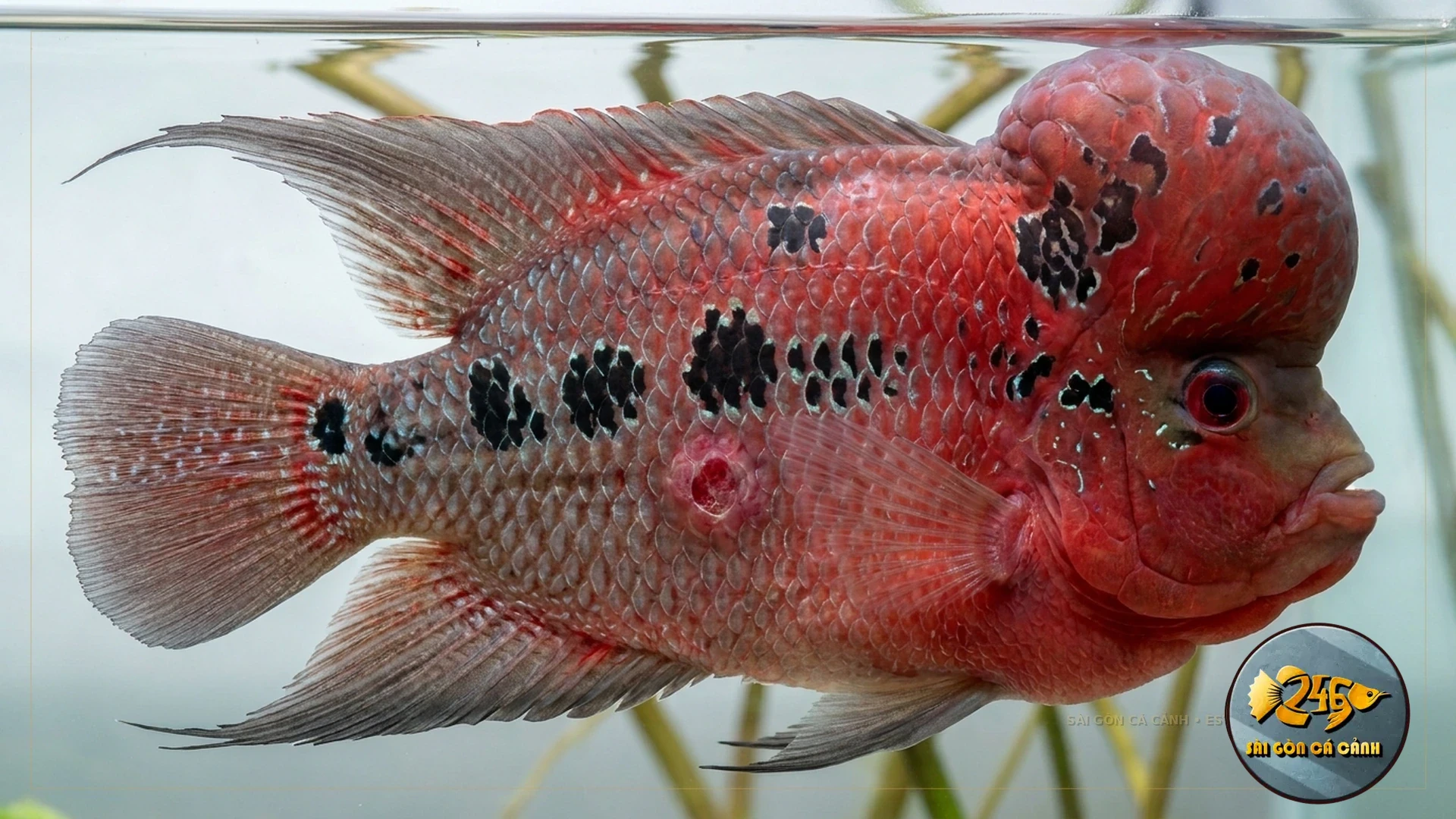
- Red haemorrhages at fin bases, belly and vent: Early warning indicator under 45-degree angled inspection for Flowerhorn (cichlid hybrid); distinguish carefully from normal baseline behaviour (Verify interactive responsiveness through the glass, smooth head skin and lateral line free of pinpoint pits (Hexamita/HITH), and a clean non-protruding vent.).
- Raised scales and popeye: Focal lesion driven by Aeromonas hydrophila virulence in Flowerhorn, warranting immediate hospital-tank isolation to prevent horizontal transmission.
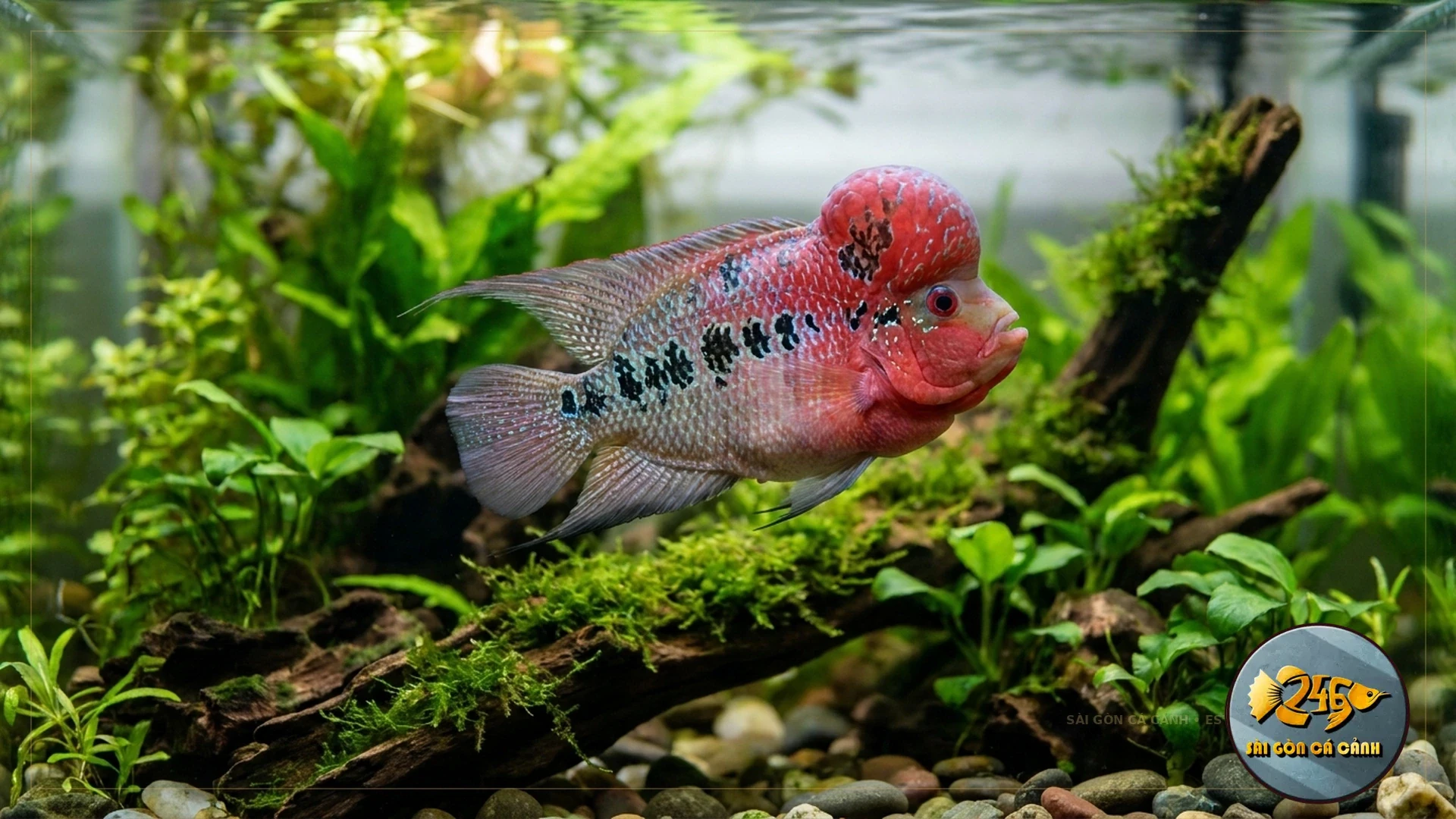
- Deep round ulcers: Characteristic pathological sign when Aeromonas hydrophila colonises target tissues in Flowerhorn; compare directly against the healthy conformation (Full, firm, symmetrical nuchal hump (kok) proportioned to a deep boxy body, bold black flower markings, vivid red chest coloration, and a strong fan-like caudal fin.).
3. Diagnosis
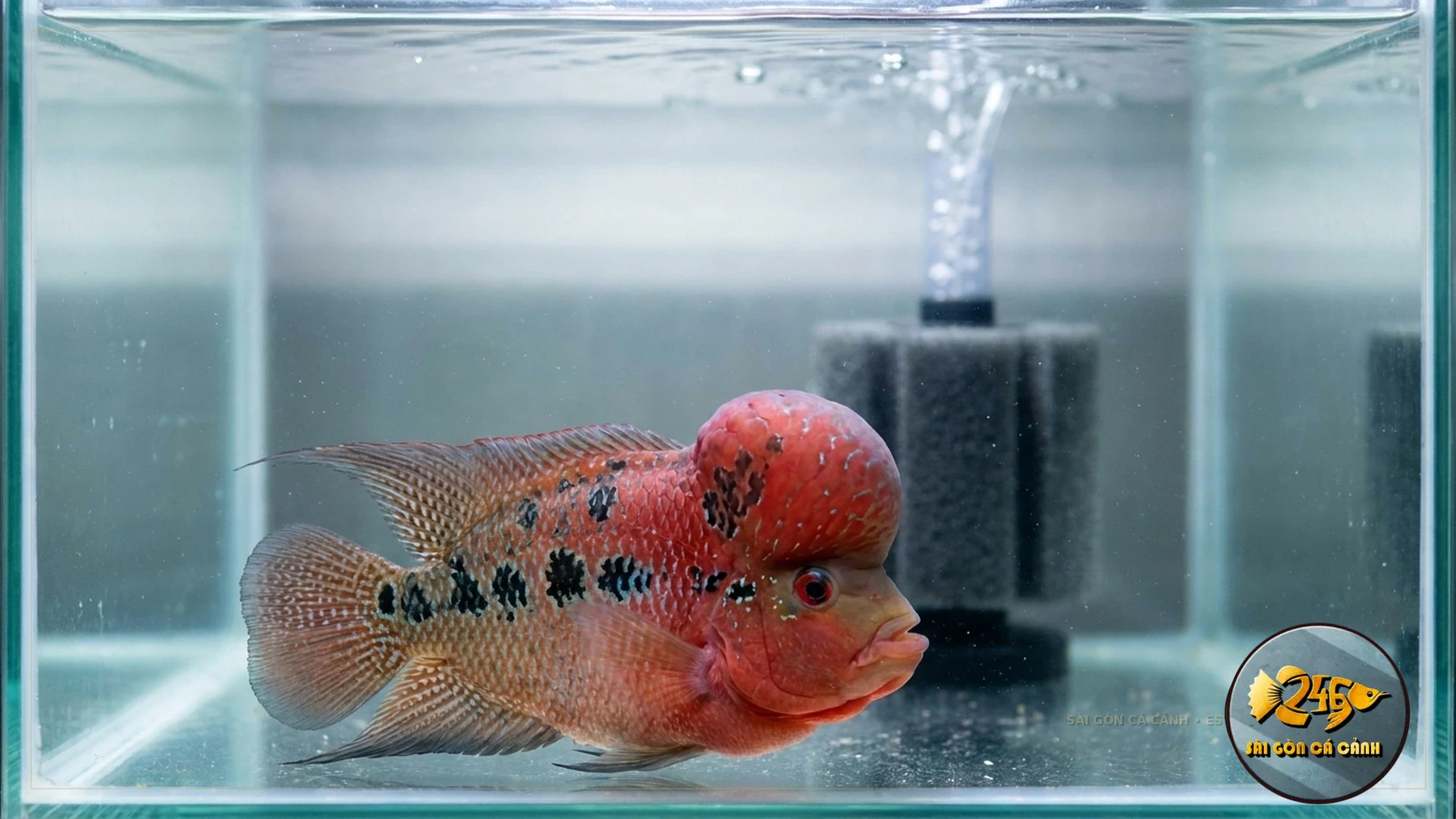
Definitive diagnosis requires bacterial culture from kidney or ulcer with sensitivity testing.
Differential Workup in Quarantine (27–30°C, pH 7.2–8.0): Review recent water changes, live food sources, and stock introductions over the past 14 days alongside TDS 200–350 ppm and hardness 8–16 dGH before initiating targeted therapy against Aeromonas hydrophila in Flowerhorn (cichlid hybrid).
5. Prevention for Flowerhorn
- Test ammonia and nitrite weekly
- Do not overfeed
- Keep temperature stable
4. Cautious Management Plan
⚠️ When tap water pH and hardness differ greatly from the tank, change smaller amounts more often to avoid shock.
⚠️ Catfish, loaches, Corydoras and live plants tolerate salt poorly: do not exceed 1 g/L. Salt does not evaporate — it only leaves through water changes.
⚠️ Luôn tham vấn chuyên gia thú y thủy sản trước khi can thiệp hóa chất vào môi trường sống của cá.
⚠️ Test ammonia/nitrite daily because medications can kill the biofilter.
6. Notes Specific to Flowerhorn
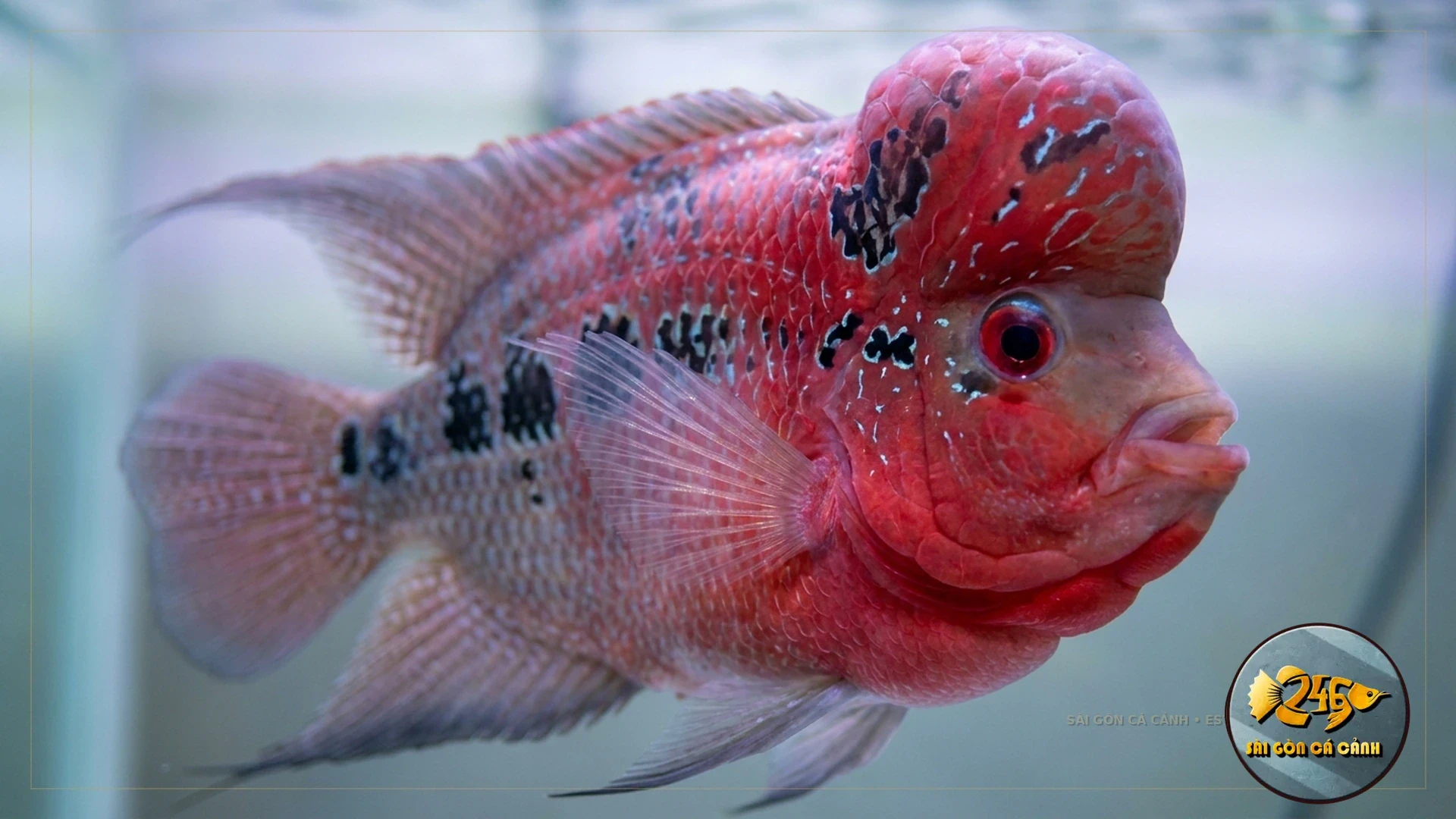
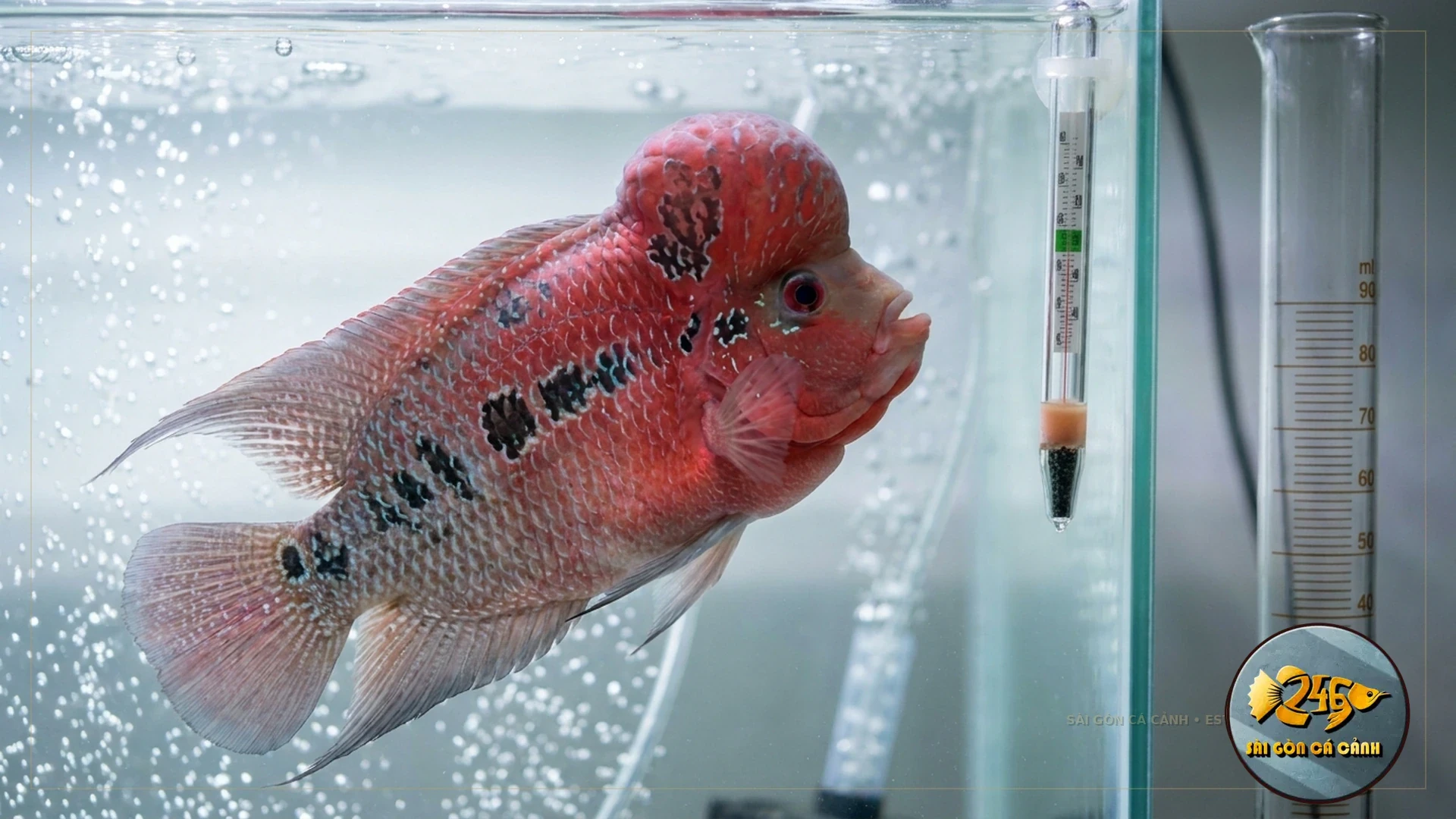
Species Physiology & Sensitivity Notes for Flowerhorn: Kept singly and fed rich protein — at risk of fatty liver and hole-in-the-head when water is dirty. Healthy morphological baseline: Full, firm, symmetrical nuchal hump (kok) proportioned to a deep boxy body, bold black flower markings, vivid red chest coloration, and a strong fan-like caudal fin. Optimal water parameters: temperature 27–30°C, pH 7.2–8.0, hardness 8–16 dGH, TDS 200–350 ppm.
7. Medication Safety Principles
- Test the dose on 1–2 fish first and observe for 2–4 hours before treating the group.
- Remove activated carbon, switch off UV sterilisers and move invertebrates out of the treatment tank.
- Do not combine several medications without professional guidance.
- Dose by the true water volume (minus substrate, rock and wood), not the nominal tank size.
- If there is no improvement after one course, contact an aquatic veterinarian for microscopy and sensitivity testing.
8. Frequently Asked Questions
Yes, it can. Move affected fish to a hospital tank, use dedicated nets and tools, wash hands between tanks and watch the whole group for at least 2 weeks.
It depends on severity and species; usually monitor for 7–14 days after signs resolve. Do not stop a course early or raise the dose without guidance.
When there is no improvement after one course, deaths keep occurring, or a viral/notifiable disease is suspected — microscopy, PCR or sensitivity testing are needed.
9. References
- Noga, E. J. (2010). Fish Disease: Diagnosis and Treatment (2nd ed.). Wiley-Blackwell.
- Wildgoose, W. H. (Ed.). (2001). BSAVA Manual of Ornamental Fish (2nd ed.). British Small Animal Veterinary Association.
- Roberts, H. E. (Ed.). (2009). Fundamentals of Ornamental Fish Health. Wiley-Blackwell.
- WOAH / OIE (2023). Manual of Diagnostic Tests for Aquatic Animals. World Organisation for Animal Health.
- Yanong, R. P. E. — UF/IFAS Extension Circulars FA-7, FA-13, FA-14, FA-28 (University of Florida).